article
- Alex Woods | Don’t let AI write for you.
- N. Cailie | I am definitely missing the pre-AI writing era.
- Elizabeth Spiers | The Anti-Intellectualism of Silicon Valley Elites.
- “We can decide that we want to be human” | The Guardian.
- Less Wrong | Folie à Machine: LLMs and Epistemic Capture.
- Manuel Morale’s two-step process for writing AI-free blog posts (an amusing response to an interesting discussion).
-
The well is poisoned now with AI slop, but even years ago when I was looking online for information on Shu Ha Ri, there were plenty of mentions but it was all extremely shallow. There were hot takes from martial arts sites and almost clueless discussions about agile software development. True, they mentioned the concept but not where it had come from, or really any context. They were skimming the surface of a very deep pond. I wanted something more substantial and so I started researching.
-
To this day there is no accessible introduction to Shu Ha Ri, and nothing in print with credible references that you can follow up yourself if you want to. So I saw a gap that was begging to be filled.
-
No one else had done it. I mean I’m not the world’s greatest expert on Japanese culture, but no one else wrote the book on Shuhari. My first draft was written in 2015 and I gave the world another 10 years to write the book on Shuhari. No one did, so in July 2025 I published my own book myself. Ironically, another introduction to Shuhari was finally published, in Spanish, two months later.
-
I had a bee in my bonnet, put there by the literature on learning. It’s heavily learner-focused, which is fine, but very often it misses out entirely any mention of the role of teaching, which is not fine. This seems plainly weird, and in my own small way I wanted to make a contribution to correcting this. Learners need teachers, and what’s more, the teachers need to be humans, not bots. I saw the Japanese concept of Shuhari as a way of emphasising this point, that learning and teaching are two sides of the same coin.
-
Following on from this last point, I wanted to present a different approach to learning theory, one with is about social interaction, not just neuroscience. Understanding the brain is great, obviously, but learning and teaching takes place in an environment that extends well beyond the individual brain.
Finished reading Trip to the Moon by John Yorke

Trip to the Moon by John Yorke 📚 sets out the author’s deeply-considered views on the nature of story and goes further than his previous work on the same theme, Into the Woods.
John Yorke is a highly experienced writer and producer for British TV, and here he presents invaluable insights into how stories really work, from the perspective of someone who absolutely knows what he’s talking about. I found the section on non-western story-forms very interesting, and though I wasn’t convinced by the claim that stories in all cultures are basically fueled by ‘some bastardization of the hero’s journey’, just hearing the argument made by a true expert was very helpful.
More convincing - and worrying - was the claim that effective storytellers ‘unshackle us from empirical observation by drugging us with rage or anger or pleasure.’ Indeed, if this book has a single key theme, it might be that telling stories is a uniquely dangerous skill, whose seductive power we’d do well to understand much better than we do.
The insights of Trip to the Moon are profound, though a more rigorous edit would have served the work well. In places the text feels unbalanced. Crucial developments are often truncated in the main chapters only to resurface in the lengthy commentary at the back. Despite this imbalance, the author’s body of work remains vital for any aspiring writer. Start with Into the Woods before tackling this more fragmented sequel.
On Mastodon, Harold Jarche points to the renewed relevance of Harold Innis, the mid-20th century Canadian scholar who called out US media imperialism for what it was.
💬 “We can only survive by taking persistent action at strategic points against American imperialism in all its attractive guises.”
I’ve written about Innis’s lost notes but his warnings about the distorting power of the media are very appropriate now.
Thoughts on ‘The Memex Method’
Today I noticed that the ridiculously prolific author and tech activist Cory Doctorow is commissioned to publish a book in 2027 on “The Memex Method”, which he described in a post of that name back in 2021. The basic idea is that he publishes continually in public by means of many, many blog posts, then collates it into books.
💬 “Traditionally, a writer identifies a subject of interest and researches it, then writes about it. In the (my) blogging method, the writer blogs about everything that seems interesting, until a subject gels out of all of those disparate, short pieces.”
I mentioned this post back in 2023, when I suggested: to build something big, start with small fragments.
Writing is still about thinking
According to author Larry McEnerney, writing is an essential part of a sophisticated thinking process. He says:
💬 “So here’s what you’re doing, you are thinking about your world in very difficult ways. This is a terrifically good thing, and it’s the source of most of the value of your work. Now, you are also writing about that world, and this is where it starts, the problem starts arising. Unlike a journalist, almost surely you are using your writing process to help yourself think. In other words, the thinking that you’re doing is at such a level of complexity that you have to use writing to help yourself do your thinking.” - Larry McEnerney: The Craft of Writing Effectively | Youtube
In my own reading I’ve felt there’s a difference between published writing as useful information (e.g. ‘how to fix that annoying computer problem’) and published writing as the voice of a human grappling with complexity (‘how I fixed my annoying computer problem ‘).
In the first instance I don’t care if the ‘author’ is AI, so long as the suggested fix actually works. I don’t need evidence of a thought process; I just want to fix my computer. In the second instance, the central thing I’m looking for is evidence of human thought. And if the writing starts to smell of AI, I don’t bother even finishing it.
But even though the AI-written information articles always seem highly plausible, I’ve found the ‘information’ contained to be highly untrustworthy. Sometimes it’s correct and helpful, other times it’s wildly off beam. That’s not exactly ideal. I noticed that at least one version of Microsoft Copilot says it’s ‘for entertainment only’ - which makes it a bit worrying that they named it Copilot.
So whether I do need a human or don’t need a human, either way, AI prose isn’t really doing it for me.
Well, here are some articles that consider the vexed question of whether AI text counts as writing, or just glorified Lorem Ipsum filler – or worse:
I’m the author of Shu Ha Ri: The Japanese Way of Learning, for artists and Fighters, which I wrote myself and I also took all the photos myself. If you’re interested in learning, teaching, art, fighting, or Japanese aesthetics and philosophy, you might just find this short book of relevance to you.
Game of Likes
I was remembering that time when the MrBeast training manual was leaked and people thought it might offer some insights into how to win at YouTube. Well, it certainly gave some insights into MrBeast.
How to succeed in MrBeast Production | simonwillison.net
There was a part of the manual that made a clear argument in favour of ‘virality’:
This is what dictates what we do for videos. “I Spent 50 Hours In My Front Yard” is lame and you wouldn’t click it. But you would hypothetically click “I Spent 50 Hours In Ketchup”. Both are relatively similar in time/effort but the ketchup one is easily 100x more viral. An image of someone sitting in ketchup in a bathtub is exponentially more interesting than someone sitting in their front yard.
This is a great example of how people do things because they think they have agency but actually their environment largely conditions what they do. If you make videos for YouTube, sooner or later you’ll at least contemplate sitting in a bath of ketchup. That’s the logic of the medium controlling both what’s ‘interesting’ (50 hours in ketchup) and what’s ‘rational’ (filming it).
This little theory goes some way towards accounting for what happened to the likes of Russell Brand, the comedian turned influencer turned defendant, who seems to have pursued every attention-grabbing fashion under the sun, like a seagull checking out empty takeaway trays. It might also at least partly explain the creepy and often abusive behaviour of those ‘manosphere’ influencers in Louis Theroux’s documentary on the tendency. One of them said “I’m playing the game of life and I’m playing it very well”.
That – or the game of likes is playing him and it’s playing him very well.
Because it’s not just the medium (YouTube) that determines the message (50 hours in ketchup): there’s also the audience. ‘An image of someone sitting in ketchup in a bathtub is ingfinitely more interesting…’ …well, interesting to whom exactly? The implication of the MrBeast manual was that this question was so irrelevant as to remain beneath asking. Presumably the algorithm delivered views and the view count went up, up, up. But whose views?
When you sit in a bath of ketchup for 50 hours you’ll attract the people who enjoy this kind of thing - the spectacle, the humiliation, the low-key shock value, (though presumably not especially the ketchup).
But is this the kind of attention or the kind of people you really want to attract? They just want ketchup, not you or anything else about you.
Unless and until you sit in a bath of custard.
Beginner’s mind: Flea turns to the trumpet
Here’s another great example of ‘beginner’s mind’ in action.
Flea, long famous as the amazing bass player in Red Hot Chili Peppers, has pivoted to jazz trumpet. As a kid he played trumpet with his stepfather, but he hadn’t played seriously in decades. That changed when he decided to make an album.
💬 “I decided I’m gonna play trumpet every day for two years, and at the end of the two years, I’m gonna make a record. I don’t know how good I’m gonna be at the end of two years, but I know I’m going on a two-year-long stadium tour with the Chili Peppers and I can play in my hotel room, and that’s what I’m gonna do, and that’s what I did. I practised every day for two years, and went and made my record.”
Did he know he’d be good enough after two years of daily trumpet playing? No, instead he used it as a forcing function. No matter what: put out the record.
💬 “I got insecure that I wasn’t good enough. But it was more being moved to tears by how vulnerable it felt, like I’m baring my soul. I was prepared that it might not work, that it might suck. I was prepared to fail. But I read this thing by Neil Young where he goes, “I’ve made shitty records and I still put them out because failure is important.” When I read that by Neil Young, someone I admire so much, I was like, f– yeah! If I fail, great. It’s beautiful to take a risk. If I fail, I f–ing tried.”
Well, by listening to his album, Honora, you can judge for yourself whether he failed (spoiler: he didn’t).
A review of ‘Honora’ in the Sydney Morning Herald.
Now read:
The greatest experts are serial beginners.
What Herbie Hancock learned from Miles Davis.
What Billy Strings learned from his father.
The fundamental flaw in how we learn about expertise.
—-
Thanks for reading. Did you know you can subscribe to the Writing Slowly weekly email digest?
I’m the author of Shu Ha Ri: The Japanese Way of Learning, for Artists and Fighters, available right now.
Two Million Notes and No Dictionary: Learning from Semyon Vengerov's Cautionary Tale
Russian bibliographer Semyon Vengerov (1855-1920) spent his life accumulating two million filing cards, but he died before he finished the dictionaries and bibliographies he set out to create.
His definitive account of Russian books from 1788 to 1893 was supposed to extend to 25 volumes, of which he completed only three. His biographical dictionary of Russian writers included six volumes, but these only covered the first three letters of the Russian alphabet. He published four volumes of his Sources for a Dictionary of Russian Writers, without making any more headway on the dictionary itself.
So was he a visionary scholar or did he end up simply overwhelmed by the weight of his own ambition?
And for anyone building a personal knowledge system today, for anyone doing their own research, for anyone making their own notes, his story raises an uncomfortable question: are we just accumulating notes, or are we actually creating something?
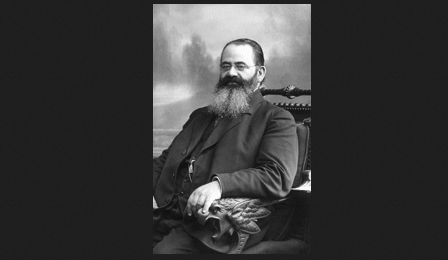
Historian Mark Gamsa summarizes it this way:
“For some of his critics, Vengerov’s colossal undertaking ended in deserved failure. In this view, his story is at best a cautionary tale about a scholar overwhelmed by his material; at worst, it is one about a wrong choice of profession” (Gamsa 2016).
Literary scholar Angela Brintlinger is more specific about the problem:
“Vengerov was unable to cull and organize the materials he gathered into true biographies. He was overwhelmed by the process and by the facts themselves. Vengerov’s approach to biography suffered from a very particular problem: wanting to include everything, he never finished anything” (Brintlinger 2018, 96).
To be sure, Vengerov died before he finished what he’d started. But having published prolifically and influenced a generation of Russian scholars, was he really a failure? Or does calling him one say more about the unrealistic scope of what he promised than about the value of what he actually achieved?
What Are Notes For?
If you find yourself writing notes and later discover that you now have rather a lot of them, there’s an underlying question which begs to be addressed, if not fully answered: what are they for?
Many people write notes simply because the act of writing is a way of thinking. They might agree with physicist Richard Feynman that writing is thinking. At the very least, you can’t really write without thinking. The sociologist Niklas Luhmann made an even stronger claim: you cannot think without writing, at least not systematically. As he put it in a note lodged carefully in his Zettelkasten:
“Behind the Zettelkasten technique stands the experience: You can’t think without writing - at least not in a sophisticated way, selective access to memory in demanding contexts. This also means: without marking differences, one cannot think.”
From this perspective, notes, at least in the first instance, are complete in themselves; they are thinking made visible.
Vengerov went much further than this. He appreciated “the love of, or rather the passion for scholarly labour as such, almost independently of the results that follow from it” (Byford 2003:7). He understood you actually had to enjoy the task, moment by moment. He lionised the painstaking, meticulous scholarly work epitomised by the Benedictine monks of Western Europe:
“The very process of work gives a true scholarly labourer a kind of pure psychological pleasure.” (Ibid.)
Well I’ll admit I’ve experienced a little of this in writing here about a now obscure Nineteenth Century Russian bibliographer. I mean, what am I thinking? Many though, myself included, write notes because we want to produce, well, writing: blog posts, articles, video or audio scripts, books even. In short, we want a public outcome. And given this aspiration, there might be a frisson of anxiety about whether, like Vengerov, we’re just going to end up with two million notes and no dictionary.
Lessons from the Cautionary Tale
So having encountered Vengerov’s extraordinary story, and taking it as a cautionary tale for note-making maximalists like me, here’s what I’m taking from it:
Under-promise and over-deliver
Vengerov wrote and published a great deal and was very influential. He was a great success! The only problem, really, is that he didn’t finish the dauntingly massive projects he himself had set out in public to finish. This made it look as though he failed. But in reality, who could have succeeded at the gargantuan tasks he embarked upon? In 1899 a contemporary of Vengerov’s, V.F. Shishmarev, argued:
“The love of learning compensates for all failures and all shortcomings that inevitably accompany the practical realization of any project.” (Byford 2003: 3).
I’m not so sure. For me, it’s worth finishing things, perhaps by limiting their scope.
Vengerov’s approach (announcing a massive 25-volume project and then appearing to fail to deliver it) contrasts sharply with that of Linus Torvalds, the founder of the near-ubiquitous computer operating system Linux. Torvalds famously opened his project with great modesty, claiming in his initial 1991 announcement that it “won’t be big and professional” and “probably never will support anything other than AT-harddisks.”
By setting expectations low, every achievement became a triumph rather than a shortfall. Linux now powers everything from smartphones to supercomputers.
The lesson here isn’t that you should lack ambition. It’s that you might consider announcing smaller milestones, while still, privately, pursuing larger goals.
Bite off less than you can chew
Take a step at a time, package it up, and call it a product. Then take another step.
Bent Flyvbjerg, the expert in mega-projects, claims the most successful large projects are completed by means of modularity. The Empire State Building, for example, was completed one storey at a time. A similar, relatively small process repeated over and over produces something bigger. Each floor was a complete unit; if construction had stopped at any point, there would have been a usable (if shorter) building.
Applied to note-taking and writing, I take this to mean: publish the limited article before attempting the extensive book. Release the provisional blog post before promising the comprehensive guide. Each complete smaller work is both valuable in itself and a building block for something larger.
Work collaboratively and delegate
Perhaps Vengerov could have finished his huge projects if he’d assembled a team to help him. As a postgraduate student, I was tangentially involved in a large dictionary project, and it was very clear back then that a project of this nature requires a large number of participants. Very rarely is such a task a one-person show.
Ironically, Vengerov was highly influential with the next generation of scholars whom he had trained. Perhaps his greatest legacy was the influential Pushkin seminars, which he started in St Petersburg in 1906. The formalist school, many of whose members he had taught, owed a great deal to him. But his own projects seem to have lacked the kind of team effort that might perhaps have seen them to completion. He knew how to teach and inspire others, but it seems he couldn’t translate that into collaborative production on his own work. My conclusion is, if you can’t do without a team, you should at least attempt to assemble one. Or, you know, just get someone to help you.
Use the data, don’t let the data use you
Fortunately, Vengerov’s students emulated his scholarly meticulousness without getting bogged down in his precise method. As Brintlinger puts it:
“Without the ‘data’ preferred by their professor, the biographies produced by the students would have lacked precision and verisimilitude; however, at the same time, the students moved past Vengerov’s fact-bound research to try to draw connections and make judgements about the psychological reasoning behind the actions of historical individuals.” (Brintlinger 2018, 114).
For me, this is perhaps the most important lesson. Notes, research, and data are means to an end, not ends in themselves. Vengerov’s students understood that scholarship means doing something with the facts: analyzing, synthesizing, interpreting, and ultimately, publishing. The two million filing cards were only valuable if they led somewhere beyond themselves.
A modest promise
So was Vengerov a failure? That depends on what we measure. He didn’t complete his stated projects, true. But “having published prolifically, Vengerov nonetheless did not complete his life’s work. He did leave an archive containing about two million filing cards” (Gamsa 2016). Importantly for Russian literary scholarship, he left a generation of scholars who learned from both his successes and his struggles.
This is the point where I might be expected to reach a conclusion, so here’s my attempt at one: the perfect comprehensive work may never be finished, but imperfect, incremental contributions can still matter enormously. Breaking down the task and making modest promises: these options always remain open. Far better to have published three volumes than to have left twenty-five in perfect form in your head. Better to have published one real volume than three imaginary ones. And if you do have a huge project in mind, it wouldn’t hurt to inspire others who will continue the work, perhaps in ways you never imagined.
Your two million notes might never become the definitive work you once envisioned. But they might become something else: something smaller, more focused, and actually useful. Or better yet, they might help you think clearly enough to create a series of smaller somethings, each complete in itself, each, like my little essay on Semyon Vengerov’s two million notes, a modest promise fulfilled.
—-
Now read:
What to do when you’ve made some notes: start writing.
Inside Georges Didi-Huberman’s monumental note archive.
Lord Acton took too many notes, but that doesn’t mean you have to.
Leibniz created a haystack of notes that wouldn’t fit in his Zettelschrank.
Thoughts are nest-eggs: Thoreau on Writing.
References
Brintlinger, Angela. “Lives and Facts: Biography in Russia in the 1920s.” The Slavonic and East European Review 96, no. 1 (2018): 94–116. www.jstor.org/stable/10…
Byford, Andy. “S. A. Vengerov: The Identity of Literary Scholarship in Late Imperial Russia.” The Slavonic and East European Review 81, no. 1 (2003): 1–31. www.jstor.org/stable/42…
Gamsa, Mark. “Two Million Filing Cards: The Empirical-Biographical Method of Semen Vengerov”, History of Humanities, vol. 1, no. 1 (March 2016), pp. 129–53. www.journals.uchicago.edu/doi/10.10…
I’m the author of Shu Ha Ri: The Japanese Way of Learning, for Artists and Fighters, available now.
And if you found this article interesting you might like to sign up to the Writing Slowly weekly email digest. You’ll receive all the week’s posts in that handy email format you know and love.*
Artists Books at the NSW State Library
I visited the State Library in Sydney recently, where I was inspired by an exhibition on artists’ books, called Paper Universe: The Book as Art. It’s open till 3 May 2026 and is well worth seeing.
There were books on display too about how to make your own books, which I also found inspiring.
And when I looked in on another exhibition about housing in Australia, I couldn’t help noticing that the Sirius Building, a famous brutalist landmark in Sydney, looks an awful lot like a set of books lined up along a shelf. I’ve never heard anyone say that this was the architect’s intent, but you can judge for yourself.

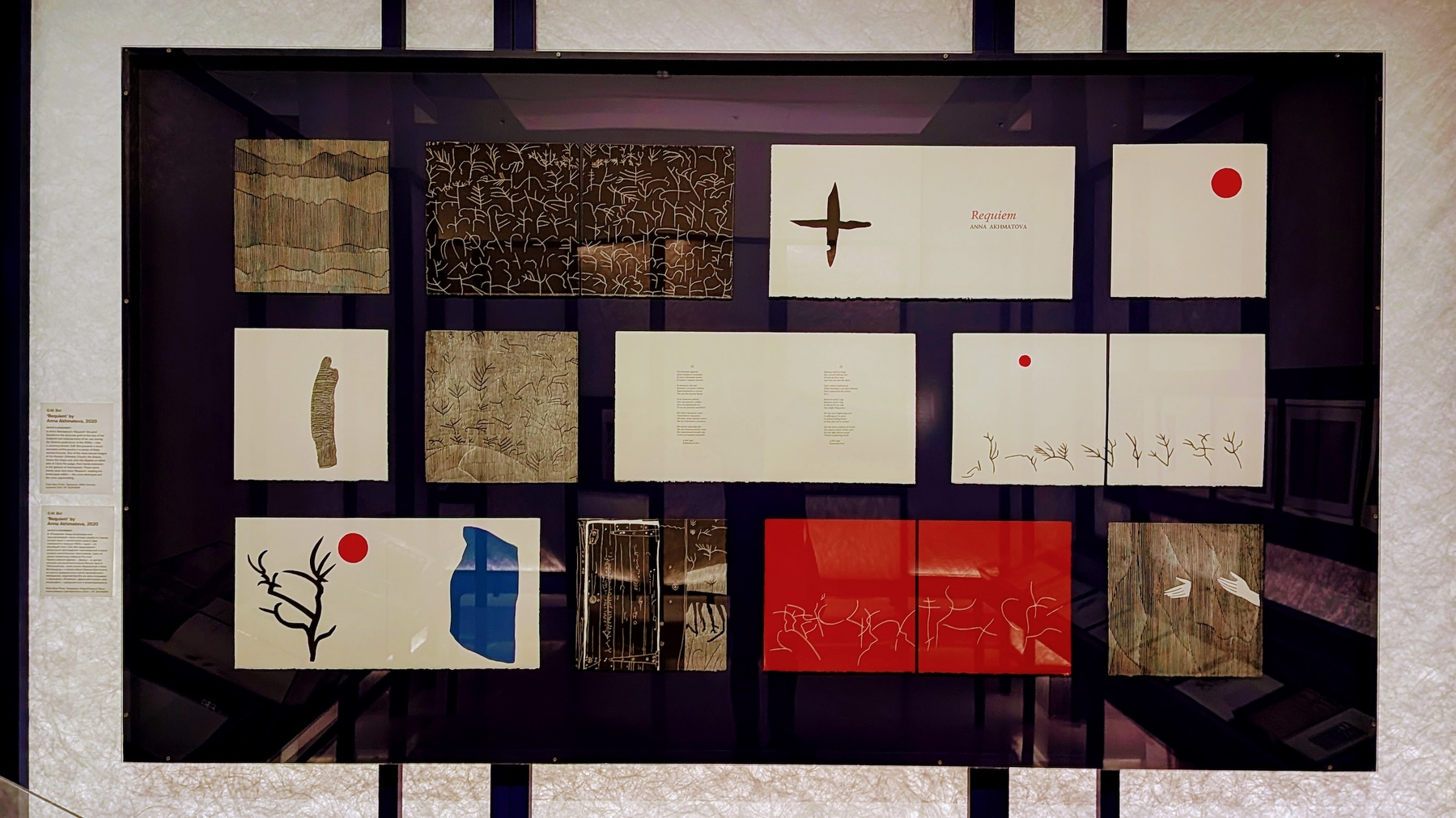
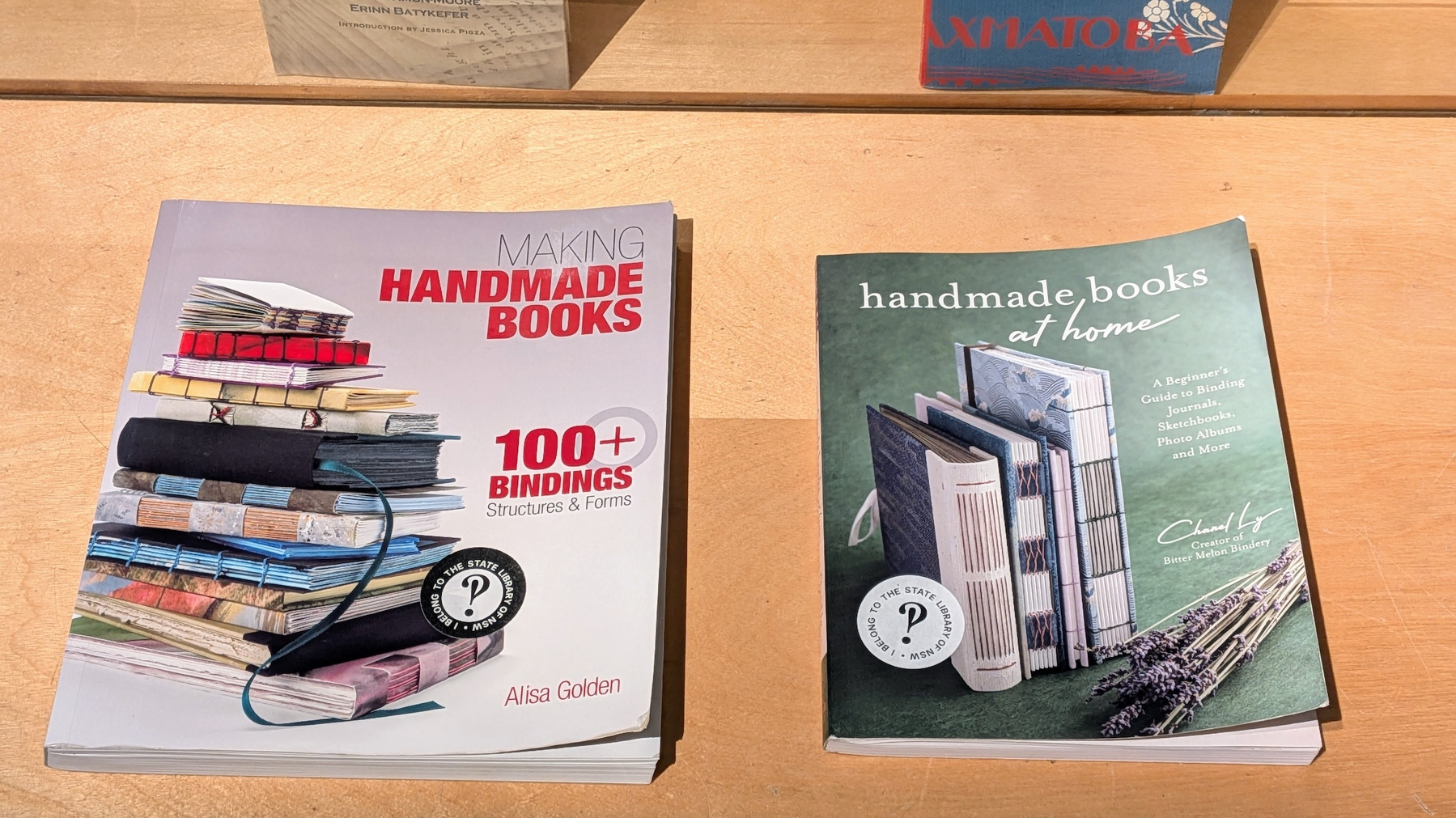


Photo of the Sirius Building by Katherine Lu - Own work, CC BY-SA 4.0, commons.wikimedia.org/w/index.p…
I guess I have made my own book: I’m the author of Shu Ha Ri. The Japanese Way of Learning, for Artists and Fighters, available now.
And for all the Writing Slowly goodness you can sign up to the weekly digest.
Why I wrote the book on Shuhari and what’s in it for you
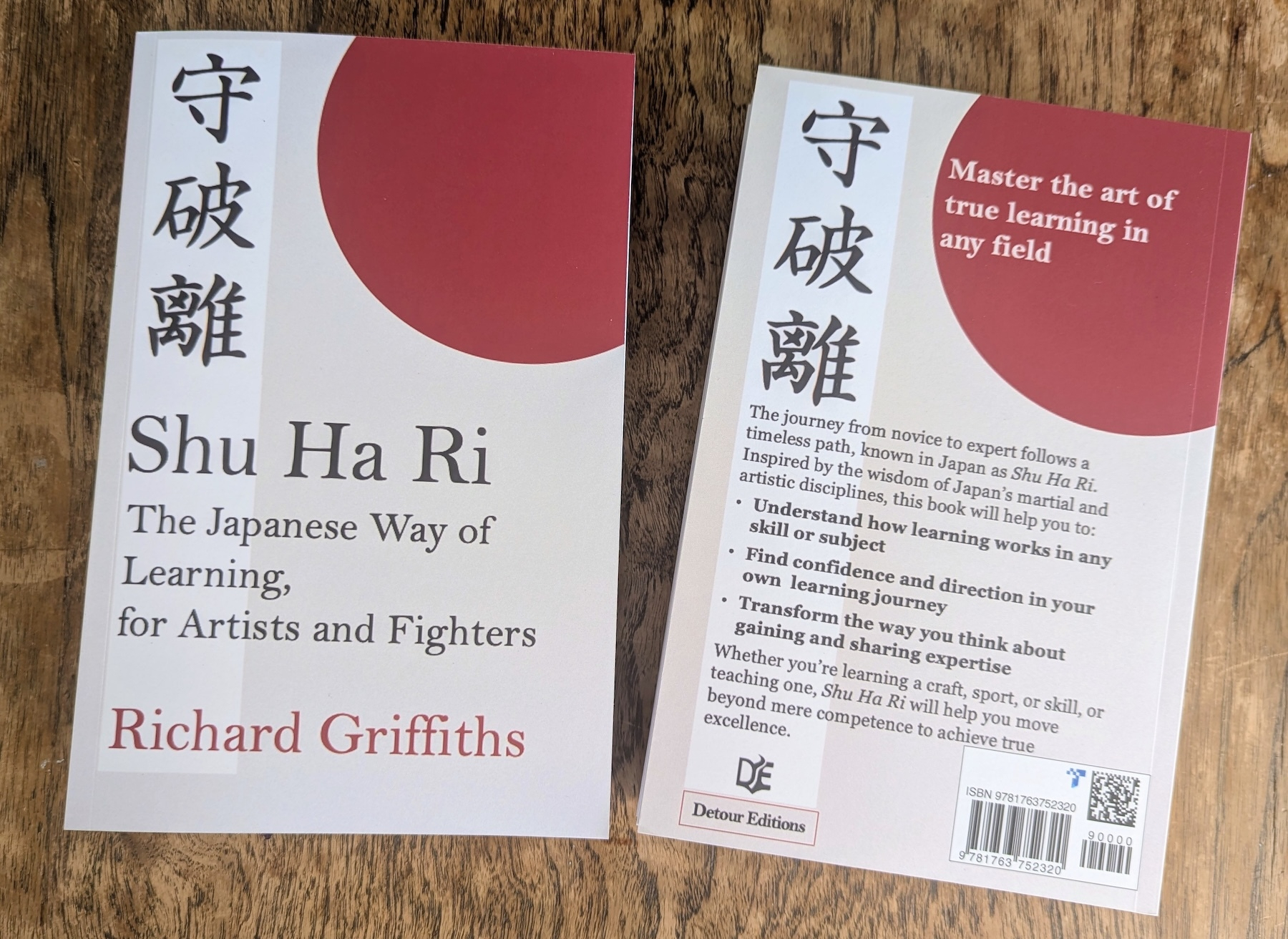
Well, a book doesn’t just write itself, but why should I be the one to write it? What made me decide to write an introduction to the Japanese concept of Shuhari? There were several reasons and here are five of them.
So anyway, I did the research, I read scores of books and articles, I took endless photographs (of which readers only get to see the best ones), I chased up obscure references, many in Japanese, with which I needed to gain at least a basic familiarity, and I visited Japan. Oh, and I wrote the book, designed the cover, and published it.
The result is Shu Ha Ri: The Japanese Way of Learning, For Artists and Fighters. I hope you enjoy it and find it useful.
One reviewer said:
”Simple in its structure, yet profound in the information it conveys, SHU HA RI is a must read for anyone wanting clarity on a tried and true approach to teaching and apprenticeship. A great resource for teachers, but also anyone interested in learning how to honor the teachings of precious masters while respectfully forging ahead.”
—-
Now read:
Japanese Shu Ha Ri: Is it better than Western learning methods?
There’s a fundamental flaw in how we learn about expertise.
Mastering any skill the Japanese way.
And of course, my book, Shu Ha Ri: The Japanese Way of Learning, for Artists and FIghters.
Some urgent notemaking questions find answers
From time to time I attempt to answer questions about note-making on Reddit.
It’s a tough job with few perks, but someone has to do it and for no obvious reason that person is me[^1]. So here’s a fresh bunch of my recent comments, with a disclaimer that, field-tested as they are, they’re not guaranteed to make you rich, famous or even mildly handsome, even if that’s how it’s worked out for me. I guess life is unfair like that.
Anyway, here goes.