
Two Million Notes and No Dictionary: Learning from Semyon Vengerov's Cautionary Tale
Russian bibliographer Semyon Vengerov (1855-1920) spent his life accumulating two million filing cards, but he died before he finished the dictionaries and bibliographies he set out to create.
His definitive account of Russian books from 1788 to 1893 was supposed to extend to 25 volumes, of which he completed only three. His biographical dictionary of Russian writers included six volumes, but these only covered the first three letters of the Russian alphabet. He published four volumes of his Sources for a Dictionary of Russian Writers, without making any more headway on the dictionary itself.
So was he a visionary scholar or did he end up simply overwhelmed by the weight of his own ambition?
And for anyone building a personal knowledge system today, for anyone doing their own research, for anyone making their own notes, his story raises an uncomfortable question: are we just accumulating notes, or are we actually creating something?
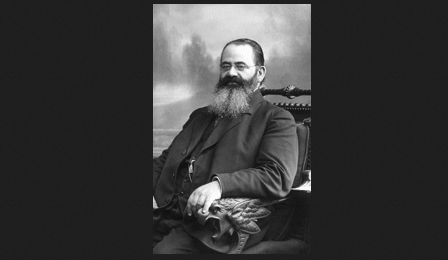
Historian Mark Gamsa summarizes it this way:
“For some of his critics, Vengerov’s colossal undertaking ended in deserved failure. In this view, his story is at best a cautionary tale about a scholar overwhelmed by his material; at worst, it is one about a wrong choice of profession” (Gamsa 2016).
Literary scholar Angela Brintlinger is more specific about the problem:
“Vengerov was unable to cull and organize the materials he gathered into true biographies. He was overwhelmed by the process and by the facts themselves. Vengerov’s approach to biography suffered from a very particular problem: wanting to include everything, he never finished anything” (Brintlinger 2018, 96).
To be sure, Vengerov died before he finished what he’d started. But having published prolifically and influenced a generation of Russian scholars, was he really a failure? Or does calling him one say more about the unrealistic scope of what he promised than about the value of what he actually achieved?
What Are Notes For?
If you find yourself writing notes and later discover that you now have rather a lot of them, there’s an underlying question which begs to be addressed, if not fully answered: what are they for?
Many people write notes simply because the act of writing is a way of thinking. They might agree with physicist Richard Feynman that writing is thinking. At the very least, you can’t really write without thinking. The sociologist Niklas Luhmann made an even stronger claim: you cannot think without writing, at least not systematically. As he put it in a note lodged carefully in his Zettelkasten:
“Behind the Zettelkasten technique stands the experience: You can’t think without writing - at least not in a sophisticated way, selective access to memory in demanding contexts. This also means: without marking differences, one cannot think.”
From this perspective, notes, at least in the first instance, are complete in themselves; they are thinking made visible.
Vengerov went much further than this. He appreciated “the love of, or rather the passion for scholarly labour as such, almost independently of the results that follow from it” (Byford 2003:7). He understood you actually had to enjoy the task, moment by moment. He lionised the painstaking, meticulous scholarly work epitomised by the Benedictine monks of Western Europe:
“The very process of work gives a true scholarly labourer a kind of pure psychological pleasure.” (Ibid.)
Well I’ll admit I’ve experienced a little of this in writing here about a now obscure Nineteenth Century Russian bibliographer. I mean, what am I thinking? Many though, myself included, write notes because we want to produce, well, writing: blog posts, articles, video or audio scripts, books even. In short, we want a public outcome. And given this aspiration, there might be a frisson of anxiety about whether, like Vengerov, we’re just going to end up with two million notes and no dictionary.
Lessons from the Cautionary Tale
So having encountered Vengerov’s extraordinary story, and taking it as a cautionary tale for note-making maximalists like me, here’s what I’m taking from it:
Under-promise and over-deliver
Vengerov wrote and published a great deal and was very influential. He was a great success! The only problem, really, is that he didn’t finish the dauntingly massive projects he himself had set out in public to finish. This made it look as though he failed. But in reality, who could have succeeded at the gargantuan tasks he embarked upon? In 1899 a contemporary of Vengerov’s, V.F. Shishmarev, argued:
“The love of learning compensates for all failures and all shortcomings that inevitably accompany the practical realization of any project.” (Byford 2003: 3).
I’m not so sure. For me, it’s worth finishing things, perhaps by limiting their scope.
Vengerov’s approach (announcing a massive 25-volume project and then appearing to fail to deliver it) contrasts sharply with that of Linus Torvalds, the founder of the near-ubiquitous computer operating system Linux. Torvalds famously opened his project with great modesty, claiming in his initial 1991 announcement that it “won’t be big and professional” and “probably never will support anything other than AT-harddisks.”
By setting expectations low, every achievement became a triumph rather than a shortfall. Linux now powers everything from smartphones to supercomputers.
The lesson here isn’t that you should lack ambition. It’s that you might consider announcing smaller milestones, while still, privately, pursuing larger goals.
Bite off less than you can chew
Take a step at a time, package it up, and call it a product. Then take another step.
Bent Flyvbjerg, the expert in mega-projects, claims the most successful large projects are completed by means of modularity. The Empire State Building, for example, was completed one storey at a time. A similar, relatively small process repeated over and over produces something bigger. Each floor was a complete unit; if construction had stopped at any point, there would have been a usable (if shorter) building.
Applied to note-taking and writing, I take this to mean: publish the limited article before attempting the extensive book. Release the provisional blog post before promising the comprehensive guide. Each complete smaller work is both valuable in itself and a building block for something larger.
Work collaboratively and delegate
Perhaps Vengerov could have finished his huge projects if he’d assembled a team to help him. As a postgraduate student, I was tangentially involved in a large dictionary project, and it was very clear back then that a project of this nature requires a large number of participants. Very rarely is such a task a one-person show.
Ironically, Vengerov was highly influential with the next generation of scholars whom he had trained. Perhaps his greatest legacy was the influential Pushkin seminars, which he started in St Petersburg in 1906. The formalist school, many of whose members he had taught, owed a great deal to him. But his own projects seem to have lacked the kind of team effort that might perhaps have seen them to completion. He knew how to teach and inspire others, but it seems he couldn’t translate that into collaborative production on his own work. My conclusion is, if you can’t do without a team, you should at least attempt to assemble one. Or, you know, just get someone to help you.
Use the data, don’t let the data use you
Fortunately, Vengerov’s students emulated his scholarly meticulousness without getting bogged down in his precise method. As Brintlinger puts it:
“Without the ‘data’ preferred by their professor, the biographies produced by the students would have lacked precision and verisimilitude; however, at the same time, the students moved past Vengerov’s fact-bound research to try to draw connections and make judgements about the psychological reasoning behind the actions of historical individuals.” (Brintlinger 2018, 114).
For me, this is perhaps the most important lesson. Notes, research, and data are means to an end, not ends in themselves. Vengerov’s students understood that scholarship means doing something with the facts: analyzing, synthesizing, interpreting, and ultimately, publishing. The two million filing cards were only valuable if they led somewhere beyond themselves.
A modest promise
So was Vengerov a failure? That depends on what we measure. He didn’t complete his stated projects, true. But “having published prolifically, Vengerov nonetheless did not complete his life’s work. He did leave an archive containing about two million filing cards” (Gamsa 2016). Importantly for Russian literary scholarship, he left a generation of scholars who learned from both his successes and his struggles.
This is the point where I might be expected to reach a conclusion, so here’s my attempt at one: the perfect comprehensive work may never be finished, but imperfect, incremental contributions can still matter enormously. Breaking down the task and making modest promises: these options always remain open. Far better to have published three volumes than to have left twenty-five in perfect form in your head. Better to have published one real volume than three imaginary ones. And if you do have a huge project in mind, it wouldn’t hurt to inspire others who will continue the work, perhaps in ways you never imagined.
Your two million notes might never become the definitive work you once envisioned. But they might become something else: something smaller, more focused, and actually useful. Or better yet, they might help you think clearly enough to create a series of smaller somethings, each complete in itself, each, like my little essay on Semyon Vengerov’s two million notes, a modest promise fulfilled.
—-
Now read:
What to do when you’ve made some notes: start writing.
Inside Georges Didi-Huberman’s monumental note archive.
Lord Acton took too many notes, but that doesn’t mean you have to.
Leibniz created a haystack of notes that wouldn’t fit in his Zettelschrank.
Thoughts are nest-eggs: Thoreau on Writing.
References
Brintlinger, Angela. “Lives and Facts: Biography in Russia in the 1920s.” The Slavonic and East European Review 96, no. 1 (2018): 94–116. www.jstor.org/stable/10…
Byford, Andy. “S. A. Vengerov: The Identity of Literary Scholarship in Late Imperial Russia.” The Slavonic and East European Review 81, no. 1 (2003): 1–31. www.jstor.org/stable/42…
Gamsa, Mark. “Two Million Filing Cards: The Empirical-Biographical Method of Semen Vengerov”, History of Humanities, vol. 1, no. 1 (March 2016), pp. 129–53. www.journals.uchicago.edu/doi/10.10…
I’m the author of Shu Ha Ri: The Japanese Way of Learning, for Artists and Fighters, available now.
And if you found this article interesting you might like to sign up to the Writing Slowly weekly email digest. You’ll receive all the week’s posts in that handy email format you know and love.*