Shu Ha Ri

    Imitating the greats?

    Imitation can be a very effective form of learning, but it’s worth considering who to imitate, and how.

    Writers often seek to imitate the greats, but it interesting how far the star of some supposedly timeless writers can fade. Here’s William Zinsser, the well-read author of ‘Writing to learn’, on how he did it.

    “Writing is learned by imitation. I learned to write mainly by reading writers who were doing the kind of writing I wanted to do and by trying to figure out how they did it. S. J. Perelman told me that when he was starting out he could have been arrested for imitating Ring Lardner. Woody Allen could have been arrested for imitating S. J. Perelman. And who hasn’t tried to imitate Woody Allen? Students often feel guilty about modeling their writing on someone else’s writing. They think it’s unethical—which is commendable. Or they’re afraid they’ll lose their own identity. The point, however, is that we eventually move beyond our models; we take what we need and then we shed those skins and become who we are supposed to become.”

    So who are these people I’ve never heard of, I wondered, who could all have been arrested for imitating one another? I mean, they couldn’t, could they? It’s not actually illegal, is it? Or did Zinsser mean plagiarism?

    It turns out that Ring Lardner was an American sports journalist and satirist whose work was greatly admired by many of the major authors who were his contemporaries. In his high school newspaper Ernest Hemingway used the pen name, ‘Ring Lardner Jr’. Lardner became a friend of F. Scott Fitzgerald and he inspired the writing of John O’Hara (another great writer whose name is seldom heard these days). In The Catcher in the Rye, J.D. Salinger gave Lardner a backhanded compliment by having his protagonist, Holden Caulfield, name Lardner as his second favourite author. So for Hemingway at least the juvenile imitation seems to have extended to impersonation.

    Clearly I need to read some Ring Lardner.

    S.J.Perelman was a humourist, writing especially for the New Yorker. He was admired by T.S. Eliot, Somerset Maugham, Garrison Keillor, Frank Muir, and Woody Allen. Another writer I’ve never heard of, who seems to have been inspirational. But then…

    “Who hasn’t tried to imitate Woody Allen?” Is a question I’ll leave hanging in the wind.

    Author and academic Adam Roberts has an interesting post about Jonathan Buckley’s novel, One Boat (2025), which appears to use Laurence Durrell’s adjectives as a model for how one of his own characters might over-write their diary. Durrell is an author whose star has certainly faded, even though he was nominated several times for the Nobel Prize for Literature. And his style is certainly not admired these days. As Roberts says,

    “giving his narrator these Durrellisms: the point of this adjectival affectation, or addiction, is to characterize her as someone groping, somewhat desperately, for expression, or the impossibility thereof”

    Well, whether this is a deliberate imitation in order to show a diarist whose purple prose, like Durrell’s gallops away from them, or whether, as Adam’s seems to suspect, it isn’t, whether Buckley was doing something very clever and ‘meta’ with his character’s imitation, or whether he was just getting away with it, all the same, the novel was long listed for the Booker Prize.

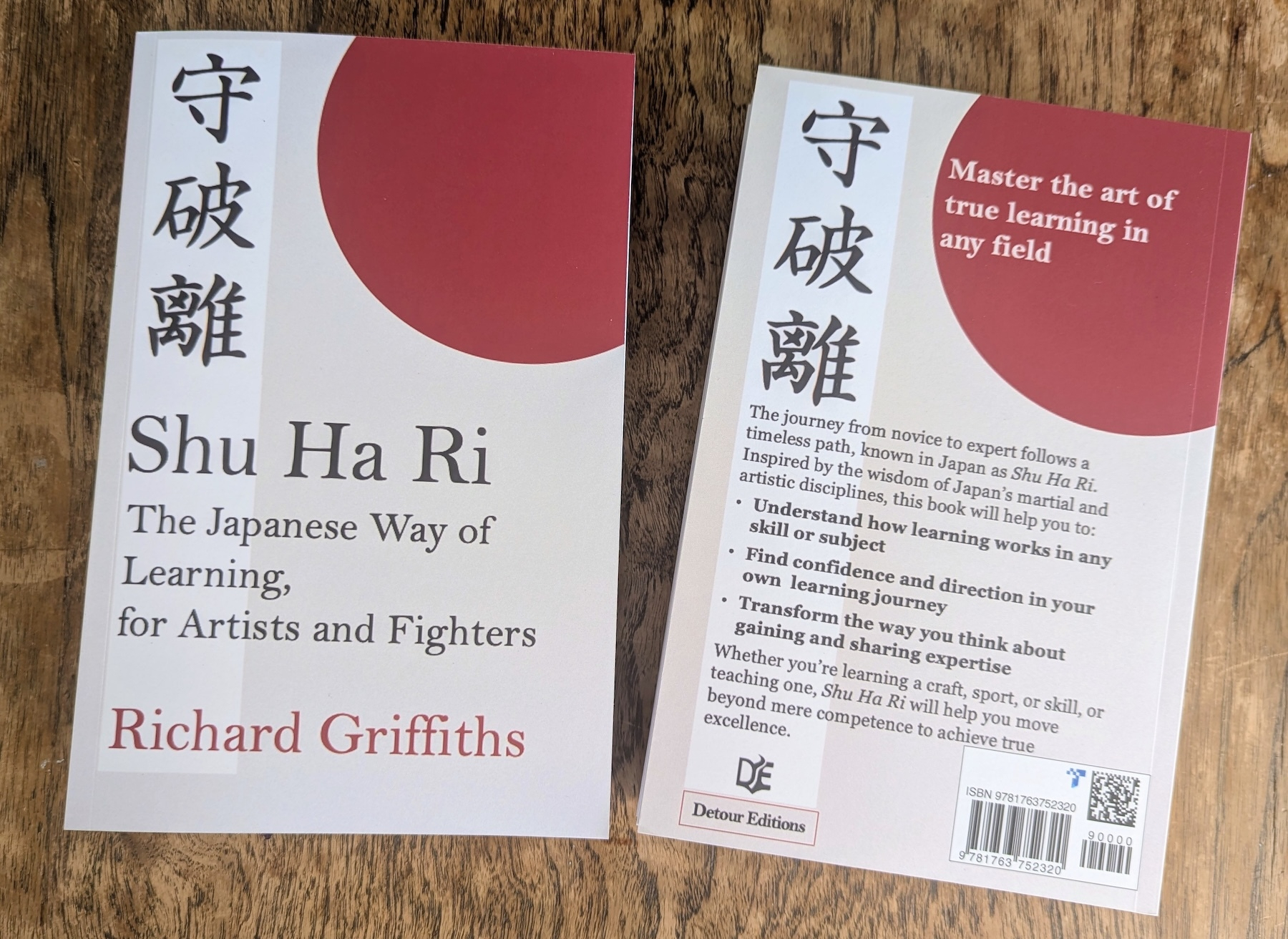
    I’m the author of Shu Ha Ri. The Japanese Way of Learning, for Artists and Fighters, available now.

    Japanese paper films

    Japanese paper films! What?

    Yes, in the 1930s the Japanese made a whole bunch of short movies using rolls of paper instead of celluloid.

    With the aid of a bright light and some clever mirrors this actually worked. But the technology never really took off and these paper movie reels, originally made for showing at home, were basically forgotten. Worse, the paper was fragile and highly susceptible to disintegration.

    Game over for paper films?

    Not quite.

    Researchers eventually realised what a treasure trove this is, if only it could be rescued. They worked out a way of restoring, or rather preserving, and digitising the remaining movies and now, amazingly, it’s possible to view them in all their preserved (not restored) quirkiness.

    I was lucky enough to be able to experience these paper films in a presentation to a packed house at the Art Gallery of New South Wales. There was live music too, which was exquisite, and really complemented the films that didn’t have an original ‘78 record soundtrack, which was the majority.

    The presenter was Professor Eric Faden, who has devoted an impressive amount of time and effort to ensure these unique cultural artifacts weren’t lost to decay. They’re now a showpiece of the 2025 Japanese Film Festival and a valuable element of Japanese and international film history.

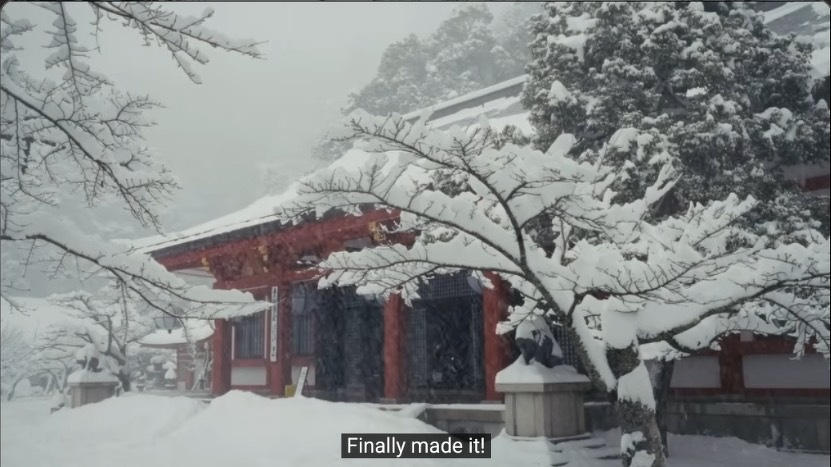
    A montage of the Japanese Paper Films presentation, showing stills from the paper reels.

    Now, through the magic of the Internet, you can see many of the recovered paper films for yourself, on the project’s Bluesky account.

    And here’s a news story from Japanese TV (English language).

    I’m the author of Shu Ha Ri. The Japanese Way of Learning, for Artists and Fighters, available now.

    Remembering Tea Master Sen Genshitsu (1923-2025), who spread peace through sipping.

    His philosophy is quoted on page 53 of my book, Shu Ha Ri: The Japanese Way of Learning: writingslowly.com/shuhari-b…

    #SenGenshitsu #Chado #Peace #ShuHaRi #UNESCO

    There's a fundamental flaw in how we learn about expertise

    Learn Spanish in eight days? Learn to ski in a weekend? Finish a novel in a month? Design a book in three and a half hours? (OK, that last one was me - long story).

    Everyone’s looking for shortcuts, but the way we approach learning fundamentally shapes how deeply we can master a skill.

    Auto-generated description: Three book covers featuring Speak Spanish in 8 Days, Learn to Ski in a Weekend, and The Ten Day Draft: A Writer's Guide to Finishing a Novel in Ten Days.

    In the West, we’ve mostly embraced a linear progression; we’re all supposed to move methodically from theoretical understanding to practical application. First you learn in school and college, and only later do they let you loose in the real world. This approach has served us well in academic institutions and technical training programs.

    But there exists an alternative philosophy that challenges this conventional wisdom: I’m referring to the Japanese concept of Shu Ha Ri.

    Western learning models are characteristically linear; they often begin with cognitive frameworks before advancing to hands-on practice. Students typically start with rules, theories, and simplified components before attempting the full complexity of their chosen discipline.

    In contrast, Shu Ha Ri represents a cyclical process that moves through three distinct phases: Shu (imitation), Ha (frustration), and Ri (detachment or transcendence). Rather than moving from simple to complex, this ancient framework begins with complete immersion in the master’s way.

    I propose instead that while Western models serve their purpose in structured, academic environments, the Shu Ha Ri approach offers a superior framework for achieving true mastery.

    This is particularly true in practical skills that demand intuitive understanding rather than merely intellectual comprehension. What’s more, Shu Ha Ri is a reminder that expertise isn’t truly linear anyway. The real experts continue to learn, and they’re always willing to accept they are still ‘beginners’ in a constantly changing world.

    For any complex skill, the more you know the more you realise you don’t know.

    A linear approach to learning makes sense but it’s not the only approach

    It’s true that Western educatonal psychology has produced several influential models that support linear skill acquisition.

    • Fitts & Posner’s Three-Stage Model of learning describes a clear progression beginning with the Cognitive stage, where learners consciously think through each movement whilst developing basic understanding. This advances to the Associative stage, characterised by refinement and error reduction as movements become more fluid. Finally, learners reach the Autonomous stage, where skills become largely unconscious.
    • Adams’s Two-Stage Model offers a simpler linear progression from the Verbal-Motor stage to the Motor stage, where performance becomes increasingly automatic.
    • Perhaps most influential is Scaffolding and Fading, an approach rooted in Lev Vygotsky’s theory of the ‘zone of proximal development’. This approach deliberately simplifies complex skills into manageable components, and the teacher provides extensive support initially before gradually removing assistance.

    These models, and others like them, share a common thread: they assume that effective learning requires moving from simple, understood components toward complex, integrated performance.

    Clearly there’s a lot of truth to this view.

    But it’s not the only way of looking at things.

    Shu Ha Ri is superior for mastery

    These Western models excel at creating competent practitioners, but they may inadvertently limit the development of true mastery.

    By prioritising theoretical understanding and simplified components, these approaches can create barriers to the deep, intuitive knowledge that characterises genuine expertise.

    So what should we be doing instead?

    1. Embrace the “Whole” over the “Simplified”

    Western scaffolding deliberately fragments skills into digestible pieces. A violin student might spend a long time on bow hold or scales before attempting a simple melody, or a chef might practice knife cuts in isolation before approaching actual recipes. Culinary schools may dedicate days, or even weeks, solely to practicing various knife cuts (brunoise, julienne, etc.) to achieve consistency and speed before they are used in actual recipes.

    This reductionist approach, though logical enough, can hinder or even prevent learners from experiencing the skill’s true essence.

    The Shu Ha Ri model takes a radically different approach.

    In the Shu stage, students engage immediately with the complete, unsimplified form. A student of the Japanese tea ceremony doesn’t begin with simplified movements or theoretical principles; they observe and attempt to replicate the real ritual from their very first lesson. The ritual is scaled: the student will start with the most basic, fundamental, and shortest temae (like hira-denae or a simplified usucha preparation). The master will hold back more complex tools and procedures, and will reserve advanced philosophical lessons for later in the training. While the ‘complete ritual’ is the simplest version the master has to offer, nevertheless the experience is holistic from day one, even if the content is strategically simplified.

    This immersion in the “whole” allows learners to absorb subtle relationships between components that might be lost in a fragmented approach.

    2. Prefer Imitation to Cognition

    Western educational models often place considerable emphasis on cognitive understanding before physical practice.

    Shu Ha Ri fundamentally inverts this priority. The Shu stage prioritises imitation and embodied practice while deliberately minimising cognitive load.

    Students are encouraged to copy their master’s movements, timing, and approach without initially concerning themselves with underlying principles. This allows for “embodied cognition” to develop naturally through physical practice rather than intellectual analysis.

    This difference becomes particularly apparent in disciplines that require split-second decision-making or subtle physical adjustments, as in martial arts.

    But it also applies in contemplative skills such as shodo (calligraphy), ikebana (flower arranging) or, as mentioned already, the Tea Ceremony.

    An artist learning through traditional Western methods might spend considerable time studying color theory and linear perspective before picking up a brush. The Shu Ha Ri approach would complement this with extensive observation and assisted practice, to allow the trainee to develop a practical understanding of line weight, shadow behavior, and subtle material texture that cannot be fully captured in textbooks.

    3. Recognise Cyclical Refinement, not Finite Progression

    Western models typically imply completion.

    Eventually you graduate, which supposedly means you’ve reached a final “autonomous” stage where learning essentially concludes. Off you go!

    The Shu Ha Ri model presents a fundamentally different philosophy. Rather than linear progression toward completion, it describes a cyclical journey of continuous refinement.

    After achieving mastery, practitioners commonly return to foundational practices (Shu) with deeper understanding, uncovering subtleties previously invisible to them.

    A master calligrapher might return to basic brush strokes after decades of practice, finding new depths in movements they’ve performed thousands of times.

    This cyclical nature suggests that true mastery isn’t really a destination but rather an ongoing process of deepening understanding.

    Sorry: it takes more than a weekend

    Western learning models possess considerable strengths, particularly in academic settings where clear progression markers are essential.

    They prove invaluable for complex technical skills where safety and precision demand systematic understanding. Medical training, engineering education, and scientific research obviously all benefit from structured, theoretical foundations.

    That said, when our goal extends beyond competency to genuine mastery, particularly in practical skills that require intuitive understanding or creative expression, the Shu Ha Ri model, I believe, offers a more complete framework.

    The traditional Japanese approach recognises that true mastery involves more than accumulated knowledge or perfected technique. It encompasses a quality of understanding that emerges through sustained practice, through cyclical refinement, and through a deep immersion in complete forms rather than in fragmented components.

    True, linear models can efficiently create capable practitioners. But the cyclical, holistic, and imitation-based philosophy of Shu Ha Ri nurtures the lifelong pursuit of true mastery.

    We’re obsessed these days with speed and with rapid skill acquisition: Speak Spanish in a weekend! Learn to ski in ten days! Finish your novel in just eight!

    Good luck with that.

    Meanwhile, the ancient wisdom of Shu Ha Ri reminds us that the deepest forms of human expertise can’t be rushed or simplified. Instead, they must be lived, embodied, and continually refined, through patient, cyclical practice.

    In a future article I’ll offer some practical takeaways for your own learning journey. Meanwhile, you might like to check out my book, Shu Ha Ri: The Japanese Way of Learning, for Artists and Fighters, which is available right now.

    A group of monks dressed in traditional robes and sandals walk in a solemn procession along a street.

    References

    • Adams, J. A. (1971). A closed-loop theory of motor learning. Journal of Motor Behavior, 3(2), 111-150.
    • Fitts, P. M., & Posner, M. I. (1967). Human performance. Brooks/Cole.
    • Hammerness, K., Darling-Hammond, L., & Bransford, J. (2005). How teachers learn and develop. In L. Darling-Hammond & J. Bransford (Eds.), Preparing teachers for a changing world: What teachers should learn and be able to do (pp. 358-389). Jossey-Bass.
    • Hoffman, S. (2009). Introduction to kinesiology: Studying physical activity (3rd ed.). Human Kinetics.
    • Kato, T. (2012). The traditional Japanese learning model: Shu-Ha-Ri. In M. Nakamura & T. Yamamoto (Eds.), Cultural approaches to skill acquisition (pp. 67-89). Tokyo Academic Press.
    • Magill, R. A., & Anderson, D. I. (2017). Motor learning and control: Concepts and applications (11th ed.). McGraw-Hill Education.
    • Schmidt, R. A., & Lee, T. D. (2019). Motor learning and performance: From principles to application (6th ed.). Human Kinetics.
    • Vygotsky, L. S. (1978). Mind in society: The development of higher psychological processes. Harvard University Press.
    • Wood, D., Bruner, J. S., & Ross, G. (1976). The role of tutoring in problem solving. Journal of Child Psychology and Psychiatry, 17 (2), 89-100.

    Image credit: Photo by Nathalie SPEHNER on Unsplash

    A clear and accessible introduction to Japanese philosophy, in a podcast with Takeshi Morisato.

    Philosophy Bites episode 388

    I’m the author of Shu Ha Ri: The Japanese Way of Learning, for Artists and Fighters, available now.

    #JapanesePhilosophy #Podcast #ShuHaRi #Japan #Learning #TakeshiMorisato

    AI is not helping the learning process

    💬 “When teachers rely on commonly used artificial intelligence chatbots to devise lesson plans, it does not result in more engaging, immersive or effective learning experiences compared with existing techniques”

    AI-generated lesson plans fall short on inspiring students and promoting critical thinking | The Conversation

    See also:

    Civic Education in the Age of AI: Should We Trust AI-Generated Lesson Plans? | CITE Journal

    I’m the author of Shu Ha Ri: The Japanese Way of Learning, for Artists and Fighters, available now.

    A person holds a book in front of their face while standing against a brick wall.

    Image credit: unsplash

    What’s your most valuable note?

    @eleanorkonik@pkm.social asked:

    “Any examples where a tiny note became unexpectedly valuable?”

    Here’s my reply.

    In 2018 I wrote a note describing how I’d like to visit Japan and learn more about the concept of Shu Ha Ri.
    Better late than never I did visit Japan, and I ended up writing the book on Shu Ha Ri.
    There was a lot of value in that one short note.

    A screenshot of a Mastodon post about a useful note

    Create your own mental models

    When he was still in high school my cousin took to pulling old cars apart, completely, then putting them back together. This was a real learning experience, and the beginning of an entire career working with motor vehicles. François Chollet, author of Deep Learning with Python, said:

    💬 To really understand a concept, you have to “invent” it yourself in some capacity. Understanding doesn’t come from passive content consumption. It is always self-built. It is an active, high-agency, self-directed process of creating and debugging your own mental models. - as quoted by Simon Willison.

    This is what I’m doing with my collection of working notes, my Zettelkasten. I disassemble ideas and concepts, de-contextualise them, and reassemble them into new arrangements under quite different circumstances. From fragments you can build a greater whole.

    Sometimes ‘invention’ is mashing together two or more existing ideas in new and unexpected ways. But sometimes it’s simply rebuilding an existing idea from the ground up, to create something previously unimaginable.

    I wrote my book about the Japanese concept of learning, Shu Ha Ri, because in the fifteen years since I first encountered this concept, no one else had written a clear introduction. It’s quite literally the book I wanted to read for myself. Well, I certainly didn’t invent the idea, but in writing the definitive introduction I’ve certainly taken it apart, examined it from every angle, worked out how to explain it to others, and put it back together.

    On Friday I received a nice text from a martial arts instructor, who’d been handed the book by someone else:

    💬 I absolutely loved it. First time in a long time I immediately reread a book.

    And so I hope you’ll enjoy giving the book a test drive too.

    A vintage car is driving along a former railway line near Trawsfynydd, Wales, through a rural landscape with rolling hills in the background. Photo by Geoff Charles, 1962. National Library of Wales. Llyfrgell Genedlaethol Cymru / The National Library of Wales on Unsplash

    Check out my book, Shu Ha Ri: The Japanese Way of Learning, for Artists and Fighters. And you can also subscribe to the weekly Writing Slowly email newsletter.

    📷 Outside Matsumoto Castle it was raining gently.

    The traditional Japanese castle at Matsumoto stands in the background as people with umbrellas walk through a garden in the foreground on a rainy day.

    My book, Shu Ha Ri: The Japanese Way of Learning, for Artists and Fighters, is out now. Please check it out.

    #MatsumotoCastle #Photography #JapanCulture #ShuHaRi #Learning #MartialArts #Nonfiction #JapanTravel

    Provocative words about learning, teaching, AI, and the timely value of history

    Do you like links? Here’s what I’ve come across on the Web lately: provocative words about learning, teaching, AI, and the timely value of history.

    💬 “What A.I. can’t do is feel the shape of silence after someone says something so honest we forget we’re here to learn. What it can’t do is pause mid-sentence because it remembered the smell of its father’s old chair. What it can’t do is sit in a room full of people who are trying—and failing—to make sense of something that maybe can’t be made sense of. That’s the job of teaching.” — Sean Cho A. on teaching college during the rise of AI The Rumpus.

    💬 “When human inquiry and creativity are offloaded to anthropomorphic AI bots, there is a risk of devaluing critical thinking while promoting cognitive offloading. If we turn the intellectual development of the next generation over to opaque, probabilistic engines trained on a slurry of scraped content, with little transparency and even less accountability, we are not enhancing education; we are commodifying it, corporatizing it, and replacing pedagogy with productivity.” —  Courtney C. Radsch, We should all be Luddites • Brookings.

    💬 “While the school says its students test in the top 1% on standardized assessments, AI models have been met with skepticism by educators who say they’re unproven.” — The $40,000 a year school where AI shapes every lesson, without teachers. CBS News. Wikipedia: Alpha School. I’ll revisit this in a few years to see just how hard it crashed (or not).

    💬 “As our lives become more enmeshed with technological devices, services, and processes, I think that awareness is something which we the technology-wielding should strive for if we want to build a properly humane and empathic world.” — Matthew Lyon, The Fourth Quadrant of Knowledge • lyonheart.

    💬 “Knowledge of history and awareness of history can allow us to see patterns, make connections, and identify incipient problems. It can give us a language and a set of references which allows us to step back, broaden our view, and see things and sometimes warn ourselves and others when necessary.” — Timothy Snyder on Stalin and Stephen Miller.

    I’m the author of Shu Ha Ri. The Japanese Way of Learning, for Artists and Fighters, available now.. And for all the crunchy, fresh Writing Slowly goodness you can sign up to the weekly digest. It’s exactly like a bunch of radishes, but made out of email.

    Five freshly harvested radishes with leaves and soil are arranged on a wooden surface.

    Publishing means no more hiding

    Revelation must be terrible, knowing you can never hide your voice again. – David Whyte

    Publishing my book, I had the strange feeling of having crossed an invisible but very powerful threshold.

    It was while signing copies at a small and very supportive gathering, that it dawned on me that the thoughts that used to be just in my head are now public and exposed to the world – and since I’ve lodged this work in every State Library in Australia, they’ll never again be totally private.

    I had thought I just wanted to publish my words, to release my book into the wild, as it were, to allow it to find its readers.

    So it never occurred that I might have been benefiting in some way from the obscurity of the drafting process.

    Not that I want to hide my voice – far from it.

    Nor that I’m expecting a million readers. Again, far from it.

    But the knowledge that I now have one unique reader – you – with whom my words will perhaps connect whether I bid them or not, well that changes things somehow.

    And it’s certainly a revelation to realise there’s no going back.

    My book, Shu Ha Ri: The Japanese Way of Learning, for Artists and Fighters, is out now. Please check it out.

    Colourful koi fish swim gracefully in a pond, surrounded by a few scattered leaves.

    Curious about Hypercuriosity

    One reason I make notes and write is that I’m curious about everything.

    I’ve written previously about how to be interested in everything. And I’ve also written about busybodies, hunters and dancers - three different styles of curiosity.

    It was the ‘dancer’ style of curiosity that resonated most with me:

    “This type of curiosity is described as a dance in which disparate concepts, typically conceived of as unrelated, are briefly linked in unique ways as the curious individual leaps and bounds across traditionally siloed areas of knowledge. Such brief linking fosters the generation or creation of new experiences, ideas, and thoughts.”

    So I was interested to see that Anne-Laure Le Cunff, author of Tiny Experiments and founder of Ness Labs, Has been exploring what she calls ‘hypercuriosity’, which may be associated with ADHD.

    Well, I guess I’m the living proof. I set out this evening to write about my book, Shu Ha Ri: The Japanese Way of Learning for Artists and Fighters but I ended up writing about something completely different instead: hypercuriosity.

    Come to think of it, that’s how the book got written in the first place, by pursuing my curiosity. And come to think of it, that’s how I do practically everything.

    In writing the book I was particularly attracted by the value placed on the Japanese concept of shoshin (初心), ‘beginner’s mind’ - a quality often downplayed in Western contexts, where experts are supposed to already know everything.

    I’m more interested in not knowing - and then going to great lengths to find out.

    Links:

    Brar, G. (2024, November 14). The hypercuriosity theory of ADHD: An interview with Anne-Laure Le Cunff. Evolution and Psychiatry (Substack).

    Gupta, S. (2025, September 16). People with ADHD may have an underappreciated advantage: Hypercuriosity. Science News.

    Le Cunff, A. (2024). Distractability and impulsivity in ADHD as an evolutionary mismatch of high trait curiosity. Evolutionary Psychological Science, 10, 282.

    Le Cunff, A. (2025, July 15). When curiosity doesn’t fit the world we’ve built: How do we design a world that supports hypercurious minds? Ness Labs.


    If you’re curious to catch the latest Writing Slowly action, please subscribe to the weekly email digest. All the posts, delivered straight to your in-box.

    A cat with striking blue eyes is peeking out from inside a paper bag.

    Author Craig Mod seems to be following me. I saw his picture in Kyoto Station. Now he’s doing a 200km walk in the Kiso valley, where I walked just a few days ago. Follow his latest pop-up newsletter Between Two Mountains for a unique view of Japan.

    A small, rustic Japanese train station building stands against a backdrop of mountains under a cloudy sky.

    #KisoValley #Japan #Walking #Travel #SlowTravel

    Japanese Shu Ha Ri: Is it Better Than Western Learning Methods?

    I’m the author of Shu Ha Ri: The Japanese Way of Learning, for Artists and Fighters, available now.

    The way we approach learning fundamentally shapes how deeply we can master a skill. In the West, we’ve largely embraced linear progression. We move methodically from theoretical understanding to practical application. And the dominant image of learning is that of a ladder or a pyramid which the learner climbs step by step to reach the top. Yet there exists an alternative philosophy that challenges this conventional wisdom. It’s the Japanese concept of Shu Ha Ri. It’s not better, perhaps, but I’ve found it different in interesting and fruitful ways. Interesting enough to write a short introduction to the concept, since no one else had done so.

    Western learning models, certainly those I grew up with, characteristically begin with cognitive frameworks before advancing to hands-on practice. Students typically start with rules and theories before attempting simplified components. Only then do they attempt the full complexity of their chosen discipline. In contrast, Shu Ha Ri represents a cyclical process. It moves through three distinct phases:

    • Shu (imitation),
    • Ha (innovation), and
    • Ri (detachment or transcendence).

    This isn’t so much a ladder, a one-way journey, as a circle, or better, a repeated spiral, in which experts don’t stop learning but return to the basics and understand them anew.

    While Western models serve their purpose in structured environments, the Shu Ha Ri approach offers crucial insights for achieving true mastery, particularly in disciplines that demand intuitive understanding rather than merely intellectual comprehension.

    How Western Linear Learning Actually Works

    Western psychology has produced several influential models that support linear skill acquisition.

    • Fitts & Posner’s Three-Stage Model describes progression from the Cognitive stage, where learners consciously think through each movement. It then moves to the Associative stage of refinement and error reduction. Finally, it reaches the Autonomous stage where skills become largely unconscious.

    • Adams’s Two-Stage Model offers a simpler linear progression from the Verbal-Motor stage to the Motor stage, where performance becomes increasingly automatic.

    • The Dreyfus model proposes that learners progress through five levels: novice, advanced beginner, competent, proficient, and expert.

    • Perhaps most influential is Scaffolding and Fading, rooted in Lev Vygotsky’s theory of the proximal zone of development. This approach deliberately simplifies complex skills into manageable components, with teachers providing extensive initial support before gradually removing assistance.

    All these models assume that effective learning requires moving from simple, understood components toward complex, integrated performance. Obviously this isn’t wrong. But this linear progression may inadvertently create barriers to the deep, intuitive knowledge that characterizes genuine expertise.

    Why Shu Ha Ri Creates Deeper Mastery

    Western models excel at creating competent practitioners, but they may limit the development of true mastery. By prioritizing theoretical understanding and simplified components, these approaches can prevent learners from accessing the profound depths that Shu Ha Ri makes possible.
    An important aspect of learning risks being overlooked - the way in which students often learn best from observing and imitating practitioners in action. As psychologist Albert Bandura observed, learning is fundamentally a social activity.

    Does Starting With the “Whole” Beat the “Simplified”?

    Western scaffolding deliberately fragments skills into digestible pieces. A violin student might spend considerable time on bow hold before attempting a simple melody, or a chef might practice knife cuts in isolation before approaching actual recipes. Yet this reductionist approach, though logical, can prevent learners from experiencing the skill’s true essence.

    Shu Ha Ri takes a radically different approach. In the Shu stage, students engage immediately with the complete, unsimplified form. Recently I visited the Japanese city of Matsumoto, which is where music educator Shinichi Suzuki (1898-1998) lived and worked. I remembered first encountering the Suzuki method of music education years previously, and marveling at how very young children were encouraged to play complete pieces of music and to be immersed in musical culture from a very young age. A student of the Japanese tea ceremony doesn’t begin with broken-down movements or theoretical principles. They observe and attempt to replicate an entire ritual (known as temae), albeit simplified, from their very first lesson. And this immersion in the “whole” allows learners to absorb subtle relationships between components that might be lost in fragmented approaches.

    Why Imitation Surpasses Cognition

    Western educational models place considerable emphasis on cognitive understanding before physical practice. Shu Ha Ri fundamentally inverts this priority. The Shu stage prioritizes imitation and embodied practice while deliberately minimizing cognitive load.
    This is somewhat consistent with Albert Bandura’s presentation of observational learning, and the idea that we learn best not in isolation, but socially, by observing and imitating effective practitioners.

    Students are encouraged to copy their master’s movements and timing without initially concerning themselves with underlying principles. And this allows “embodied cognition” to develop naturally through physical practice rather than intellectual analysis.

    A jazz musician learning through traditional Western methods might spend considerable time studying music theory and chord progressions before improvising. But the Shu Ha Ri approach would emphasize extensive listening and playing along with masters. This allows the musician to develop intuitive understanding of rhythm and phrasing, along with harmonic relationships and timing that cannot be fully captured in theory books. This was in fact very close to the approach of Clark Terry (1920-2015), legendary jazz trumpeter and educator, who proposed:

    “imitation, assimilation, and then innovation”.

    Can Learning Be Cyclical Rather Than Linear?

    Western models typically imply completion. They suggest reaching a final “autonomous” stage where learning essentially concludes. Newly minted experts risk being led to believe they have somehow finished their education. Perhaps we have to keep talking about ’lifelong learning’ because otherwise we might forget to do it. But Shu Ha Ri presents a fundamentally different philosophy. Rather than linear progression toward completion, it describes a cyclical journey of continuous refinement.

    After achieving mastery (Ri), practitioners commonly return to foundational practices (Shu) with deeper understanding. They uncover subtleties previously invisible to them. So a master calligrapher might return to basic brush strokes after decades of practice. By returning to their ‘beginner’s mind’ they may find new and previously unrecognised depths in movements they’ve performed thousands of times. This cyclical concept suggests that true mastery isn’t a destination. It’s an ongoing process of deepening understanding.

    Which Path Actually Leads to Mastery?

    Western learning models possess considerable strengths, particularly in academic settings where clear progression markers are essential. These models prove invaluable for complex technical skills where safety and precision demand systematic understanding. Medical training, engineering education, and scientific research all benefit from structured, theoretical foundations.

    However, when our goal extends beyond competency to genuine mastery, Shu Ha Ri offers a complimentary framework. This is particularly true in disciplines requiring intuitive understanding or creative expression. And the traditional Japanese approach recognizes that true mastery involves more than accumulated knowledge or perfected technique.

    Shu Ha Ri encompasses a quality of understanding that emerges through sustained practice and cyclical refinement. It prioritizes deep immersion in complete forms and wholeness over fragmented components. Linear models efficiently create capable practitioners. But the cyclical and holistic philosophy of Shu Ha Ri nurtures the lifelong pursuit of true mastery. Its imitation-based approach and emphasis on complete forms creates deeper understanding than fragmented learning.

    We’re increasingly focused on rapid skill acquisition and short cuts to expertise. Yet this ancient wisdom reminds us that the deepest forms of human expertise can’t be rushed or simplified. They must be lived, embodied, and continually refined through patient, cyclical practice.

    Read more in Shu Ha Ri: The Japanese Way of Learning, for Artists and Fighters.
    And did you know you can sign up to the Writing Slowly weekly email digest?


    References

    Adams, J. A. (1971). A closed-loop theory of motor learning. Journal of Motor Behavior, 3(2), 111-150.

    Bandura, A. (1962). Social Learning through Imitation. University of Nebraska Press: Lincoln, NE.

    Bradić, S., Kariya, C., Callan, M., & Jones, L. (2023). Universality and applicability of shu-ha-ri concept through comparison in everyday life, education, judo and kata in judo. The Arts and Sciences of Judo (ASJ) Vol. 03 No. 02.

    Dreyfus S, Dreyfus H. (1980). A five stage model of the mental activities involved in directed skill acquisition. California University Berkeley Operations Research Center. Accessed at www.dtic.mil/dtic/inde…

    Fitts, P. M., & Posner, M. I. (1967). Human performance. Brooks/Cole.

    Freimann, R. (nd) An Interview with Clark Terry. banddirector.com. Accessed at https://banddirector.com/interviews/an-interview-with-clark-terry-by-rachel-freiman/

    Hammerness, K., Darling-Hammond, L., & Bransford, J. (2005). How teachers learn and develop. In L. Darling-Hammond & J. Bransford (Eds.), Preparing teachers for a changing world: What teachers should learn and be able to do (pp. 358-389). Jossey-Bass.

    Magill, R. A., & Anderson, D. I. (2017). Motor learning and control: Concepts and applications (11th ed.). McGraw-Hill Education.

    Peña A. (2010). The Dreyfus model of clinical problem-solving skills acquisition: a critical perspective. Medical education online, 15, 10.3402/meo.v15i0.4846. Accessed at doi.org/10.3402/m….

    Vygotsky, L. S. (1978). Mind in society: The development of higher psychological processes. Harvard University Press.

    Wood, D., Bruner, J. S., & Ross, G. (1976). The role of tutoring in problem solving. Journal of Child Psychology and Psychiatry, 17(2), 89-100.

    Keeping a diary is a way of living

    “A diary is not only a text: it is a behaviour, a way of life, of which the text is a by-product" - French theorist Philipe Lejeune. Source: Arts & Ideas Podcast.

    Exactly so. I have a journalling habit, which fuels my Zettelkasten, (my collection of linked notes), which in turn fuels my writing. This in turn affects my life, which I journal about. It’s a virtuous circle.

    A handwritten index card features a circular flow diagram with the concepts Journal, Zettelkasten, Writing, Publishing, and Life, accompanied by notes and timestamps.

    I’m the author of Shu Ha Ri: The Japanese Way of Learning, for Artists and Fighters.
    And did you know you can sign up to the Writing Slowly weekly email digest?

    Some books I read before visiting Japan.

    #reading #Japantravel #shuhari

    Fifteen books about Japan, spines upright on a white surface next to a leafy house plant.

    Western learning is linear; mastery is cyclical. A new article will show exactly why the Japanese concept of Shu Ha Ri offers a more effective path to true expertise than conventional Western methods. Is it time to unlearn how we learn?

    #ShuHaRi #Learning #Mastery

    The hills just to the North of Kyoto, from Kurama-dera temple. There’s a cool breeze up here, seemingly far removed from the sweltering city.

    Shu Ha Ri: The Japanese Way of Learning, for Artists and Fighters is available now.

    A lush, mountainous landscape with cloudy skies and a temple roof in the foreground.

    I’m excited to be heading to Japan for some research. But just realised I’ve spent more time learning Japanese history than the Japanese language. Oops.

    #shuhari #JapanTravel #writingslowly #amwriting

    After launching my book on the Japanese concept of Shu Ha Ri I’m visiting Japan itself soon to research another concept that’s become a minor obsession.

    I’m particularly interested in traditional Japanese gardens and in traditional crafts, so where should go? If you know Japan, what tips have you got to share?

    #Japan #shuhari #Japantravel #Japanesegardens

← Newer Posts Older Posts →