
Leonard Koren on Life as an Aesthetic Experience
I’ve never been much of a bathing person. Perhaps that’s due to unpleasantly lingering memories of luke warm water in freezing cold bathrooms in the UK when I was a child. The bath was fine enough, but getting out would be a real test. Even bathing, as an adult, in natural hot springs on Orcas Island in the US Pacific Northwest didn’t really do it for me. That was a little ‘rustic’, and not in a good way.
True, swimming here in Sydney where I live is fabulous, especially in the Summer, when the cool refreshment of the ocean waves is totally restorative. But bathing? Not so much. Until a few months ago, that is, when I visited Japan.
I hadn’t really understood the national Japanese obsession with bathing, but once I realised there are natural hot water sources all over the place in this volcanic archipelago, and how culturally central they are, and how refined the Japanese have made the whole bathing experience, I was completely hooked. In fact, returning to Australia, it feels strangely hard to live without it. Happily, a new spa and sauna has just opened up in our little neighbourhood, where my partner is already enjoying her season ticket. Come the Autumn, or even sooner, I’ll surely be joining her.
Which brings me to Leonard Koren, the august founder in the 1970s of ‘Gourmet Bathing’ magazine. He tells that story in a podcast interview. What particularly drew me to the interview though, was his account of how he came to write what he’s best known for — his cult book Wabi-Sabi for Artists, Designers, Poets and Philosophers. This book, published in 1994, has pretty much inspired not one but two cottage industries: one that centres on the concept of wabi-sabi, which now counts literally dozens of books exploring every possible angle of the term; and a second cottage industry that revolves around the exploration of Japanese concepts other than wabi-sabi, of which there are also now dozens. Who among us has not now heard of ikigai (finding your purpose), kaizen (continuous improvement), mono no aware (beauty in impermanance), shoshin (beginner’s mind) and so on and so forth?
Time Sensitive Podcast S11 E128 - 2 April 2025.Leonard Koren on Life as an Aesthetic Experience
I learned a few things from this podcast.
First, I learned that Leonard Koren had always intended to self-publish his book.
“When I made the first book," he said, “I thought it would be extremely niche… I realized that I would have to publish it myself.”
Second, I was happy to hear him fully owning the little secret of Wabi-Sabi, that there’s no such thing.
“Let me just be very clear: In Japanese there is no term wabi-sabi, OK? There’s an old word, ‘wabi’ and an old word ‘sabi’. If you look in the Japanese dictionary you won’t find wabi-sabi, period.”
Third, I was very taken with Koren’s description of his creative life:
”My life is essentially an aesthetic experience. Everything I know, everything I take in, every idea I have, comes to me through my senses. And then it’s processed.”
Well, Koren’s book is, quite clearly, the direct inspiration for my own, Shu Ha Ri: The Japanese Way of Learning, for Artists and Fighters.
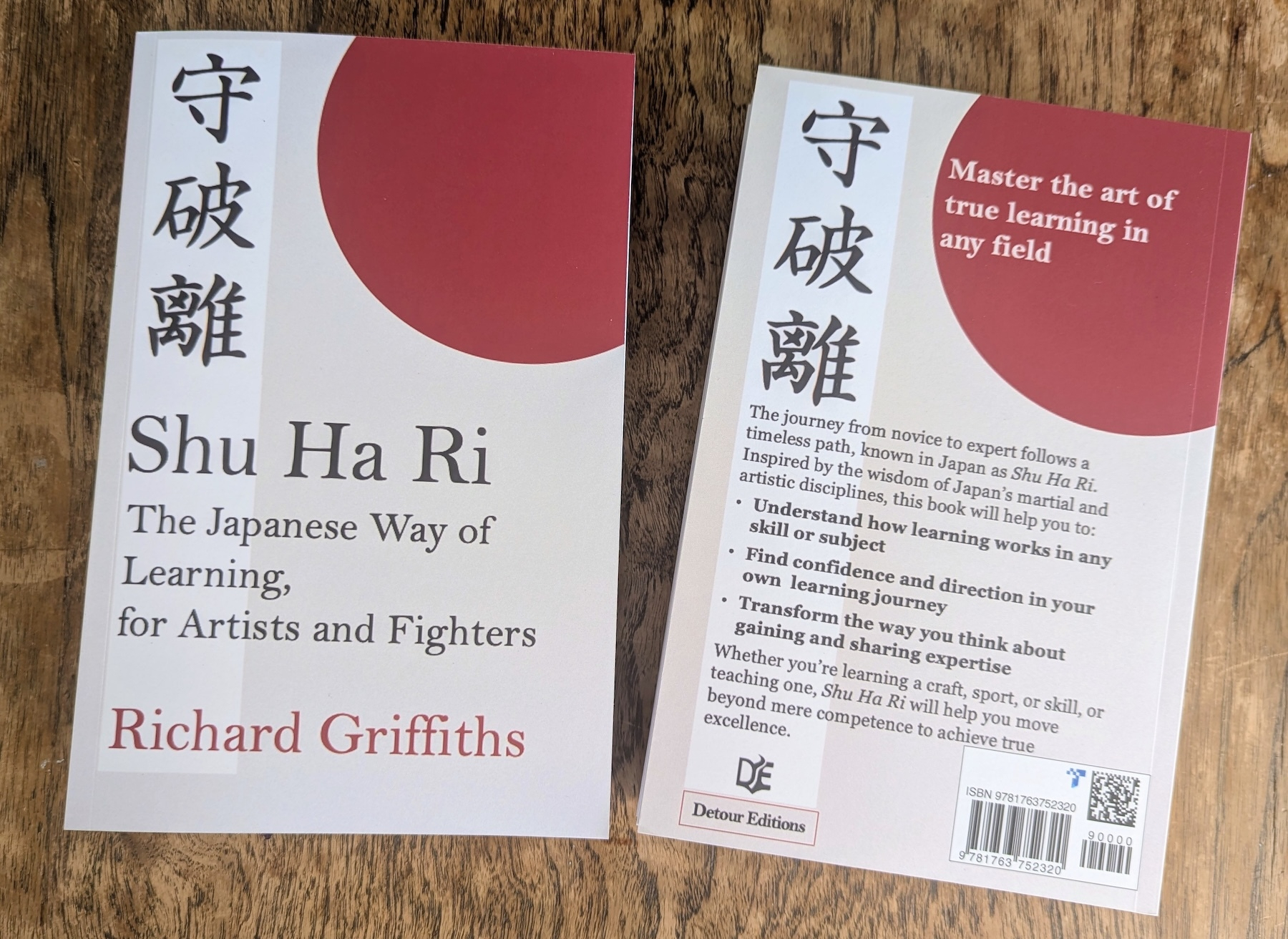
They’re both short, just 100 pages.
They’re both direct, covering one concept and one concept only.
They’re both Artist’s books, including photography (mine has 20 photographs of Japanese gardens, which I took myself).
They’re both originally self-published, to enable a singular, perhaps eccentric vision to find full expression.
They’re both the first book on a Japanese concept that no one in Japan, or anywhere else, has written yet, at least not a long-form treatment.
They’re both at the leading edge of an emerging trend.
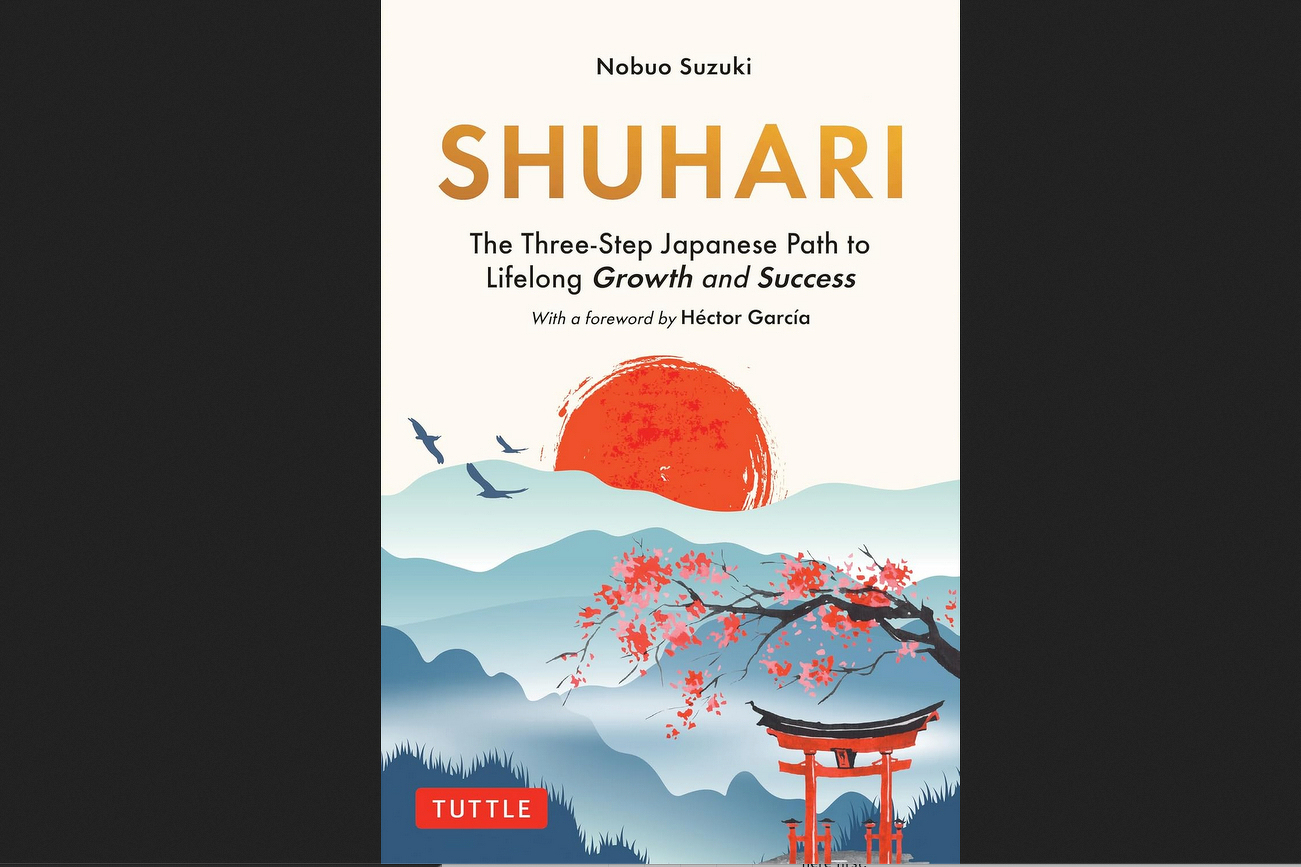
Wait! What? What emerging trend is this? Well, I waited 15 years for someone better qualified than me to write about the concept of Shu Ha Ri. No one did. At least, no one else wrote a clear, well-referenced, accessible introduction. Eventually I relented, wrote the book I wished already existed, and put it out there for readers to make their own judgement. But what do you know? Very shortly after I published my own introduction to the concept, another appeared, written by the partnership of Hector Garcia and Nobuo Suzuki. It’s in Spanish only for now, but the English version is published by Tuttle in August 2026, so perhaps soon there’ll be a Shu Ha Ri cottage industry. You heard it here first.
On my recent visit to Japan I walked past a gift shop in the small city of Matsumoto called ‘WabiXSabi’ (yes, in English), and it turns out there’s a whole chain of these stores across Japan. So maybe one day in the future someone will open a Shu Ha Ri shop, selling who-knows-what. Maybe it’ll be a footwear store. You heard that here first too.
But here’s word of warning to anyone thinking of trying this: Best not be selling anything fragile. Translated literally, Shu Ha Ri means ‘hold, break, leave’.
—
As you might have gathered, I’m the author of Shu Ha Ri: The Japanese Way of Learning, for Artists and Fighters, available now.
And if you found this article interesting you might like to sign up to the Writing Slowly weekly email digest. You’ll receive all the week’s posts in that handy email format you know and love.