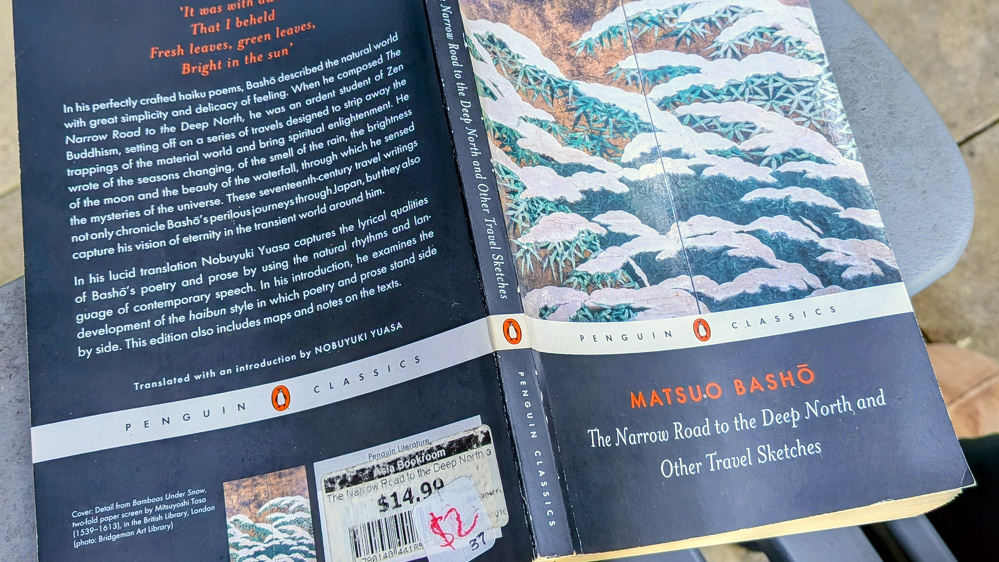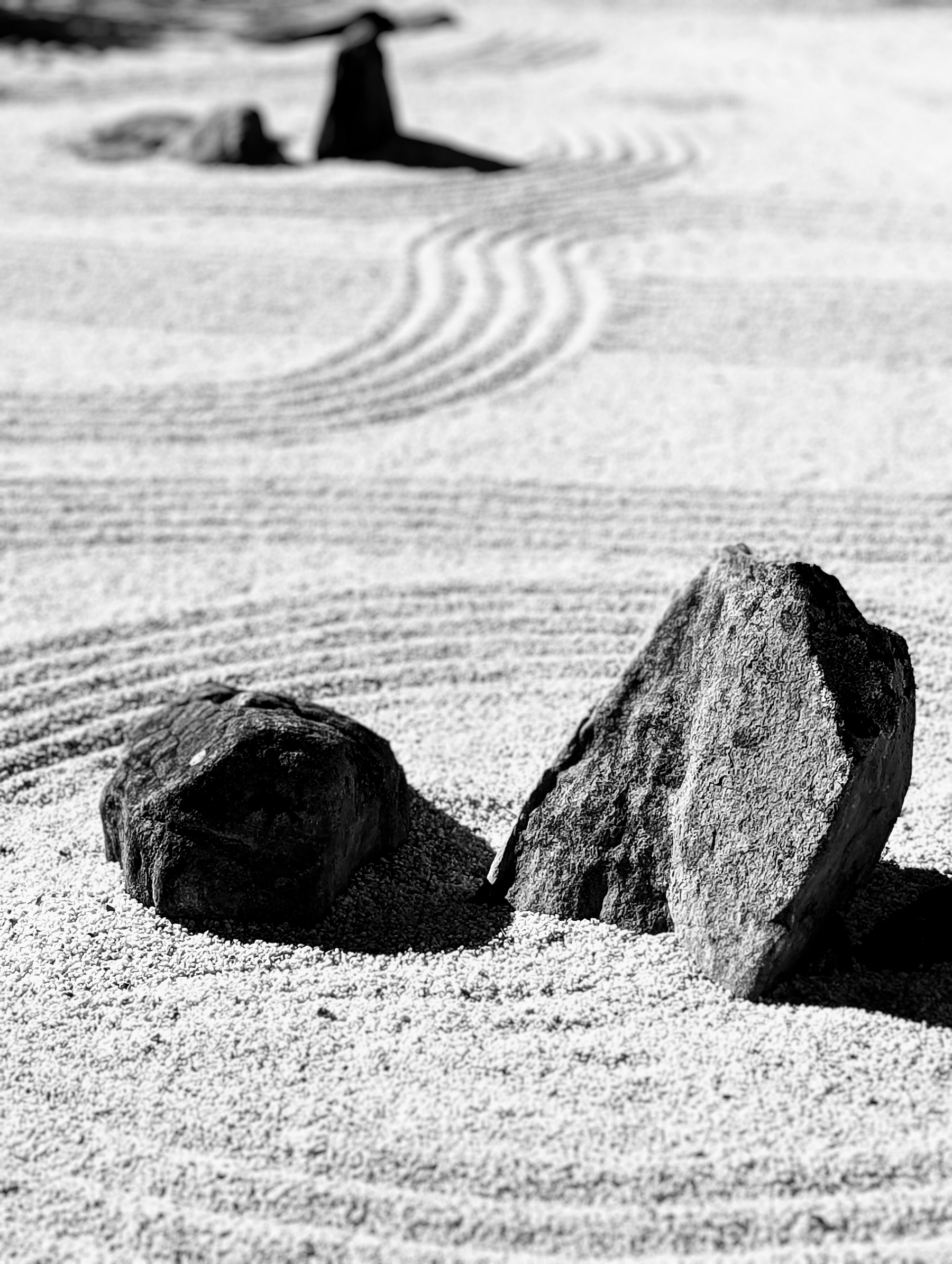
Shu Ha Ri

    The heart of the craft: an encounter with the spirit of Shokunin

    “There’s something to be learned from everything. From even the most ordinary, commonplace things, there’s always something you can learn.” – Haruki Murakami, Pinball, 1973.

    I read this quote in the epilogue to Matt Alt’s book, Pure Invention: How Japan Made the Modern World. (London: Constable, 2021).

    It could be a summary of shokunin kishitsu (職人気質), the spirit of traditional Japanese artesanal culture.

    In fact, Jiro Ono the consummate master of sushi, featured in the acclaimed documentary Jiro Dreams of Sushi, and who was still going strong at the age of 100, says something very similar in the movie:

    “I do the same thing over and over, improving bit by bit. There is always a yearning to achieve more.”

    This yearning, to learn, to achieve more is kojoshin (向上心), or aspiration, and it’s an integral element of the shokunin spirit.

    Shokunin (職人) is a Japanese concept translating to “craftsman” or “artisan,” but its cultural meaning runs much deeper. It describes a master of a trade who dedicates their life to the relentless pursuit of perfection, continuously refining their skills, and feeling a deep, altruistic responsibility to their community and craft.

    On visiting Japan, it was clear to me that alongside the relentless modernity, there’s also a deep respect for traditional craftwork at an extremely high level of skill. People are devoted to this and it’s marvelous to see.

    Here’s the master woodcraftsman, Shuji Nakagawa, who makes exquisite wooden utensils:

    “When I was a child, my grandfather was making 200 wooden buckets a month! Wooden buckets were used in every household for everything from wash buckets to rice trays. By the time I was grown, plastic had replaced them and my father had fewer than 20 orders a month. I knew that if I was unable to think outside the box, our beautiful heritage would be lost. This is not about nostalgia. What is more important is that we not lose sight of the original ideals that guided our ancestors–that deep, connection to the natural world through the materials we use and an awareness that our lives are but a moment in a continuum of the craftsman’s tradition.” — Shuji Nakagawa. Shokunin: Five Kyoto Artisans Look to the Future – Portland Japanese Garden

    It’s interesting to witness the way the Japanese have revived and re-imagined their traditional crafts, and attempted with some success to strengthen this culture of dedication to perpetual improvement into the 21st Century.

    “The word Shokunin (職人) means “artisan,” a word that signifies a person who has achieved a high level of accomplishment and a deep commitment to carry on the legacy of a traditional craft. A shokunin who works in the 21st century is an artisan whose work shows respect for the traditions of fine craftsmanship that have been handed down for generations—the handmade tools, the time-honored techniques, the finest natural materials, and the patience and indomitable spirit needed to carry on a painstaking craft.” - Shokunin: Five Kyoto Artisans Look to the Future – Portland Japanese Garden

    Some reading

    • The Beauty of Everyday Things, by Soetsu Yanagi. Classic essays on Japanese folk crafts (mingei). Penguin Classics 2018.
    • Water, Wood, and Wild Things: Learning Craft and Cultivation in a Japanese Mountain Town by Hannah Kirshner. New York: Viking Press

    Some viewing

    ”A student’s understanding of particular subjects forms in collaboration with teachers, peers and the daily friction of being one mind among many.” – W. Ian O’Byrne

    A thoughtful article on the messy process that helps kids learn.

    So you practised for 10,000 hours but you’re still not an expert. What happens next? How to learn deliberate practice: https://writingslowly.com/2026/06/15/how-to-learn-deliberate-practice.html

    #ShuHaRi #Expertise #LearningStrategies #PersonalGrowth

    How to learn deliberate practice

    Have you heard of ‘deliberate practice’?

    You might well have, because Swedish psychologist Anders Ericsson’s work on what makes an expert has been hugely influential over the years. His co-authored original paper from 1993 [^1] has been cited more than 3,000 times and it has spawned more than a few popular books, including Geoff Covin’s Talent Is Overrated: What Really Separates World-Class Performers from Everybody Else, Malcom Gadwell’s Outliers: The Story of Success, and Daniel Coyle’s The Talent Code: Greatness Isn’t Born. It’s Grown. Here’s How.

    Oh, those titles.

    The key message of ‘deliberate practice’ is simple but not obvious. If you want to become an expert you have to do the right kind of practice. This was stated very clearly in Ericsson’s widely-read book, Peak: Secrets from the New Science of Expertise (2016):

    “If you are not improving, it’s not because you lack innate talent; it’s because you’re not practicing the right way. Once you understand this, improvement becomes a matter of figuring out what the ‘right way’ is.”

    This is an attractive message because it’s very optimistic. It encourages people to overcome the fatalistic worry that somehow, maybe due to their genes or their upbringing, ’they’re just not cut out for it’.

    Instead of being resigned to your fate, you can change it. And the key? Deliberate practice!

    Unfortunately, the strong popular interest has warped some of Ericsson’s key ideas about how to gain expertise. Two concepts in particular have made it hard to move forward productively.

    Read More →

    “There’s a great strength in me showing you a chord or a riff or something, and it’s just going from mind to mind, there’s no paper involved. All of what we did in this very studio would be that. It was really an immediate transference of ideas.”
    – Paul McCartney on The Rest is History podcast on YouTube.

    This chimes with the Japanese concept of ishin-denshin, heart-to-heart communication, which is central to the Shu Ha Ri way of learning I’ve written about.
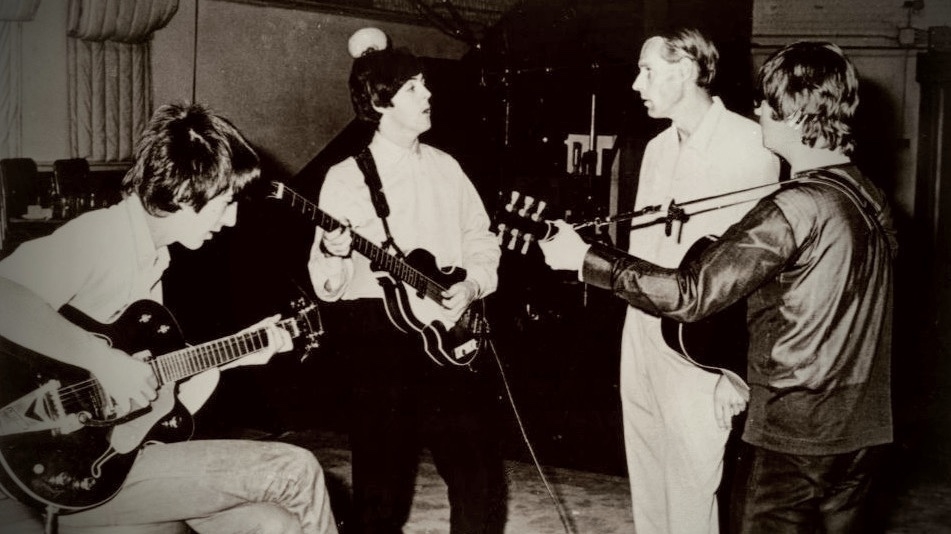
    Three of the Beatles are gathered in a studio, holding guitars and engaging in conversation with George Martin.

    The expert’s trap is where you start thinking of yourself as having gone beyond the need to learn anything new.

    What did the legendary Zen maverick Ikkyū Sōjun teach about overcoming the expert’s trap? Find out in The Paradox of Mastery.

    #ShuHaRi #Learning #Buddhism #ContinuousLearning #Japan

    The Paradox of Mastery: Why the Expert Must Remain a Beginner

    A Zen Buddhist master hands his successor a formal certificate of mastery. The successor burns it. Why?

    No, it’s not a Zen koan but it almost could be.

    The name for such a certificate in Japanese is inka. This word might be translated as a ‘seal of approval’, but it’s hardly that straightforward.

    In the original transcripts of Shunryu Suzuki’s teachings, the foundation for his influential book “Zen Mind, Beginner’s Mind”, he describes the inka as both profound and vacuous at the same time.

    The inka, this formal paper, might represent decades of practice, but it also subtly indicates the need to abandon the very idea of mastery. If you’re an intellectual hunting for a hidden formula, the paper might appear to you as a riddle to be solved. But to the practitioner who inhabits “beginner’s mind” (shoshin), there’s no clever secret to be interpreted, it’s just a transparent occasion for a sincere “Thank you.”

    Westerners might be tempted or conditioned to treat the inka like a diploma. Is it proof you’ve arrived? Is it a trophy? Or is it a kind of finish line? In fact, the moment you view the paper as a “result” like this, you’ve fallen into the expert’s trap.

    ##Expertise Closes the Mind

    The expert’s trap is where you start thinking of yourself as having gone beyond the need to learn anything new.

    Imagine a master chef in a restaurant with a once-great reputation that’s now on the slide. They’ve cooked that signature dish a thousand times. The knife work is flawless. Their timing is impeccable. But somewhere along the way, they stopped tasting. These days they plate up by means of muscle memory, not joie d’esprit. They season by formula. The dish is technically perfect but spiritually dead. This sense that it’s all been done before? That’s the expert trap.

    Or consider a concert pianist. They play Chopin and Bach with a technical precision that sets critics agog, yet to the audience the performance feels mechanical and airless. Though they hit every note and these notes reach the ears, they just don’t make it as far as the heart. This is what happens when expertise goes rigid and calcifies – and this is the expert trap.

    Suzuki warned: “In the expert’s mind there are few possibilities.” As we solidify our knowledge, the mind loses its inherent fluidity. We stop seeing what’s in front of us because we’re too busy recognizing patterns we’ve seen before. Conventional expertise becomes empty in the worst sense: not the fertile emptiness of Zen, but the closed system of someone who thinks they already know what there is to know. That’s the expert’s trap, right there.

    Mastery Means Returning to Innocence

    Skill in itself isn’t the problem. In Shu Ha Ri: The Japanese Way of Learning, for Artists and Fighters I introduced a time-honoured map of the learning journey: first you follow rules (Shu), then you break them (Ha), and finally you transcend them (Ri). You never abandon the rules, though. Instead, you internalise them. That’s why improvisation is bewildering. To a beginner, improv can seem like an impossible freedom from all convention. But a jazz musician must master scales deeply before they can improvise freely. Improvisation may sound like the free–expression of a beginner, but paradoxically only an expert can do it justice.

    True expertise is the Ri stage. Technique becomes so ingrained that it disappears. And the expert returns to the spontaneous state of the beginner. They’ve travelled full circle. Their beginner’s mind is now informed by ten thousand hours of practice, but it remains open, curious and alive.

    The master and the beginner see with the same freshness.

    The master simply climbed a mountain to return to the valley.

    That’s the journey out of the expert’s trap.

    Why did Ikkyū Burn the Certificate ?

    The ultimate expression of this came from the iconoclastic Zen master Ikkyū Sōjun. Last year, I visited Lake Biwa, the legendary location where Ikkyū heard the cry of a crow, which jogged him to attain enlightenment. Despite plenty of modern development on the lakeshore, the lake itself remains a vast, still place. And in many places it still looks much as it might have in Ikkyū’s day. It’s still a fitting backdrop for a mind stripping away illusions.

    When his teacher presented him with the inka, Ikkyū famously trampled on it. Then, as though that wasn’t enough, he tore it to pieces and threw it in the fire. By burning the ‘proof’ of his mastery, he demonstrated the secret that true realization can’t be commodified or archived. It exists only in the living moment, in the quality of attention you bring right now. Despite how it might look to us, the burning wasn’t an insult to his teacher. Rather, it showed he understood at a deeper level.

    A scenic view over Lake Biwa near Kyoto showcases lush foliage framing a distant body of water and mountains in the background.

    I took this photo of Lake Biwa from the Eastern slopes of Mount Heiai. On this lake the maverick monk Ikkyū attained enlightenment - in legend at least.

    Try This Today

    OK, so what practical difference does this make? Today, choose one skill where you consider yourself proficient. Your profession. A hobby. Even something simple like how you make your morning coffee. Approach it as if you know nothing. Try performing it with your non-dominant hand. Or ask a child to show you their approach. Or read an introductory tutorial as if for the first time.

    Notice what you’ve stopped seeing because you ‘already know.’ Does your expert ego resist? Does it feel foolish, a waste of time? Or do you catch a glimpse of the strange wonder of not knowing? The possibilities that only appear when you release your grip on certainty?

    You might well be an expert. You might well posses certificates to prove it (that you haven’t burned), or you might have many hours of experience under your belt. Or maybe the evidence of your expertise lies all around, in the things you’ve built. But today remember this: The inka is just paper. The wisdom lies in burning it. Because expertise is just an opinion. Part of being able to do something really well is knowing how much better still you could become. The mastery is in the continual learning.

    Further Reading

    Zen Mind, Beginner’s Mind by Shunryu Suzuki – A guide to the attitude of shoshin and the foundation for the ideas in this post.

    Extraordinary Zen Masters: A Maverick, a Master of Masters, and a Wandering Poet by John Stevens – Includes the definitive biographical account in English of Ikkyū Sōjun’s wild, iconoclastic life.

    Shu Ha Ri: The Japanese Way of Learning, for Artists and Fighters by Richard Griffiths – An exploration of the stages of mastery and how to move from rigid rules to spontaneous freedom.

    Crow with No Mouth (translated by Stephen Berg) – A collection of Ikkyū’s own “crazy cloud” poetry that captures his visceral, non-institutional approach to Zen.


    Thanks for reading! If you like this kind of thing, why not subscribe to the weekly email digest?

    And you can also buy my book, Shu Ha Ri: The Japanese Way of Learning, for Artists and Fighters.

    Remembering what you read

    One of the chief uses of note-making is to help you to remember what you read.

    But it’s not as simple as imagining your notes are just an ‘aide memoire’.

    When you make notes you forget your reading and replace it with the future opportunity to read again not the original book but your own notes on it. So making notes is inevitably a process of interpretation, which involves the occlusion of the original work, albeit in the name of preserving it.

    Psychologists, including Ciara Greene and Gillian Murphy, authors of Memory Lane: The perfectly imperfect ways we remember (Princeton UP, 2025) believe “we construct and reconstruct our memories every time we attempt to recall them”.

    So when we re-read our notes, does that mean we’re reconstructing our memories of the book, or just the memories of our notes? These elements in time are all intertwined: the content of the book itself, the environment in which we read it in the first place, the environment of the place where the notes were made, the notes themselves, and the circumstances in which, later, perhaps much later, we recollect all these factors by re-reading the notes in a new context.

    And you do actually remember at least some of what you’ve read. Your reading, or a part of it anyway, sticks in your memory in ineffable ways. Without thinking about it, you have been engaging in what literary scholar Andrew Elfenbein calls ’the differential allocation of attentional resources.’ But how?

    A tabby cat is perched on the edge of a sofa in a sunlit room with bookshelves and an armchair in the background.

    This cat has allocated his attentional resources, differentially.

    Yesterday I spent a little while looking over the bookshelves in our house, reminding myself of some the books I’ve read and noticing what I haven’t read yet. It was an odd experience because what I remembered of each book varied widely.

    I remembered many of the titles, and seeing their spines was a prompt to remember their contents. A surprising number of books I’d forgotten I had ever read, but seeing them again enabled my memories of their contents to come flooding back. A few books I had no memory of having read, even though I’m pretty sure I must have done. And a few more books I was convinced I had never actually owned and vaguely remember thinking I ought to buy a copy.

    I suspect the memory-aiding features of the bookshelf itself are qualitatively different from those of a plain list of the books in that bookshelf. The book shelves are a kind of ‘memory palace’ for the books themselves. In fact this realisation is quite important to me. It might explain why I get frustrated when someone reorganises these books: they’re literally reorganising my memory.

    Now I’m minded to take photos of these shelves, so that as I dispose of my books (it’s a working library after all) I can at least look back on how they used to be.

    All this got me wondering: what does it mean to be ‘well-read’ when you can only partially remember what you’ve read?

    Perhaps being well-read is really only something that can emerge in your writing, not as something you carry around with you in your memory. Or is it about the way you weave your reading into your conversation? These days it seems as though being well-read might just be a mark of someone washed up from a previous era, before there were mobile phones and AI summaries of everything.

    Scan your own shelves today. Is there a book staring back at you that you have no memory of reading? Or one where the spine alone brings the whole story back? I’d love to hear about the books that have stayed with you, or about the ones that vanished entirely.

    If our notes eventually replace the books themselves, we are essentially building a library of our own interpretations. Does this feel like a loss of the original work to you, or a necessary step in making the ideas your own? How do you decide what is worth ‘preserving’ in your notes, and what do you allow yourself to forget?

    In an age of instant AI summaries, the slow act of reading and note-making feels almost counter-cultural. Do you find that digital tools change how you remember what you read? Or do you still find that the physical presence of a book, its size and colour, its place on a shelf, is what makes the memory stick? I’d like to know about your own ‘memory-aiding’ systems in the comments.

    Meanwhile, here’s a podcast about what we remember, having first read:
    What we remember after reading, with Andrew Elfenbein | How To Read Podcast

    And here’s a podcast about the fallibility of memory, and why that might actually be a good thing:
    Memory Lane | Princeton UP Ideas Podcast

    I’ve written a lot on making notes, including:


    Thanks for reading! If you like this kind of thing, why not subscribe to the weekly email digest?

    And you can also buy my book, Shu Ha Ri: The Japanese Way of Learning, for Artists and Fighters.

    ‘Beginner's mind’ keeps you young — even in your 80s

    Stewart Brand was on the Ezra Klein Show, talking about his new book Maintenance: Of Everything. He’s well into his eighties, and he said:

    “Looking into the things that you’re not good at, especially intellectually, is one way to stay young, because you’ve got a beginner’s mind.”

    Well now, it was Shunryu Suzuki, the Japanese monk who brought Zen to Northern California, who famously spoke of ‘beginner’s mind’. He said:

    “When we have no thought of achievement, no thought of self, we are true beginners. Then we can learn something. The beginner’s mind is the mind of compassion. When our mind is compassionate, it is boundless… The most difficult thing is always to keep your beginner’s mind. … This is also the real secret of the arts: always be a beginner” – Shunryu Suzuki, Zen Mind, Beginners Mind: Prologue.

    Brand’s mention of beginner’s mind isn’t the only Japanese concept he references. The cover of Maintenance: Of Everything alludes to kintsugi, the art of repairing broken pottery by means of gold lacquer. With kintsugi, instead of hiding the cracks, you honour them.

    A collage book cover featuring illustrations of the Statue of Liberty, a map, a building grid, a ship, and an ancient structure, all interspersed with gold lines in ‘kintsugi’ style, accompanies the title Maintenance: Of Everything by Stewart Brand.

    You can read the interview’s transcript, or just listen.

    My source for this little nugget was Austin Kleon, who also has a new book out in September 2026: Don’t Call it Art.

    Meanwhile, I’ve written more about beginner’s mind, and why the greatest experts are serial beginners.

    In Influence is everything I’ve mentioned Stewart Brand’s idea of ‘pace layering’.

    “Pace layers is an idea Stewart Brand first developed in the 1990s. Civilization, he argued, works as a set of nested layers, each moving at a different speed: fashion changes fastest, then commerce, then infrastructure, governance, culture, and finally nature, which changes slowest of all. The fast layers are where novelty happens, but the slow layers provide stability. Healthy societies need both.

    Each layer also requires its own kind of maintenance—and when any of them gets neglected, the whole system suffers.”

    And I’ve also reflected on Austin Kleon’s advice about Sharing what you know.

    —-

    I’m the author of Shu Ha Ri: The Japanese Way of Learning, for Artists and Fighters, available now.

    And if you found this article interesting you might like to sign up to the Writing Slowly weekly email digest. You’ll receive all the week’s posts in the classic email format that never gets old and never goes out of fashion.

    I’m reading about the traditional Japanese porch, the engawa, seen here at the Shugakuin Imperial Villa.

    A traditional Japanese-style room with shoji screens opens up to an engawa porch with a lush garden view.

    But right now I’m sitting on the typically Australian version, the verandah, an idea the colonialists took from India.

    In each case, inside and outside connect quite elegantly.

    Two brown chickens and a white chicken roam near a house with a verandah and a lush green lawn and trees in the background.

    Beginner’s mind: Flea turns to the trumpet

    Here’s another great example of ‘beginner’s mind’ in action.

    Flea, long famous as the amazing bass player in Red Hot Chili Peppers, has pivoted to jazz trumpet. As a kid he played trumpet with his stepfather, but he hadn’t played seriously in decades. That changed when he decided to make an album.

    💬 “I decided I’m gonna play trumpet every day for two years, and at the end of the two years, I’m gonna make a record. I don’t know how good I’m gonna be at the end of two years, but I know I’m going on a two-year-long stadium tour with the Chili Peppers and I can play in my hotel room, and that’s what I’m gonna do, and that’s what I did. I practised every day for two years, and went and made my record.”

    Did he know he’d be good enough after two years of daily trumpet playing? No, instead he used it as a forcing function. No matter what: put out the record.

    💬 “I got insecure that I wasn’t good enough. But it was more being moved to tears by how vulnerable it felt, like I’m baring my soul. I was prepared that it might not work, that it might suck. I was prepared to fail. But I read this thing by Neil Young where he goes, “I’ve made shitty records and I still put them out because failure is important.” When I read that by Neil Young, someone I admire so much, I was like, f– yeah! If I fail, great. It’s beautiful to take a risk. If I fail, I f–ing tried.”

    Well, by listening to his album, Honora, you can judge for yourself whether he failed (spoiler: he didn’t).

    A review of ‘Honora’ in the Sydney Morning Herald.

    Now read:

    The greatest experts are serial beginners.

    What Herbie Hancock learned from Miles Davis.

    What Billy Strings learned from his father.

    Find the right teacher.

    Imitating the greats?

    The fundamental flaw in how we learn about expertise.

    —-

    Thanks for reading. Did you know you can subscribe to the Writing Slowly weekly email digest?

    I’m the author of Shu Ha Ri: The Japanese Way of Learning, for Artists and Fighters, available right now.

    This video of Kurama-dera, a Buddhist temple outside Kyoto, is quite lovely. And the snowy scenery makes the place look completely different from when I visited it in late Summer.

    Kottke.org

    Summer:

    The main shrine at Kurama-dera with red columns, hanging lanterns, and a stone lion statue at the entrance, surrounded by lush greenery.

    Winter:

    A snowy scene features a traditional Japanese temple building at Kurama-dera, surrounded by snow-covered trees.

    Artists Books at the NSW State Library

    I visited the State Library in Sydney recently, where I was inspired by an exhibition on artists’ books, called Paper Universe: The Book as Art. It’s open till 3 May 2026 and is well worth seeing.

    There were books on display too about how to make your own books, which I also found inspiring.

    And when I looked in on another exhibition about housing in Australia, I couldn’t help noticing that the Sirius Building, a famous brutalist landmark in Sydney, looks an awful lot like a set of books lined up along a shelf. I’ve never heard anyone say that this was the architect’s intent, but you can judge for yourself.

    A large, ornate library reading room at the NSW State Library is filled with people seated at tables, surrounded by shelves of books.

    A display case showcases pages from an artist’s book, featuring red, black, and white colors.

    Two books on creating handmade books are displayed on a wooden surface.

    A detailed architectural model of Sydney’s brutalist Sirius Building is displayed in a gallery setting surrounded by various framed posters and plans related to the structure.

    The distinctive, block-style concrete Sirius Building is set against an urban Sydney backdrop with a twilight sky.

    Photo of the Sirius Building by Katherine Lu - Own work, CC BY-SA 4.0, commons.wikimedia.org/w/index.p…


    I guess I have made my own book: I’m the author of Shu Ha Ri. The Japanese Way of Learning, for Artists and Fighters, available now.

    And for all the Writing Slowly goodness you can sign up to the weekly digest.

    Why I wrote the book on Shuhari and what’s in it for you

    Well, a book doesn’t just write itself, but why should I be the one to write it? What made me decide to write an introduction to the Japanese concept of Shuhari? There were several reasons and here are five of them.

    1. The well is poisoned now with AI slop, but even years ago when I was looking online for information on Shu Ha Ri, there were plenty of mentions but it was all extremely shallow. There were hot takes from martial arts sites and almost clueless discussions about agile software development. True, they mentioned the concept but not where it had come from, or really any context. They were skimming the surface of a very deep pond. I wanted something more substantial and so I started researching.

    2. To this day there is no accessible introduction to Shu Ha Ri, and nothing in print with credible references that you can follow up yourself if you want to. So I saw a gap that was begging to be filled.

    3. No one else had done it. I mean I’m not the world’s greatest expert on Japanese culture, but no one else wrote the book on Shuhari. My first draft was written in 2015 and I gave the world another 10 years to write the book on Shuhari. No one did, so in July 2025 I published my own book myself. Ironically, another introduction to Shuhari was finally published, in Spanish, two months later.

    4. I had a bee in my bonnet, put there by the literature on learning. It’s heavily learner-focused, which is fine, but very often it misses out entirely any mention of the role of teaching, which is not fine. This seems plainly weird, and in my own small way I wanted to make a contribution to correcting this. Learners need teachers, and what’s more, the teachers need to be humans, not bots. I saw the Japanese concept of Shuhari as a way of emphasising this point, that learning and teaching are two sides of the same coin.

    5. Following on from this last point, I wanted to present a different approach to learning theory, one with is about social interaction, not just neuroscience. Understanding the brain is great, obviously, but learning and teaching takes place in an environment that extends well beyond the individual brain.

    So anyway, I did the research, I read scores of books and articles, I took endless photographs (of which readers only get to see the best ones), I chased up obscure references, many in Japanese, with which I needed to gain at least a basic familiarity, and I visited Japan. Oh, and I wrote the book, designed the cover, and published it.

    The result is Shu Ha Ri: The Japanese Way of Learning, For Artists and Fighters. I hope you enjoy it and find it useful.

    One reviewer said:

    ”Simple in its structure, yet profound in the information it conveys, SHU HA RI is a must read for anyone wanting clarity on a tried and true approach to teaching and apprenticeship. A great resource for teachers, but also anyone interested in learning how to honor the teachings of precious masters while respectfully forging ahead.”

    The front and back covers of a book titled Shu Ha Ri: The Japanese Way of Learning, for Artists and Fighters by Richard Griffiths are displayed, highlighting themes of Japanese philosophy, personal growth, and mastery.

    —-

    Now read:

    Japanese Shu Ha Ri: Is it better than Western learning methods?

    There’s a fundamental flaw in how we learn about expertise.

    Mastering any skill the Japanese way.

    And of course, my book, Shu Ha Ri: The Japanese Way of Learning, for Artists and FIghters.

    Fear of AI is nothing new: Promethean shame in a time of technological change

    Günther Anders (1902-1992) is a 20th century philosopher for our time, which is fitting since he saw himself as uncomfortably ‘too early’ for his own.

    Almost unheard of in the English-speaking world, he was at the centre of German philosophy before the rise of Hitler and the catastrophe of the Second World War. Student of Husserl, Heidegger, and later Tillich, he was a second cousin of Walter Benjamin, a friend of Berthold Brecht and was Hannah Arendt’s first husband. Given this pedigree I found it surprising he was (to me) so obscure. In post-war Germany he was a big deal. Now he’s back in fashion, thanks to the eery prescience of his masterwork, The Obsolescence of Man (vol. 1, 1956, vol.2, 1980) and its clear relevance to the current AI revolution.

    Anders coined the phrase ‘Promethean shame’, which is…

    Read More →

    Guy Kawasaki says ‘move fast and break things’ is a myth. True! But since he can’t quite escape its toxic allure, I’ll say it for him, loudly and proudly:

    Move slow and fix things. [guykawasaki.substack.com]

    A kitchen scene featuring a bright green open pantry shelf, two refrigerators (one labeled Fridge Broken DO NOT USE), and a person in a blue dress partially visible.

    Shu Ha Ri: The Japanese Way of Learning, for Artists and Fighters is available now.

    Beginners and intermediate learners fear ‘making mistakes’; experts seldom do. Not because experts don’t make mistakes: they do. It’s just that experts know what to do next.

    Here’s Herbie Hancock telling what he learned from his mentor Miles Davis: Every mistake is an opportunity [openculture.com].

    A cat is sleeping on a sofa in a room with shelves full of books and a couple of guitars on stands.

    Find the right teacher

    There’s a Japanese saying that I included in my book):

    If it takes three years, find the right teacher.

    But sometimes, you just need to get started. Simon Sarris has a great story about this. He decided to build a barn by trial and error, with little previous barn-building experience. But because he was doing this near the road in front of his house, it attracted the attention of a regular passer-by who just happened to know, in detail, how to build barns.

    “Mike would have never stopped by if I was not working conspicuously in my driveway, every day, under a pop-up tent. But I was, and he became interested in my progress, and it happens that he has been timber framing since the 90’s. Had I waited for such a teacher—for he has now taught me a good deal—I would have never found him. But I chose to start, and he was drawn to my adventure. Only by virtue of starting the work was the intersection of our lives possible.” - Start With Creation - by Simon Sarris

    The moral? If it takes three years, find the right teacher. But if you start your learning journey with action, the right teacher might just find you.

    So now here’s a question: Who was the right teacher for you, and how did you find them, or alternatively how did they find you?

    (And yes, I have a story about a teacher who found me, but that’s a story for another time.)

    People are assembling a wooden structure using ropes, with some Japanese text visible on the wood.

    Photo by Kazuhiro Yoshimura on Unsplash


    Meanwhile, my book, Shu Ha Ri: The Japanese Way of Learning, for Artists and Fighters, is out now. Please check it out.

    Discovery, aesthetics, and the art of self-publishing: my latest post explores Leonard Koren’s influence on my new book, Shu Ha Ri.

    writingslowly.com/2026/02/0…

    #WabiSabi #ShuHaRi #Japan #Aesthetics #WritingCommunity

    Leonard Koren on Life as an Aesthetic Experience

    I’ve never been much of a bathing person. Perhaps that’s due to unpleasantly lingering memories of luke warm water in freezing cold bathrooms in the UK when I was a child. The bath was fine enough, but getting out would be a real test. Even bathing, as an adult, in natural hot springs on Orcas Island in the US Pacific Northwest didn’t really do it for me. That was a little ‘rustic’, and not in a good way.

    True, swimming here in Sydney where I live is fabulous, especially in the Summer, when the cool refreshment of the ocean waves is totally restorative. But bathing? Not so much. Until a few months ago, that is, when I visited Japan.

    Read More →

Older Posts →