Walter Benjamin on the obsolete book
“Already today, as the current scientific mode of production teaches, the book is already an obsolete mediation between two different card file systems. For everything essential is found in the index box of the researcher who wrote it, and the scholar who studies it assimilates it in his own card file.”
“Und heute schon ist das Buch, wie die aktuelle wissenschaftliche Produktionsweise lehrt, eine veraltete Vermittlung zwischen zwei verschiedenen Kartotheksystemen. Denn alles Wesentliche findet sich im Zettelkasten des Forschers, der’s verfaßte, und der Gelehrte, der darin studiert, assimiliert es seiner eigenen Kartothek.”
Walter Benjamin - Attested Auditor of Books, in One Way Street (1928) 💬
Comment
Was the book really already obsolete in 1928, as the German cultural theorist Walter Benjamin claimed?
If so, it has nevertheless enjoyed a long and distinguished afterlife. And Benjamin’s sly reference to what ’the current scientific mode of production’ teaches, may suggest a certain irony in his claim.
But the real irony is that the card index was sooner for obsolescence than the book. During the 1980s and accelerating into the 1990s millions of index cards were thrown out, to be replaced with computer databases. Despite a very niche resurgence of interest in the quaint technologies of the ‘Zettelkasten’ (German for ‘index card box’, there’s no real sign of a come-back. The book, meanwhile, has been assailed mightily by the e-book, but as Monty Python fans would say: “It’s just a flesh wound”.
However, another way of viewing this technological transition would be to say that the card index, in the new form of the electronic database, has utterly triumphed. Now everything is just the front-end of a database, including books.
References
Benjamin, W. (2016[1986]) One Way Street, Trans. E. Jephcott. Cambridge, MA: Harvard University Press. P. 43.
Source: www.heise.de/tp/featur…
Cited in Stop Taking Regular Notes; Use a Zettelkasten Instead - Hacker News
See also: Researching Benjamin Researching
Hermann Burger - Serious about a Zettelkasten?

The Swiss writer Hermann Burger (1942–1989) wrote the draft of a novel in 1970 called Lokalbericht (1970) [Local Report].
“‘Local Report’ – I already have the title, the hardest part of a book. Now, I’m just missing the novel.” [“Lokalbericht – den Titel, das Schwierigste an einem Buch, habe ich schon. Fehlt mir nur noch der Roman.”]
The story’s narrator was right. Burger was a poet and novelist but he never finished this early novel. He died in 1989 and it wasn’t published until October 2016. I found a single English-language review.
The protagonist of Lokalbericht, the young teacher Günter Frischknecht1 is in the canton of Ticino trying to write two pieces of work at the same time, a dissertation and a novel, writing on two different typewriters and using two different Zettelkästen. These two card indices get mixed up and the slips intermingle. What to do in this situation? Reality and fiction apparently can no longer be distinguished.
This farcical Zettelkasten confusion is foreshadowed early on in the novel by Frishknecht’s academic supervisor Professor Kleinert, of whom he says:
“He didn’t believe I could actually be serious about a Zettelkasten.” [“Dass ich tatsächlich Ernst machen könnte mit einem Zettelkasten, hat er mir wohl kaum zugetraut.”]
This story-line seems to be consistent with a long-standing trope among scholars that the loose slips of paper with which they ordered their work could at any moment get mixed up, or even worse, blow away, resulting in chaotic disorder.
Well, now it’s all been put back together. There’s a very impressive interactive online version of the novel, and in 2017 there was an exhibition centred upon it at the Aarau Museum.
It was Manfred Kuhn’s wonderful, though sadly defunct, blog Taking Note Now that originally alerted me to this novel and the Zettelkasten mix-up, but I had completely forgotten.
-
a composite name made up of Günter Grass and Max Frisch, with more than a nod to the old Knecht, the Magister Ludi of The Glass Bead Game. ↩︎
📷 Low hanging cloud over the creek on the way home.


Currently reading: Milkman by Anna Burns. 📚 By turns hilarious and harrowing. It’s not at all how I imagined it, which was mainly harrowing. Sure, the eponymous ‘Milkman’ is deeply sinister (and the narrative has only just got going), but the narrator’s voice is fantastically funny and engaging.
Thoughts are nest-eggs - Thoreau on writing
In October 1837 the writer Ralph Waldo Emerson prompted the twenty-year-old Henry David Thoreau to start writing a journal.
“‘What are you doing now?’ he asked. ‘Do you keep a journal?’ So I make my first entry to-day.”
Thoreau finished up with fourteen full notebooks: seven thousand pages, and two million words. Small fragments can add up to an awful lot. From these fragments he constructed pretty much all of his completed works. What began as jottings ended up as mature reflections.
He claimed his disconnected thoughts provoked others, so that ’thought begat thought'.
Thoreau wrote in his journal:
“To set down such choice experiences that my own writings may inspire me – and at least I may make wholes of parts.
Certainly it is a distinct profession to rescue from oblivion and to fix the sentiments and thoughts which visit all men more or less generally. That the contemplation of the unfinished picture may suggest its harmonious completion. Associate reverently, and as much as you can with your loftiest thoughts. Each thought that is welcomed and recorded is a nest egg – by the side of which more will be laid. Thoughts accidentally thrown together become a frame – in which more may be developed and exhibited. Perhaps this is the main value of a habit of writing – of keeping a journal. That so we remember our best hours – and stimulate ourselves. My thoughts are my company – They have a certain individuality and separate existence – aye personality. Having by chance recorded a few disconnected thoughts and then brought them into juxtaposition – they suggest a whole new field in which it was possible to labor and to think. Thought begat thought.” – Henry David Thoreau, The Journal, January 22, 1852.
The writer, according to Thoreau, doesn’t have a privileged position in relation to ideas or experiences. Everyone has the same access to their “sentiments and thoughts.” But the writer’s special task is to record them.
Thoreau’s meticulous editing process moved from raw field notes, to his journal, to lectures, to essays, and from there to published books. Walden, for example, was published after seven drafts, which took the author nine years to complete.
“The thoughtfulness and quality of his journal writings enabled him to reuse entire passages from it in his lectures and published writings. In his early years, Thoreau would literally cut out pages or excerpts from the journal and paste them onto another page as he created his essays.” - Thoreau’s Writing - The Walden Woods Project
This pretty much sums up the Zettelkasten approach to note-making for me. Thoreau lays out a simple process for “fixing” one’s thoughts in writing and for making something of them.
- Record your thoughts, one by one.
- “Each thought that is welcomed and recorded is a nest egg…”
- Build up a collection of notes, without worrying about whether they are coherent.
- “…by the side of which more will be laid.”
- Connect your notes, creating a dense network of association.
- “Thoughts accidentally thrown together become a frame in which more may be developed and exhibited
- Construct meaning from your previously disconnected thoughts
- “Thought begat thought.”
Note that the thoughts don’t necessarily follow on from one another. The very next idea Thoreau noted in his journal is on a completely different subject: the colour of the winter sun not long before dusk.
Someone who has found their own distinctive approach to writing that seems to echo that of Thoreau is Visakan Veerasamy. He lives in the 21st Century, not the Nineteenth, and instead of a cabin in the woods he probably has a laptop in a cafe. Instead of field notes he writes using tweets and threads, which he then links together in a dense network of thought.
“I’ve basically taught myself to manage my ADHD with notes and threads.”- Visakan Veerasamy
What calls Visakan to mind as I reflect on Thoreau’s writing practice is the sense they both seem to share of the seriousness of the practice of making something from nothing by writing short notes in a journal. Visakan says something of which I’m sure both Thoreau and Emerson would have approved:
in a way journaling for yourself is a radical act! It’s an act of self-ownership, self-education. It’s about setting your own curriculum, defining your own worldview, deciding for yourself what is important. I don’t think this should be outsourced to others.
People tend to think of writers like Thoreau as immensely successful. True he became a popular speaker, but Thoreau was not a successful writer, at least not in his lifetime.
“A Week on the Concord and Merrimack Rivers [1849] was initially an abysmal failure. Henry was forced to take back the books that were not sold, totalling 706 out of the 1,000 originally printed. Writing humorously of the event in his journal, he quipped, “I have now a library of nearly nine hundred volumes, over seven hundred of which I wrote myself” (Thoreau 459). Walden [1854], in contrast, was a relatively successful book, though it took most of the rest of Thoreau’s life to sell the 2,000 books of the first edition.” – Thoreau’s Writing - The Walden Woods Project
This knowledge inspires me to write without too much concern for the outcome, and to focus instead on those aspects of the process that lie within my control - recording my thoughts and like Thoreau turning them into nest eggs.
References:
Thoreau, Henry David. 2009. The Journal, 1837-1861. Edited by Damion Searls. New York: New York Review Books.
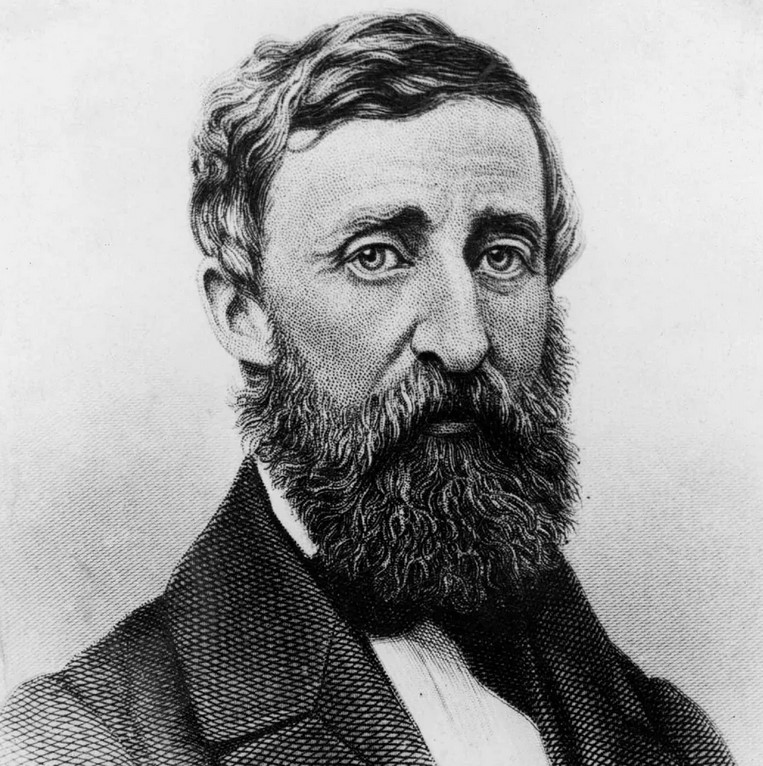
Image of Thoreau suitable for use on currency
I have elephants

A chapter of Sarah Bakewell’s book Humanly Possible considers the life and times of Renaissance scholar Petrarch. Petrarch, she says, wrote a book called Remedies for Fortune Fair and Foul (1360), which is a dialogue between three embodied figures: Reason, Sorrow and Joy. Reason’s job here is both to cheer up Sorrow and to settle down Joy.
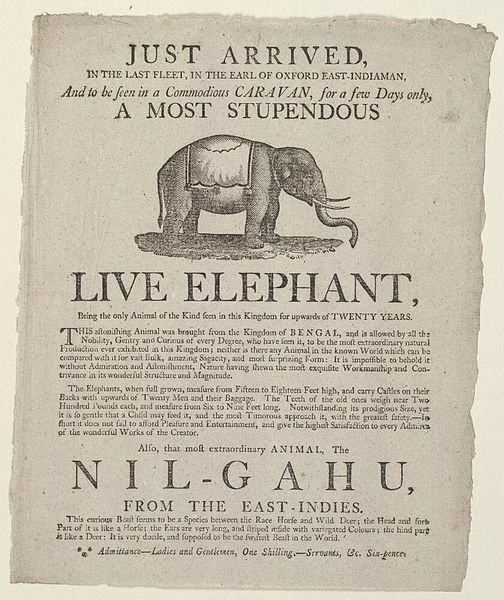
At one point, Joy says, “I have elephants.”
Reason replies, “May I ask for what purpose?”
Bakewell’s comment: “No answer is recorded.”
(Bakewell, 2023: 52)
💬 📚
📚I’m really enjoying Craig Mod’s latest pop-up newsletter from Japan. This time he’s doing a walking tour of Northern Japan’s jazz kissa1. The whole thing is tremendously evocative, but not in a way I’d expect. Highly recommended. BASIE!BOP!JAMAICA!
-
a cafe or bar - but there’s a bit more to it than that ↩︎

Finished this collection of short stories a while ago but forgot to record that important fact: A Manual for Cleaning Women by Lucia Berlin 📚
The story about the dentist was amazing. Not for the faint-hearted though.

This week I finished reading: Lost Kingdom by Serhii Plokhy 📚
Discovered some of the complexities of Russian nationalism. Began to make sense of the idea of the Soviet Union as an empire, and the legacy of that imperial project. Also began to see how Russians might understand Ukraine.
🎵 Belatedly learning to play ‘Maybe I’m amazed’. There’s something ridiculously satisfying about Paul McCartney’s chord choices.