Finished reading: Your Name is not Anxious by Stephanie Dowrick. Urgent, practical, and affirming. Both profound and profoundly helpful. 📚
Interview on ABC Radio
Live Webinar
#reading #psychology #mentalhealth
“Walking in and of itself is a way to cultivate precisely all the qualities of person-hood that seem missing from much public discourse — attention, focus, kindness, patience, persistence, tenacity, mental and physical health.” — Craig Mod💬 #Quotes
Is there a literature of teeth?

Do you find teeth comical? Do you find it hard to take them seriously? Jianan Qian, writing in The Millions, does.
“teeth make a flawed metaphor, too mundane to be tragic and too superficial to be profound. I await the the first great contribution to dental literature.” - Jianan Qian, Dentistry and Doubt: On Writing About Teeth. The Millions
Happily, there’s no need to wait for great dental literature, because we already have Lucia Berlin’s extraordinary short story ‘Dr. H. A. Moynihan’. This appears in her 2015 collection, A Manual for Cleaning Women, and though wonderful, is not for the faint-hearted. To be fair, this dentistry is comical, though along the lines of a Southern Gothic Grand Guignol.
“I hated St. Joseph’s. Terrified by the nuns, I struck Sister Cecilia one hot Texas day and was expelled. As punishment, I had to work every day of summer vacation in Grandpa’s dental office.”
A Manual for Cleaning Women by Lucia Berlin 📚
Just the first two sentences here, though. The rest you’ll need to extract yourself!
Two metaphors for #learning. Do we acquire knowledge or do we participate in it? Maybe it’s both. doi.org/10.3102/0… #PKM
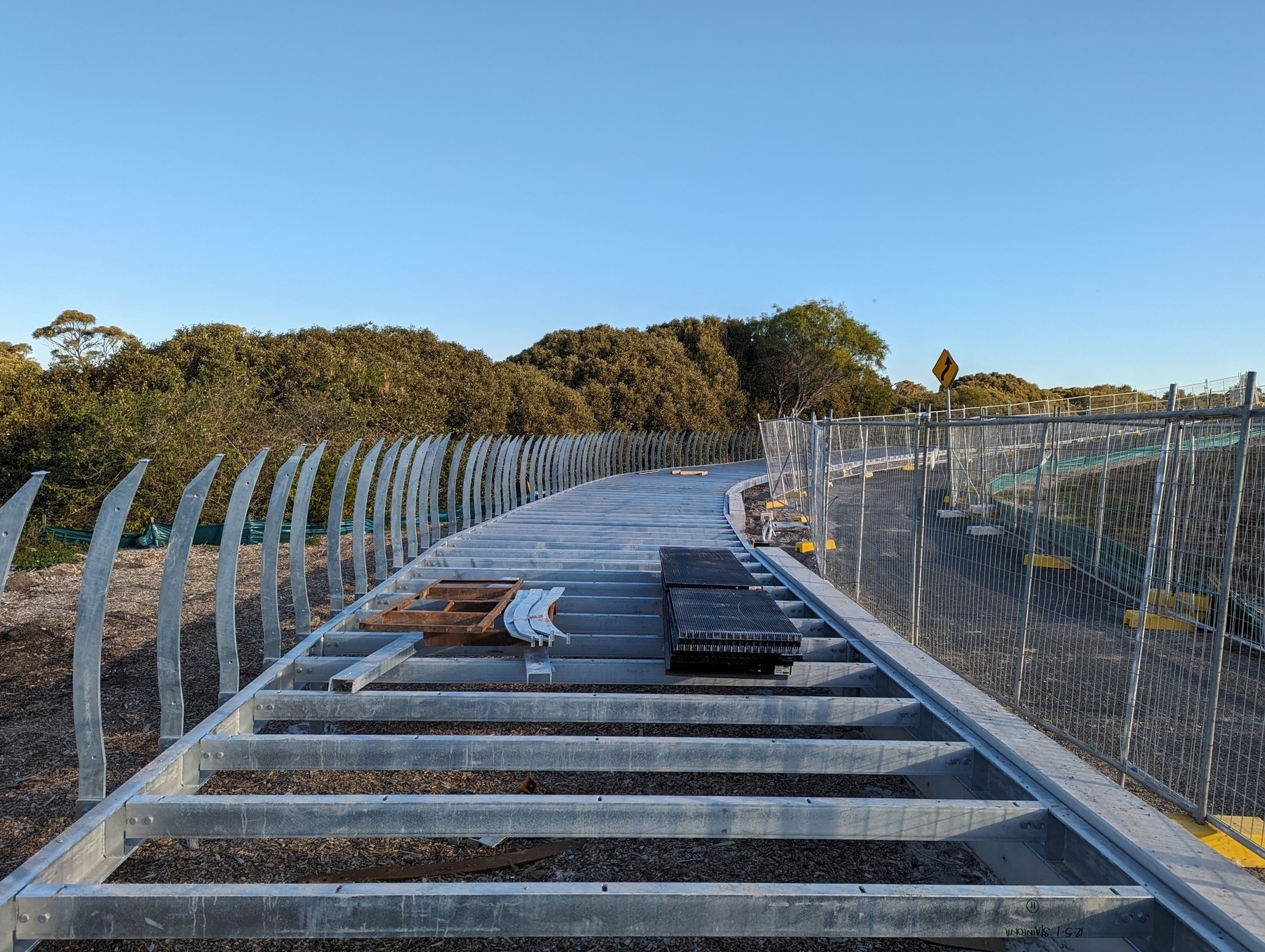
Another week, another new bike path! Still partly under construction, this one’s near my house alongside the excellently named Muddy Creek. 🚲
The dream is diversity
“We co-create with one another and with nature, but by the very creativity of the Universe and us in it, we cannot know what we will co-create.
Then what can guide us? Our guide can be a new founding mythic structure that reflects our full enlivenment: humanity in a creative universe, biosphere and human individual, and social lives that are fully lived and that keep becoming. The dream is diversity, more ways of being human as our 30 or so civilisations across the globe weave together gently enough to honour their roots and allow change to unfold gracefully. Our global woven civilisation is ours to create, ever-unknowing, facing, as Immanuel Kant said, the crooked timber of our humanity.”
Stuart A. Kauffman, ‘Why science needs to break the spell of reductive materialism’. Aeon 💬
See also: Stuart A. Kauffman (2016) Humanity in a Creative Universe. Oxford University Press.
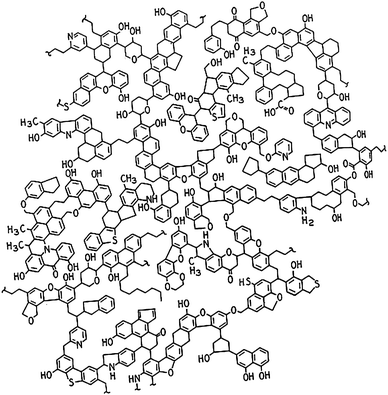
Image: [Chemical composition of coal][3].
I’m the author of Shu Ha Ri: The Japanese Way of Learning, for Artists and Fighters, available, now.
Stay in the Writing Slowly loop and never miss a thing (you’ll get a weekly digest of everything posted here, all in one convenient email.)
[3]: https:</https:></https:></https:>
Just want to say I’ve been using #Workflowy for 541 weeks now. It’s just fantastic. The app I’m happiest to pay my annual fee for (apart from #micro.blog, of course). #PKM 📝
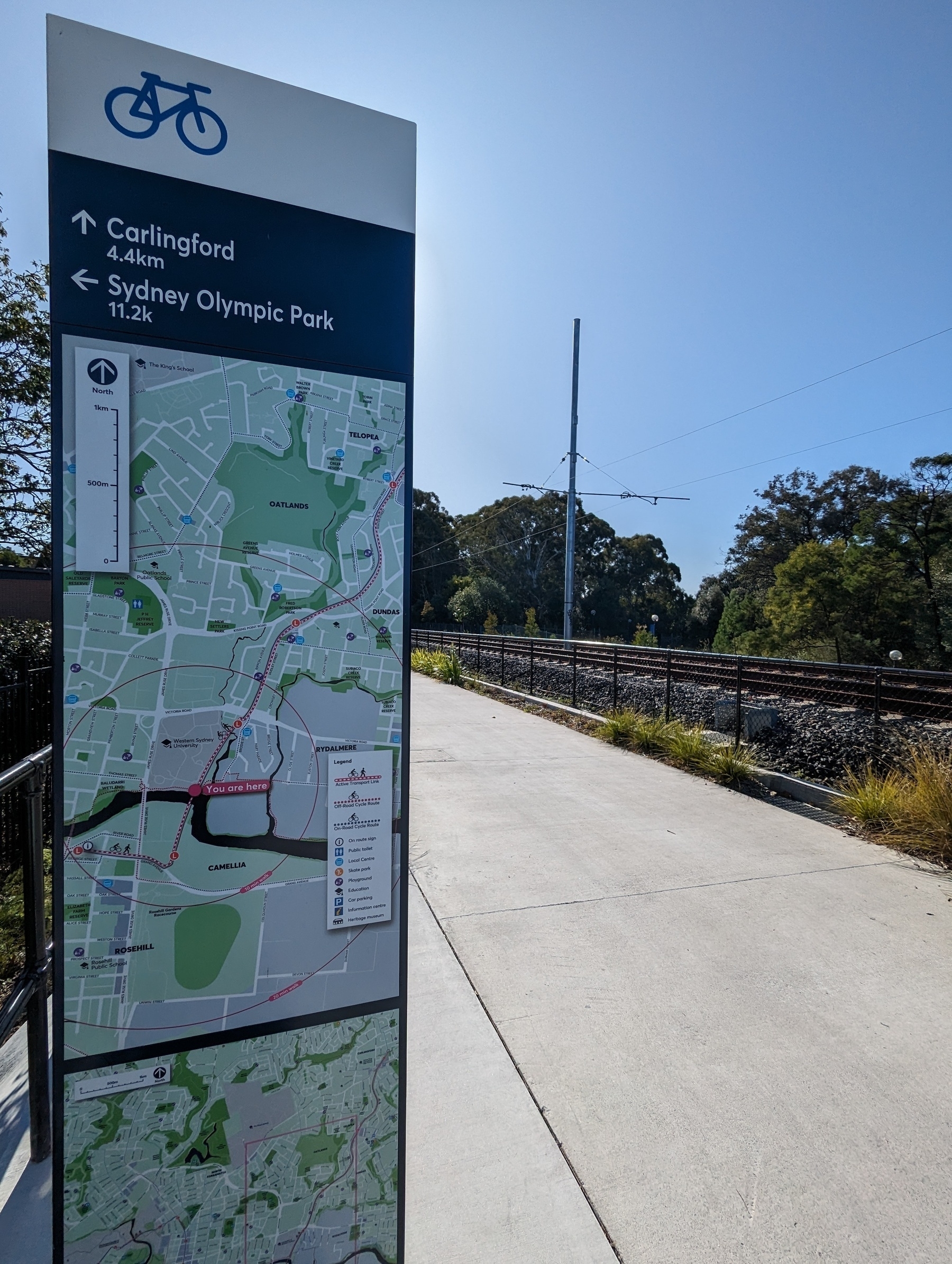
Checked out this new Sydney cycling path on the weekend. It runs from Parramatta, across the Parramatta River, and nearly 5km North to Carlingford. Extended safe, off-road riding makes me happy 😁📷🚲
The mastery of knowledge is an illusion
The writing task always eludes us.
CJChilvers sees in the slow but inevitable demise of the Evernote app a deeper critique of the concept of the ‘external brain’. Indeed, this term is rather clumsy marketing-speak, hardly improved by Tiago Forte’s version: ‘Building a Second Brain’.
I only have one brain, and it’s internal, thankfully. But I’m still very happy with the idea of the ‘extended mind’. My brain remains firmly in my skull, but it nevertheless uses the environment in many different ways to extend its capabilities.
Even though it seems like computing has been with us forever, it’s still really very early days. This technology is still quite new. We’re only just beginning to understand how to use it. I see the Evernote saga, and the concept of an external brain as part of that ongoing learning process.
It might be helpful to set the whole matter of external brains and extended minds in a wider context of literate and non-literate cultures.
Literate cultures tend to absorb many extended mind capabilities, such as memory, into writing. For example, How many poems or songs do you know by heart? Probably not many. What’s the point these days of learning things by heart? Why remember poems when you can just read them from a book? Literacy appears obviously superior to memory, even though something is lost along the way. What gets lost is the older, mnemonic culture of pre-literate societies. This loss in the transition from speaking to writing is what Plato’s Socrates warned of. Most literate people, though, neither mourn the loss nor even really notice it. The promise of writing is that if you could just get it all down you’ll have captured it, tamed it and mastered it. This is a familiar quest, from Adler’s Syntopicon1 to Otlet’s Mundaneum2, even to Allen’s “Getting Things Done”3. But somehow, the completion of the Writing Task, always eludes us. It’s too big. There’s simply too much to know and there has been for some time.
But oral cultures live in an enchanted world, not necessarily in a magical sense, but in the sense that the whole environment ‘speaks’, as part of a wider extended mind. Geographical features are not merely ‘dead matter’. They’re alive to tell stories which recount histories and genealogies, to give blessings and warnings. Plants and animals are similarly endowed with a depth of meaning.
This is the world that literate culture has exiled itself from, so that it barely comprehends its existence, much less its significance.
But this living world remains available to us. The exile is self-imposed. In her book, The Extended Mind, Annie Murphy Paul says:
“We extend beyond our limits, not by revving our brains like a machine or bulking them up like a muscle — but by strewing our world with rich materials, and by weaving them into our thoughts.”
We can’t master knowledge. It’s what we live in. This requires a radical shift of worldview from colonialist to ecological. The colonial approach to knowledge is to capture it in order to profit from it. The ecological approach is to live within it as within a garden to be tended. The two worldviews may well be mutually incompatible, though this matter is hardly resolved yet.
This saga isn’t over.
Further reading:
Annie Murphy Paul, The Extended Mind. The power of thinking outside the brain.
Margo Neale and Lynne Kelly, Songlines: The Power and Promise.Thames and Hudson.
Why not subscribe to the weekly email digest? All the posts, but only once a week.