
💬 “How convincing does the illusion of understanding have to be before you stop calling it an illusion?”
That’s the question James Somers asks in The New Yorker.
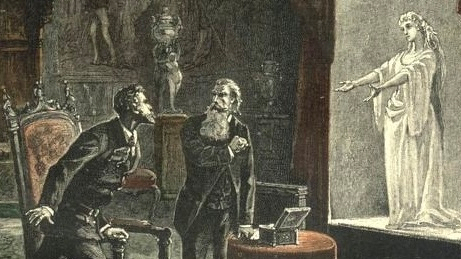
My answer: Fail to see the illusion and you’ll fail to understand AI. Jules Verne could have told us AI is not a person
The case that AI is thinking | New Yorker. No, it isn’t.
#AI #Tech #Consciousness #JulesVerne #Philosophy
To truly learn a language, you don’t need computers, you need human interaction. Time to get serious! Where to Go to Get Serious About Learning a Language | WIRED
—I’m the author of Shu Ha Ri: The Japanese Way of Learning, for Artists and Fighters.
#LanguageLearning #ShuHaRi #WIRED #Polyglot
A clear and accessible introduction to Japanese philosophy, in a podcast with Takeshi Morisato.
I’m the author of Shu Ha Ri: The Japanese Way of Learning, for Artists and Fighters, available now.
#JapanesePhilosophy #Podcast #ShuHaRi #Japan #Learning #TakeshiMorisato
AI is not helping the learning process
💬 “When teachers rely on commonly used artificial intelligence chatbots to devise lesson plans, it does not result in more engaging, immersive or effective learning experiences compared with existing techniques”
See also:
Civic Education in the Age of AI: Should We Trust AI-Generated Lesson Plans? | CITE Journal
I’m the author of Shu Ha Ri: The Japanese Way of Learning, for Artists and Fighters, available now.

What’s your most valuable note?
@eleanorkonik@pkm.social asked:
“Any examples where a tiny note became unexpectedly valuable?”
Here’s my reply.
In 2018 I wrote a note describing how I’d like to visit Japan and learn more about the concept of Shu Ha Ri.
Better late than never I did visit Japan, and I ended up writing the book on Shu Ha Ri.
There was a lot of value in that one short note.

To truly understand, you must take things apart and build them back up. My cousin did it with cars, I do it with ideas in my #Zettelkasten and I did it with the concept of #ShuHaRi in my book.
Create your own mental models: it’s a high-agency, active process!
#learning #deeplearning #PKM #notetaking
Create your own mental models
When he was still in high school my cousin took to pulling old cars apart, completely, then putting them back together. This was a real learning experience, and the beginning of an entire career working with motor vehicles. François Chollet, author of Deep Learning with Python, said:
💬 To really understand a concept, you have to “invent” it yourself in some capacity. Understanding doesn’t come from passive content consumption. It is always self-built. It is an active, high-agency, self-directed process of creating and debugging your own mental models. - as quoted by Simon Willison.
This is what I’m doing with my collection of working notes, my Zettelkasten. I disassemble ideas and concepts, de-contextualise them, and reassemble them into new arrangements under quite different circumstances. From fragments you can build a greater whole.
Sometimes ‘invention’ is mashing together two or more existing ideas in new and unexpected ways. But sometimes it’s simply rebuilding an existing idea from the ground up, to create something previously unimaginable.
I wrote my book about the Japanese concept of learning, Shu Ha Ri, because in the fifteen years since I first encountered this concept, no one else had written a clear introduction. It’s quite literally the book I wanted to read for myself. Well, I certainly didn’t invent the idea, but in writing the definitive introduction I’ve certainly taken it apart, examined it from every angle, worked out how to explain it to others, and put it back together.
On Friday I received a nice text from a martial arts instructor, who’d been handed the book by someone else:
💬 I absolutely loved it. First time in a long time I immediately reread a book.
And so I hope you’ll enjoy giving the book a test drive too.
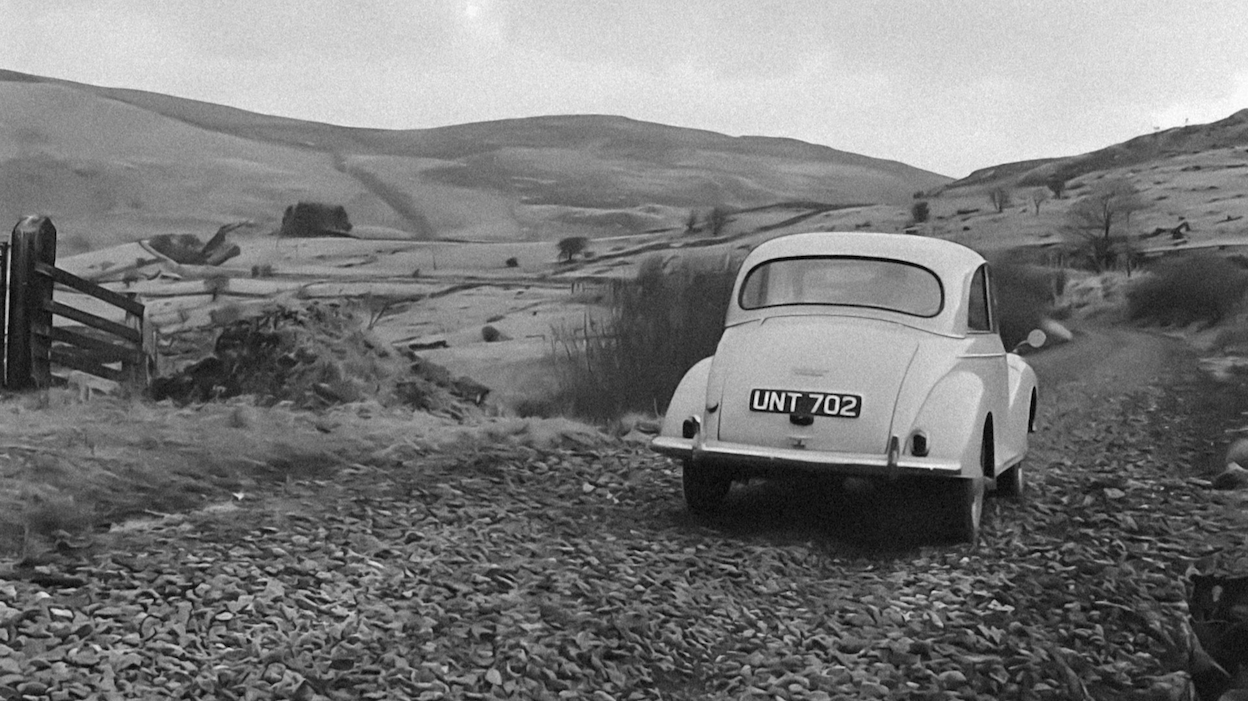 Photo by Geoff Charles, 1962. National Library of Wales. Llyfrgell Genedlaethol Cymru / The National Library of Wales on Unsplash
Check out my book, Shu Ha Ri: The Japanese Way of Learning, for Artists and Fighters. And you can also subscribe to the weekly Writing Slowly email newsletter.
Coming back to where you started is not the same as never leaving.
— Terry Pratchett
📷 Outside Matsumoto Castle it was raining gently.

My book, Shu Ha Ri: The Japanese Way of Learning, for Artists and Fighters, is out now. Please check it out.
#MatsumotoCastle #Photography #JapanCulture #ShuHaRi #Learning #MartialArts #Nonfiction #JapanTravel
🎵 You’ve got to have a dream. #RetroTech #VinylVibes