Status

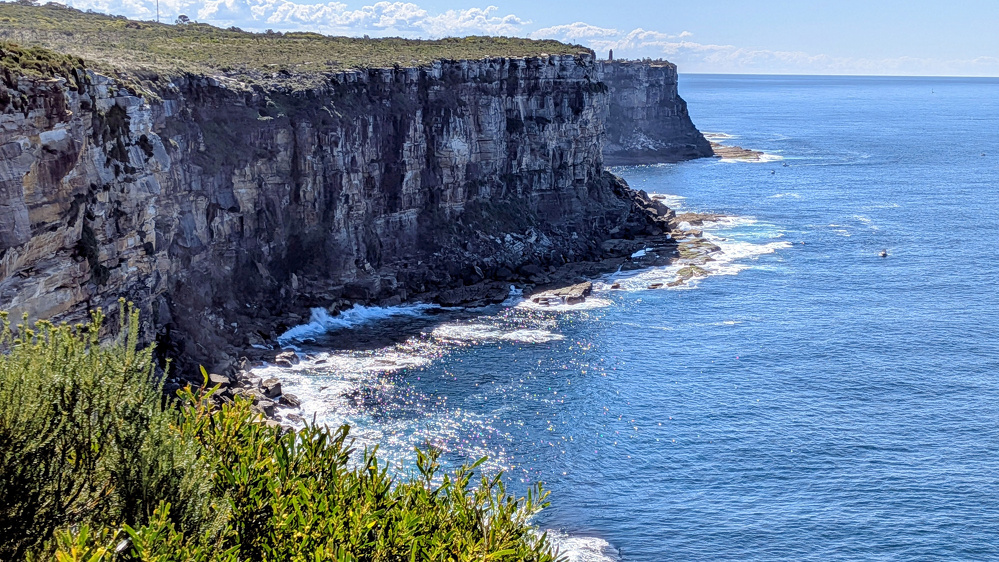
    A rocky cliffside at North Head, Sydney, overlooks the ocean with waves gently crashing against the shore and some greenery in the foreground.
    The North Head of Sydney Harbour is always spectacular.

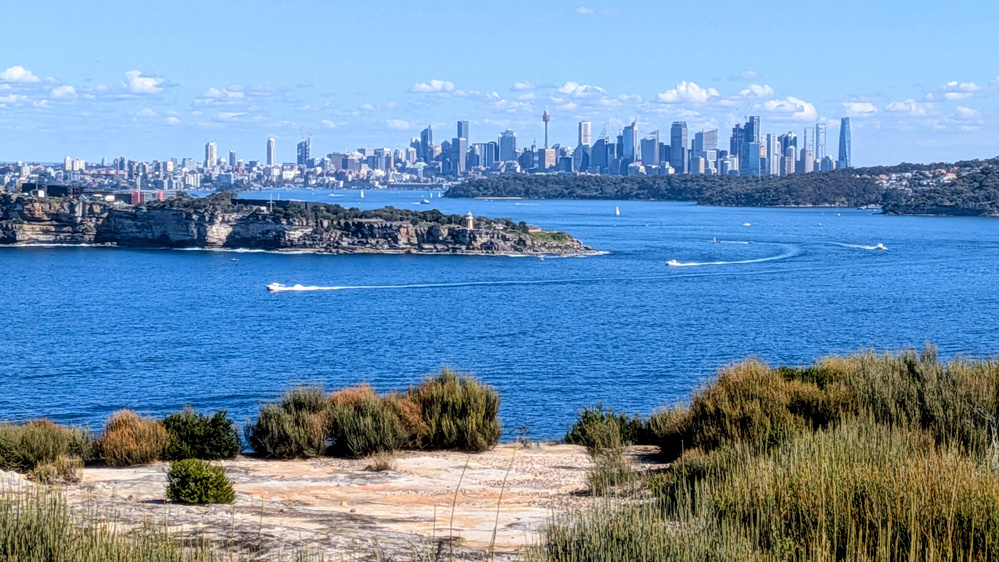
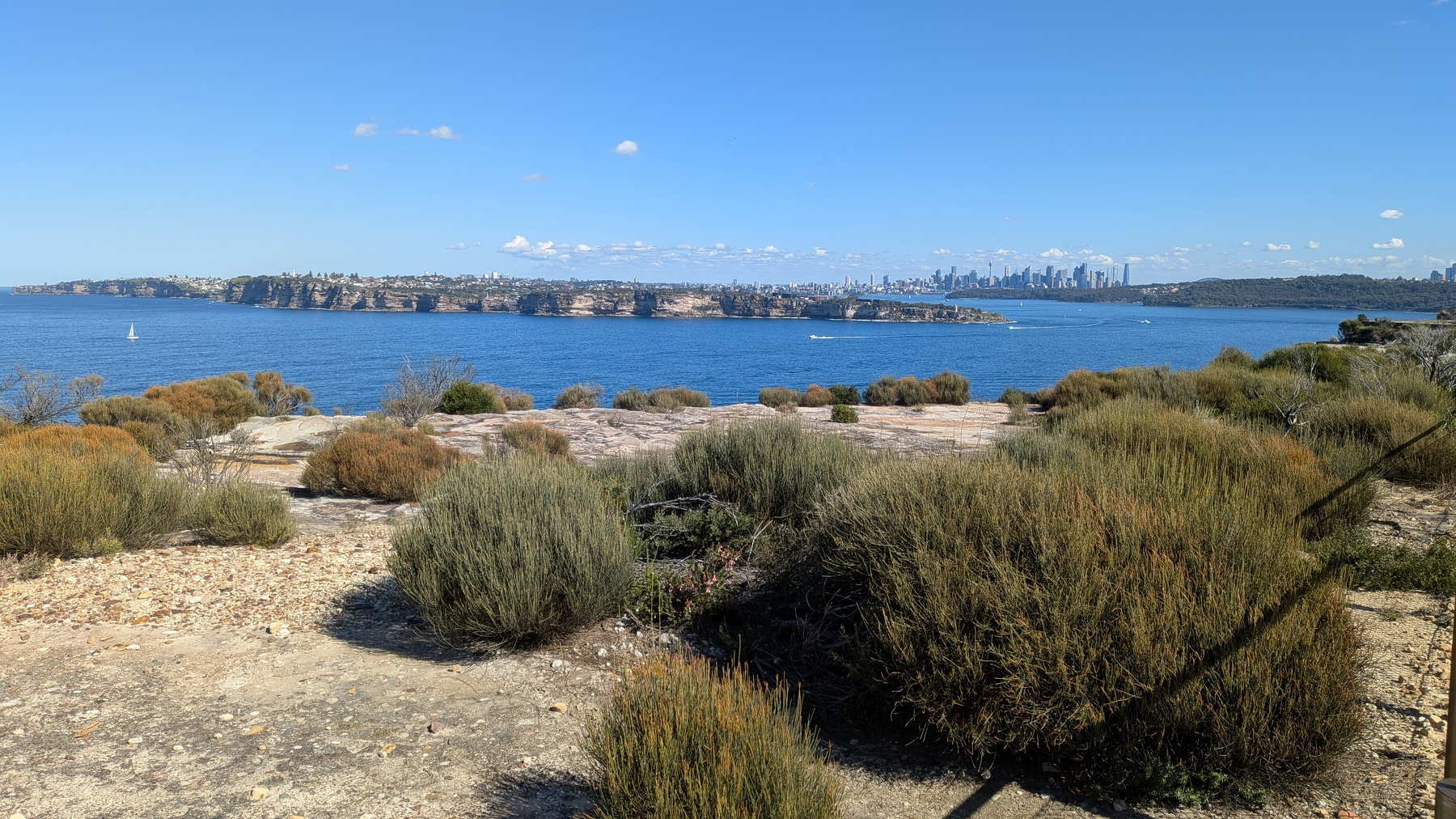
    A coastal landscape at North Head, Sydney, features clear blue water with boats and a distant city skyline under a partly cloudy sky.
    It’s amazing how close to the city this is, yet it feels quite distinct.

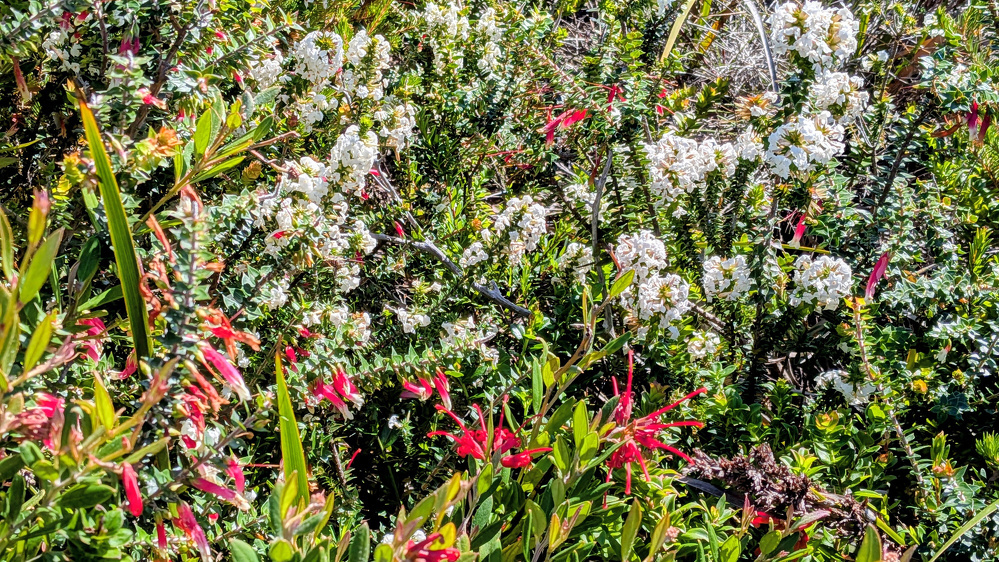
    A dense cluster of white and red Australian native flowers surrounded by green foliage.
    We weren’t alone; the early spring wildflowers were already out in force.

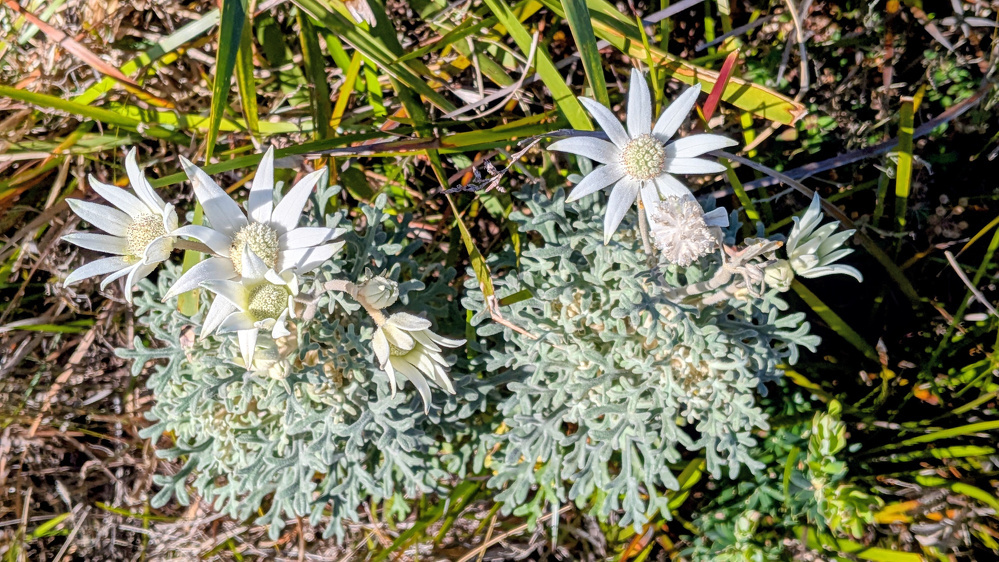
    Two clusters of white flannel flowers with spiky petals and silvery-green foliage are growing among grass and dry leaves.
    Flannel flowers: an emblem of New South Wales.

    A coastal landscape with the rocky terrain and shrubs of North Head, Sydney, overlooks a blue body of water with South Head and a distant city skyline, Sydney CBD, on the horizon.
    I’m inspired to come here more often.

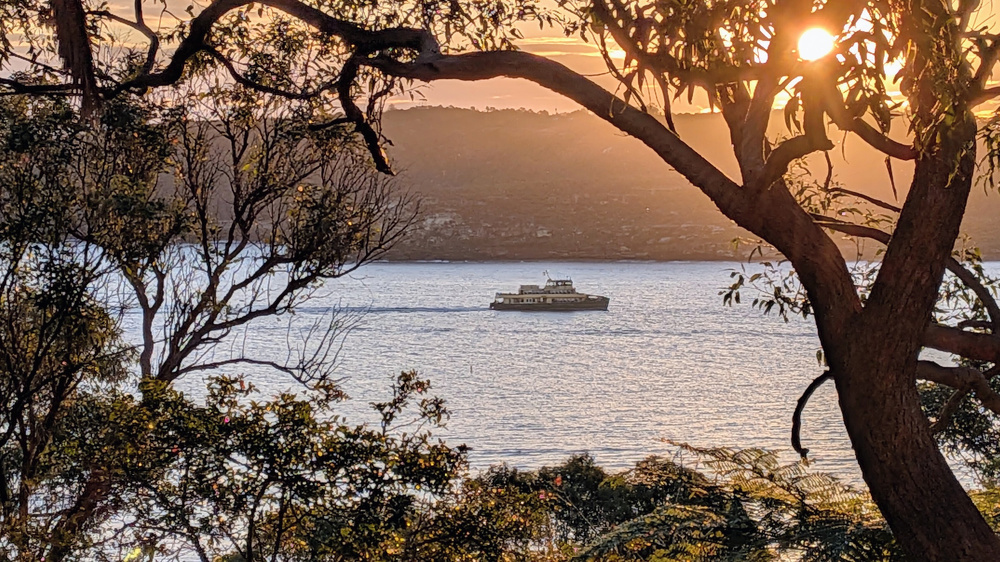
    A ferry is sailing on Sydney Harbour during sunset, framed by trees and branches in the foreground.
    The ferry took me home.

    📷 🍳Sunday morning is time for shakshuka.

    A dish of shakshuka - baked eggs topped with herbs, crumbled cheese, and a tomato-based sauce is served in an oval ceramic bowl on a wooden table.

    Loud and agitated shouting had me alarmed this morning. Sounded like a real bust-up. Then I understood. It’s the World Cup. Messi has scored. Our neighbours are Argentinian and this is only the start. ❤️🇦🇷
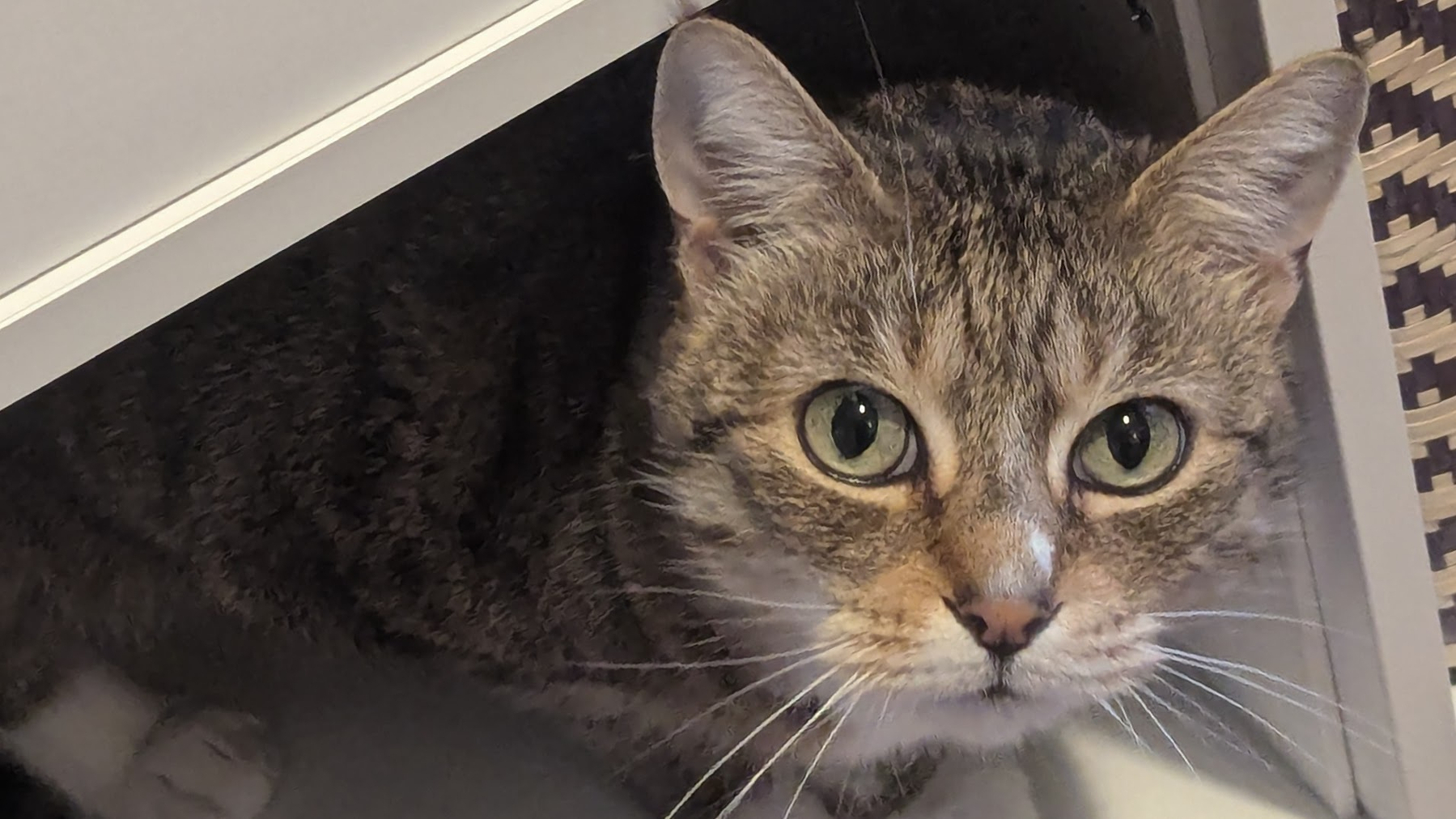
    On Friday we learned our cat, who has visited Writing Slowly several times, has a terminal illness, with just weeks to live.

    I’m deeply sad. He has been my close companion through years of working from home. To discover I could feel this way about a cat is a harsh gift, but a gift all the same.

    A tabby cat with wide eyes is peering out from under a piece of furniture.

    I fell down a rabbit hole writing about Hypercuriosity! 🤯 Inspired by Anne-Laure Le Cunff’s work.

    Read how being curious about everything defines my process: https://writingslowly.com/2025/09/30/curious-about-hypercuriosity.html

    #Hypercuriosity #Curiosity #ADHD #Writingslowly

    Author Craig Mod seems to be following me. I saw his picture in Kyoto Station. Now he’s doing a 200km walk in the Kiso valley, where I walked just a few days ago. Follow his latest pop-up newsletter Between Two Mountains for a unique view of Japan.
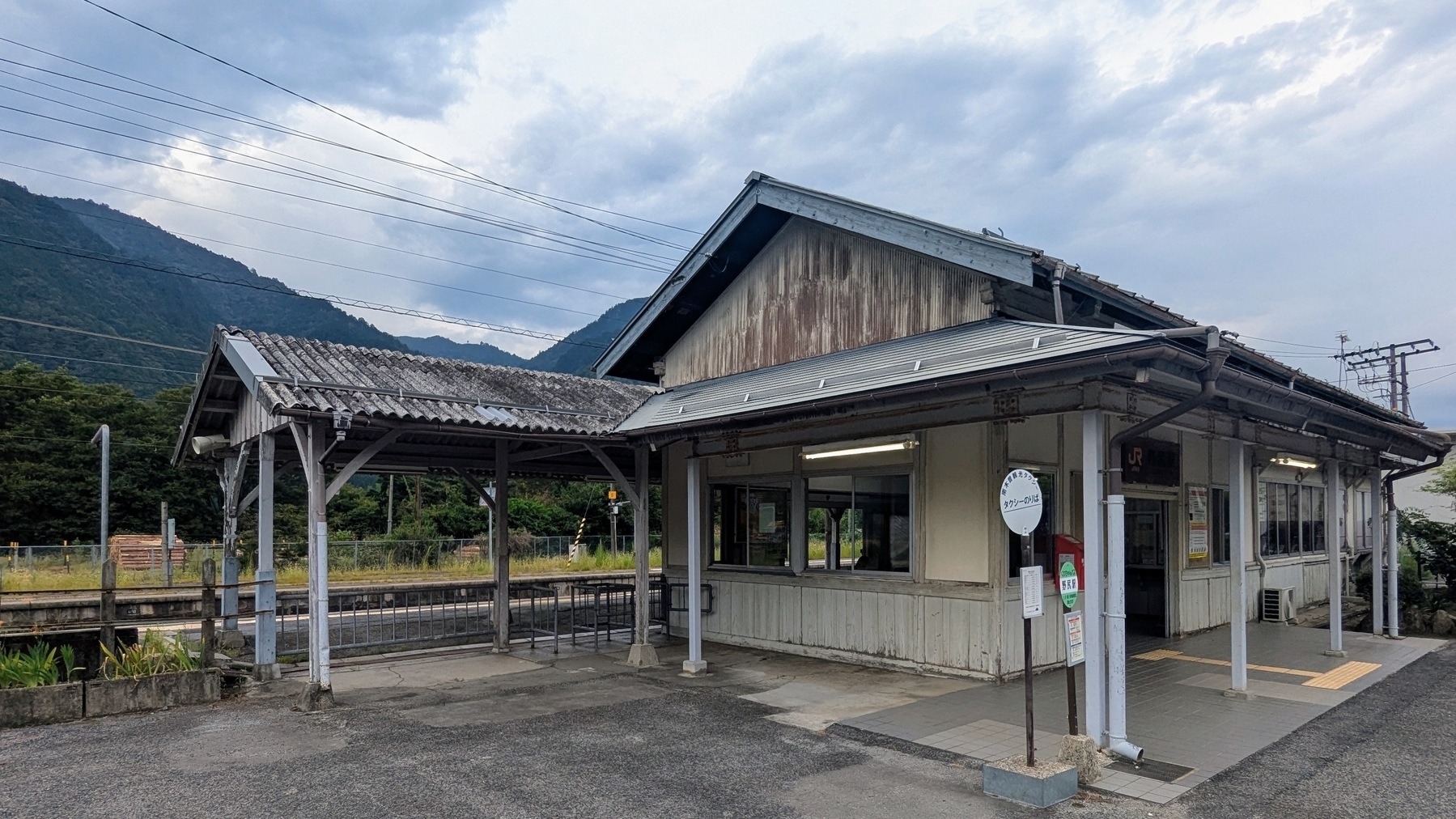
    A small, rustic Japanese train station building stands against a backdrop of mountains under a cloudy sky.

    #KisoValley #Japan #Walking #Travel #SlowTravel

    Magpie swooping season has been busy. But on this morning’s bike ride the magpies I saw were busy chasing a noisy miner (not a mynah). Then just when I thought I’d escaped, I was swooped - by a mob of ebullient rainbow lorikeets, high on their supply of bottlebrush nectar.
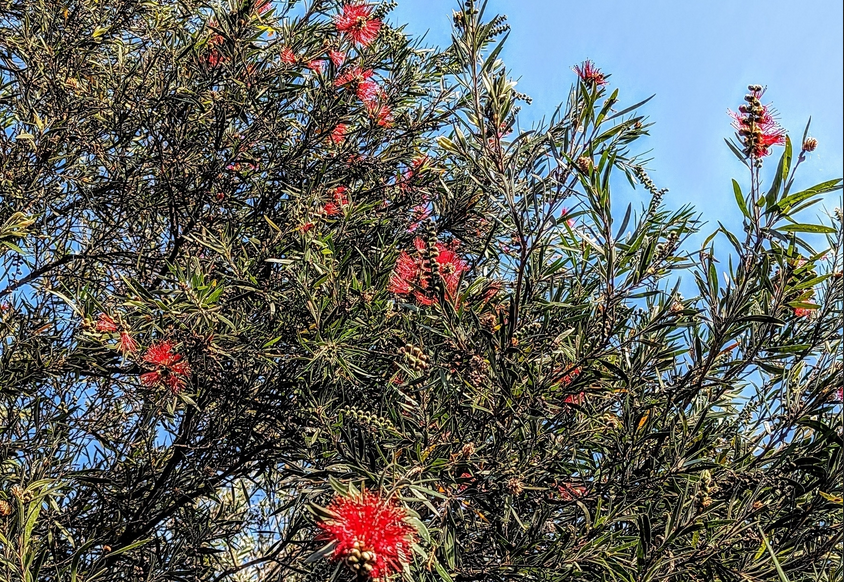
    the red flowers of a bottlebrush tree against a blue sky

    #birdlife #bikelife #swoopingseason

    I’m excited to be heading to Japan for some research. But just realised I’ve spent more time learning Japanese history than the Japanese language. Oops.

    #shuhari #JapanTravel #writingslowly #amwriting

    Thinking about Joanna Macy today. In memoriam. I was very influenced by her insistence on both the necessary grief and the vital hope.

    Well the book arrived this morning. Now I really am publishing slowly!

    A collage displays a book titled "Destinations & Detours" in various views, including its cover, spine, open pages, and several copies packed in a box.

    Conducting myself properly

    A vintage cartoon from Punch magazine, showing a conductor busking by conducting an orchestra of broken instruments with no musicians to play them.

    They made me the student leader of the school orchestra. One day the music teacher was sick and he asked me to conduct. I had no idea what to do, except what I’d seen him doing. So I waved my arms around.

    Today I’m fragmented, overwhelmed by what there is still to complete, and also by all there is to start. Somewhere in the middle, there I am, lost between starting and finishing. Flailing.

    Yet even no method is still a method. Says the poet Christian Wiman1:

    💬 “The truth is our only savior is failure.”

    And look at those stats! This is my 200th post here this year. Writing slowly? No, not me.


    1. Christian Wiman, “The Preacher Addresses the Seminarians” from Once in the West (Farrar Straus and Giroux, 2014). ↩︎

    Updating a Wordpress site this weekend felt like a chore. I really wanted to enjoy it, but the writing interface, with its content blocks, seemed to block the flow. Why is it like this? Feels like the priority is machine convenience, not the human experience. Opinions, anyone?

    The only problem with 📷🎉 completing the September 2023 micro.blog photoblog challenge - 30 days of posting photos - is that by the end I kind of felt like I needed a short rest. But with normal service now resuming, I’m writing slowly again!

    A cat lies curled up asleep

    📷 🏡A couple of weeks ago we visited CERES urban farm, with its community garden, cafe, bike workshop, nursery, bookstore, playground, market, chooks and, yes, a food forest. Worth a visit if you’re ever in Melbourne.

    #gardening #permaculture

    Vegetable beds at CERES community gardens, Melbourne.

    Feels like Summer here in Sydney, even though it’s the penultimate day of Winter. 26C by lunchtime, followed by an afternoon thunderstorm.

    Painting of Redfern Station in the rain, by Arthur Streeton, 1893. Public Domain. In the foreground, a wide, rain-drenched road reflects the cloudy sky.

    The early morning cloud was lifting over Spectacle Island 📷

    Spectacle Island with a band of cloud on its side.

    Yesterday I polished the look of the Writing Slowly website by switching to Matt Langford’s Tiny theme, and adding some font and colour-scheme customisation of my own. So long as you’re not alergic to CSS, Micro.blog makes this very easy to do. Anyway, dear reader, I hope you like it. #WebDesign #Indieweb #PersonalSites #Blog

    Finished reading Cold Enough for Snow

    Finished reading: Cold Enough for Snow by Jessica Au 📚 This was a quite mezmerising read. It reminded me of the writing of Yasunari Kawabata, who won the Nobel Prize for Literature in 1968. He wrote a novel called Snow Country. Both these snowy books are set in an unnamed Japanese onsen resort in the winter, a train journey away from Tokyo. The Wikipedia entry for Kawabata’s work says:

    Through many of Kawabata’s works the sense of distance in his life is represented. He often gives the impression that his characters have built up a wall around them that moves them into isolation… Kawabata left many of his stories apparently unfinished, sometimes to the annoyance of readers and reviewers, but this goes hand to hand with his aesthetics of art for art’s sake, leaving outside any sentimentalism, or morality, that an ending would give to any book. This was done intentionally, as Kawabata felt that vignettes of incidents along the way were far more important than conclusions.

    All this qualities strongly apply to Jennifer Au’s book, too. But she writes about quite different themes, such as the relationship between mother and daughter, and the distance that accrues between second generation migrants and their parental place of origin.

    I found the prose to be so understated as to be almost tedious, but then I found the narrator’s ‘vignettes of incidents along the way’ strangely engaging.

    Why I'm writing slowly

    There’s an emerging movement in favour of ‘slow productivity’.

    And writing is one of the best examples of the many benefits of hurrying slowly.

    Successful writing doesn’t result from Herculean efforts to tally up mammoth word-counts, often at the last minute (although, if that’s your chosen path, good luck). The best and most sustainable writing takes place slowly and methodically. This is so despite the many voices telling you how you can ‘write a book in a month’, ‘write a book in a week’, or even ‘write a book in a day’. You can only do this if you write a lot, but without haste.

    What works is to write slowly and consistently, so that the writing accumulates over time into larger and ever more meaningful pieces.

    The English author of the Victorian age, Anthony Trollope, epitomised a slow but steady approach to writing. He produced a very significant output, including 47 novels, and is best known for a long series of novels centred upon the fictional county of Barsetshire. Yet he claimed never to write for more than three hours a day. In fact, while becoming one of the period’s most popular novelists, he maintained a full-time job with the Post Office. Because he had a workable method, he didn’t need more time.

    And without developing a writing method that works, no amount of extra time will ever be enough.


    If you don’t have time to keep up with all the posts on this site, why not subscribe to the weekly email digest?

    Why I'm writing slowly

    There’s an emerging movement in favour of ‘slow productivity’.

    And writing is one of the best examples of the many benefits of hurrying slowly.

    Successful writing doesn’t result from Herculean efforts to tally up mammoth word-counts, often at the last minute (although, if that’s your chosen path, good luck). The best and most sustainable writing takes place slowly and methodically. This is so despite the many voices telling you how you can ‘write a book in a month’, ‘write a book in a week’, or even ‘write a book in a day’. You can only do this if you write a lot, but without haste.

    What works is to write slowly and consistently, so that the writing accumulates over time into larger and ever more meaningful pieces.

    The English author of the Victorian age, Anthony Trollope, epitomised a slow but steady approach to writing. He produced a very significant output, including 47 novels, and is best known for a long series of novels centred upon the fictional county of Barsetshire. Yet he claimed never to write for more than three hours a day. In fact, while becoming one of the period’s most popular novelists, he maintained a full-time job with the Post Office. Because he had a workable method, he didn’t need more time.

    And without developing a writing method that works, no amount of extra time will ever be enough.

    You can get a lot done by writing slowly

    Why I’m writing faster

    Look, I wrote a book!


    If you don’t have time to keep up with all the posts on this site, why not subscribe to the weekly email digest?

Older Posts →