books
-
“Small pieces loosely joined”. — From fragments you can build a greater whole.
-
“Everything is miscellaneous”. — What does it mean to write from the bottom up instead of from the top down?
-
“The smartest person in the room is the room”. — The mastery of knowledge is an illusion.
-
“The Internet is not made out of content”. — What comes after content?
- A video interview with the author.
- A summary of the argument, adapted from the introduction: The Surprising New Significance of Shu Ha Ri in Postwar Karatedo.
- A 1983 BBC documentary about Okinawan karate: The Way of the Warrior: Karate, the Way of the Empty Hand. This is extraordinary and a real classic! (mentioned in a footnote on p.97).
Holy mother of cheeses, the Internet is not made out of content

Holy mother of cheeses, the Internet is not made out of content.
💬 “The Net is not content.
There is great content on the Internet. But holy mother of cheeses, the Internet is not made out of content.
A teenager’s first poem, the blissful release of a long-kept secret, a fine sketch drawn by a palsied hand, a blog post in a regime that hates the sound of its people’s voices — none of these people sat down to write content.
Did we use the word “content” without quotes? We feel so dirty.” — Doc Searles and David Weinberger, New Clues
Plenty of my thoughts about writing, and writing for the Web, are really just paraphrases of something David Weinberger has already said with far greater eloquence and perspicacity.
And what do you know? the author has a new book out in October 2026:
No doubt Beautiful Particulars will also help reshape my brain, and maybe yours too.
I’m the author of Shu Ha Ri: The Japanese Way of Learning, for Artists and Fighters, available now.
And if this article piqued your interest you might like to sign up to the Writing Slowly weekly email digest, where you’ll find yourself in an exclusive club whose privileged members just get a weekly email.
The real science behind Project Hail Mary

Yes, there is some real science behind 📚 Project Hail Mary.
It’s an enjoyable and successful sci-fi novel and film, but the science fiction is frankly quite a bit more fiction than science.
It would hardly give away the plot of Project Hail Mary to mention that it has a lot to do with the microbial contamination of experimental research. I mean, that’s what the story is about – in the same way Andy Weir’s previous novel, The Martian, was all about potato farming.
If this floats your spaceship (microbes I mean, not potatoes), you might enjoy a fascinating article about the real science of microbial contamination in experimental contexts. Apparently there’s a bacteriophage called Φ80 and it’s running amok.
How Φ80 infiltrates research labs.
Scary stuff! Perhaps someone will turn it into a movie.
I’m the author of Shu Ha Ri: The Japanese Way of Learning, for Artists and Fighters, available now.
And if you found this article interesting you might like to sign up to the Writing Slowly weekly email digest. You’ll receive all the week’s posts in that handy email format you know and love.
Finished reading Trip to the Moon by John Yorke

Trip to the Moon by John Yorke 📚 sets out the author’s deeply-considered views on the nature of story and goes further than his previous work on the same theme, Into the Woods.
John Yorke is a highly experienced writer and producer for British TV, and here he presents invaluable insights into how stories really work, from the perspective of someone who absolutely knows what he’s talking about. I found the section on non-western story-forms very interesting, and though I wasn’t convinced by the claim that stories in all cultures are basically fueled by ‘some bastardization of the hero’s journey’, just hearing the argument made by a true expert was very helpful.
More convincing - and worrying - was the claim that effective storytellers ‘unshackle us from empirical observation by drugging us with rage or anger or pleasure.’ Indeed, if this book has a single key theme, it might be that telling stories is a uniquely dangerous skill, whose seductive power we’d do well to understand much better than we do.
The insights of Trip to the Moon are profound, though a more rigorous edit would have served the work well. In places the text feels unbalanced. Crucial developments are often truncated in the main chapters only to resurface in the lengthy commentary at the back. Despite this imbalance, the author’s body of work remains vital for any aspiring writer. Start with Into the Woods before tackling this more fragmented sequel.
Leonard Koren on Life as an Aesthetic Experience
I’ve never been much of a bathing person. Perhaps that’s due to unpleasantly lingering memories of luke warm water in freezing cold bathrooms in the UK when I was a child. The bath was fine enough, but getting out would be a real test. Even bathing, as an adult, in natural hot springs on Orcas Island in the US Pacific Northwest didn’t really do it for me. That was a little ‘rustic’, and not in a good way.
True, swimming here in Sydney where I live is fabulous, especially in the Summer, when the cool refreshment of the ocean waves is totally restorative. But bathing? Not so much. Until a few months ago, that is, when I visited Japan.
📚Tsundoku emergency temporarily averted.
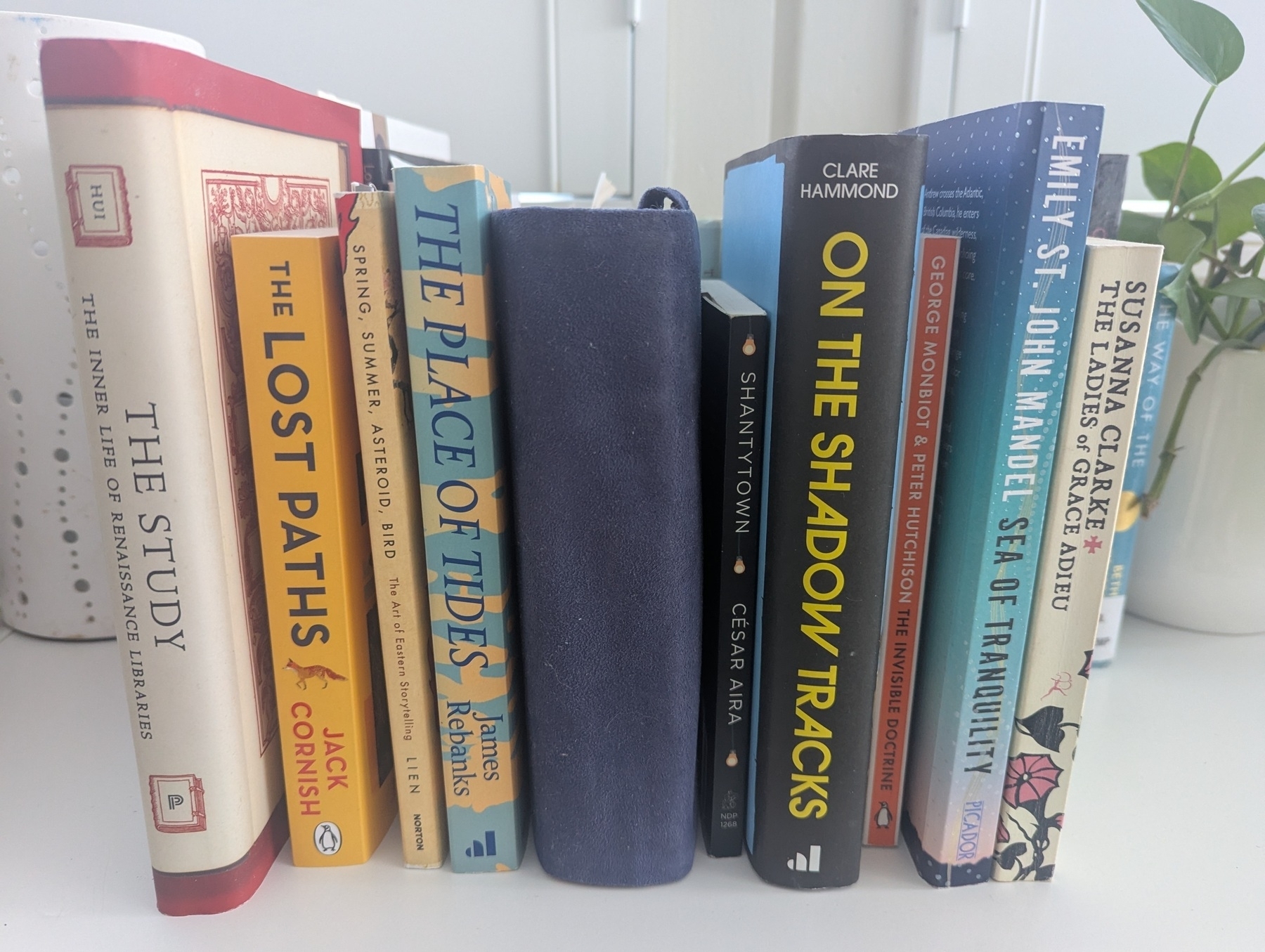
Some books I read before visiting Japan.
#reading #Japantravel #shuhari
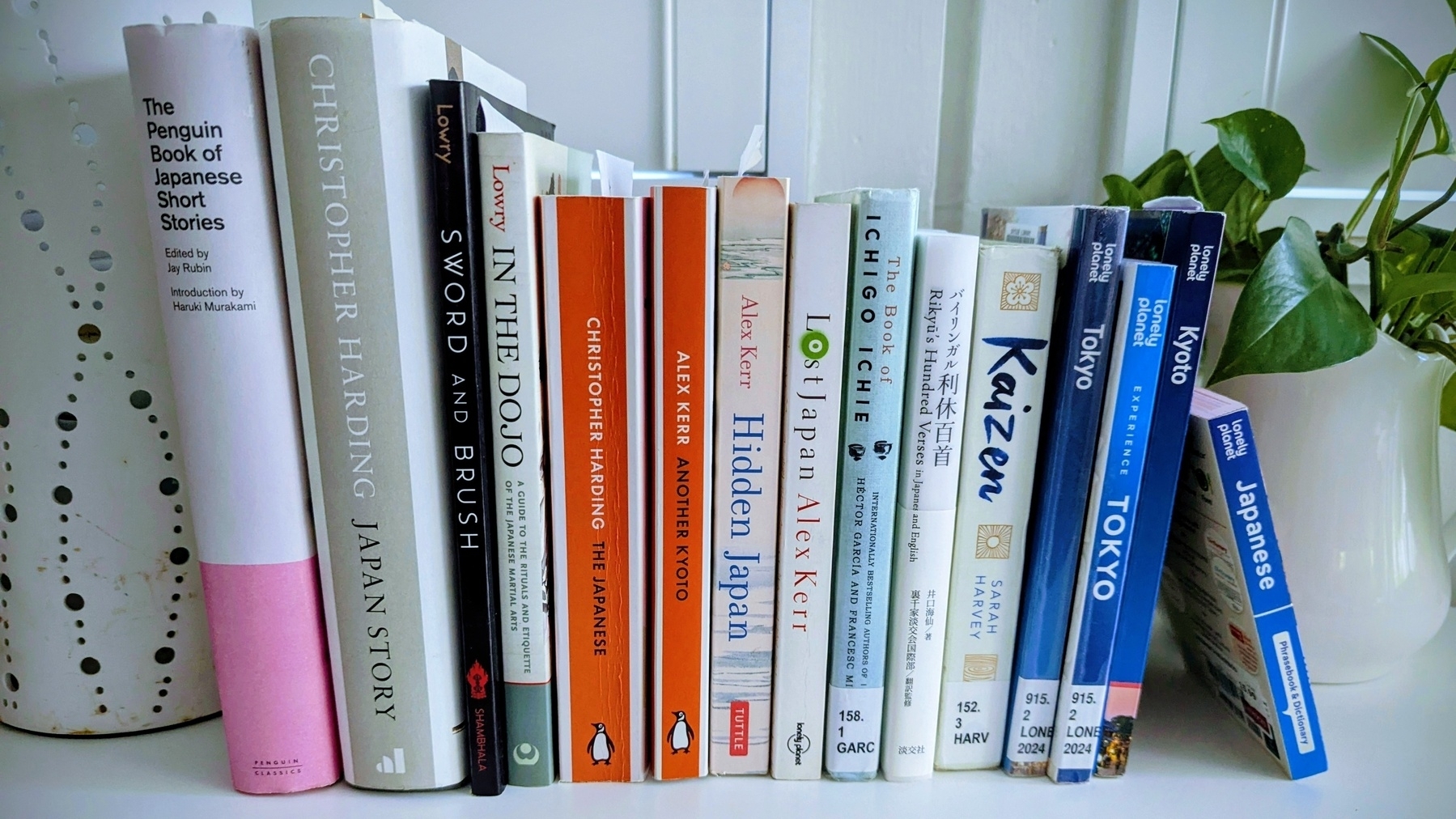
After launching my book on the Japanese concept of Shu Ha Ri I’m visiting Japan itself soon to research another concept that’s become a minor obsession.
I’m particularly interested in traditional Japanese gardens and in traditional crafts, so where should go? If you know Japan, what tips have you got to share?
#Japan #shuhari #Japantravel #Japanesegardens
Mastering Any Skill, the Japanese Way
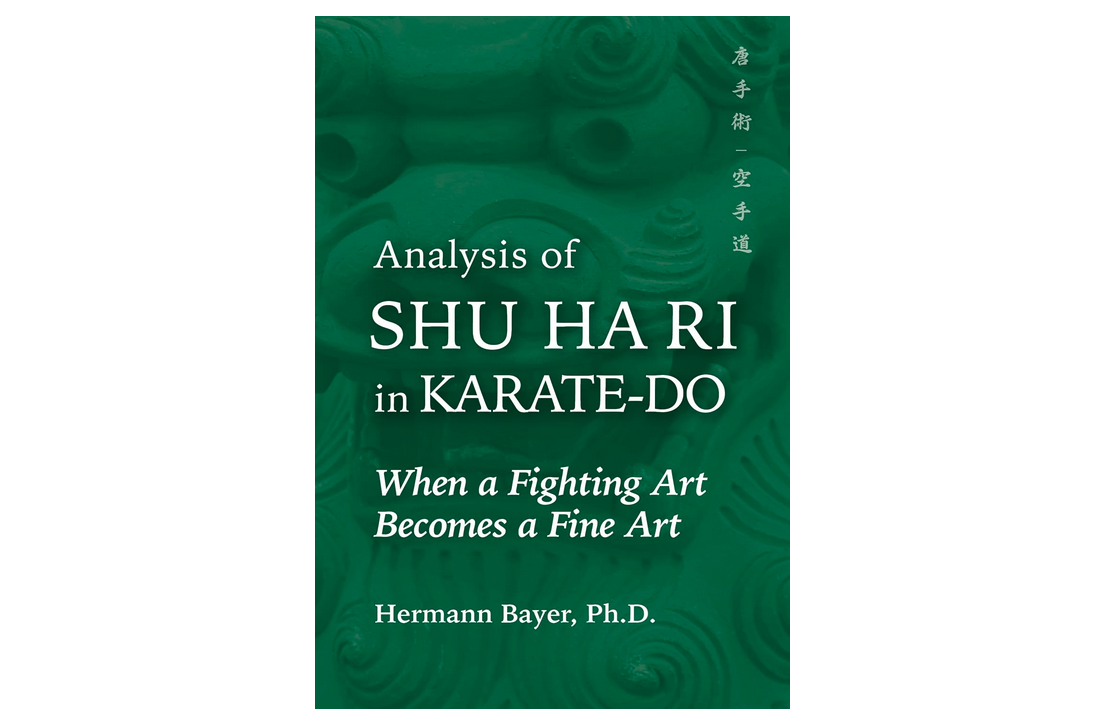
📚 A review of Analysis of Shu Ha Ri in Karate-Do: When a Martial Art Becomes a Fine Art by Hermann Bayer, Ph.D.
Most people believe that mastery of a skill comes from practicing harder and longer. ‘10,000 hours of deliberate practice’ has achieved a level of imperative unwarranted by the actual evidence (Epstein, 2021). Yet countless learners, whether in business, the arts, or sport, hit a plateau they can’t break through. The problem isn’t effort. It’s that they’re missing a hidden progression that separates the true experts from the merely experienced.
For centuries, Japanese masters have understood this journey. It has three distinct phases, Shu, Ha, Ri, and each demands a different mindset and approach. Skip one, and your growth stalls. Get them right, and you move beyond imitation into competence and ultimately mastery. Unlike many Western theories of learning, it’s not a linear set of stages to be climbed like the rungs of a ladder: instead it’s a cycle, a spiral of increasing competence where the earliest phase is never forgotten.
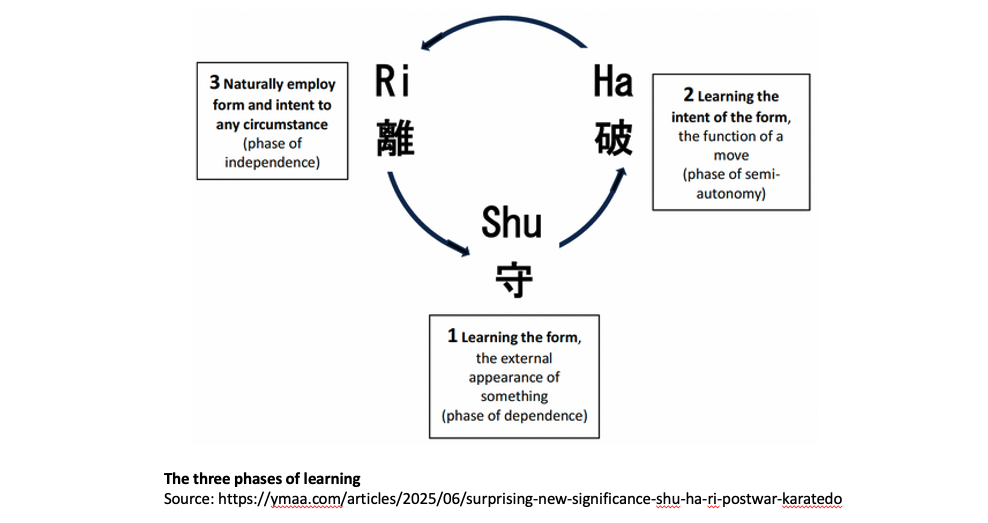
Hermann Bayer’s Analysis of Shu Ha Ri in Karate-Do is one of the clearest and most extensive explanations of this progression I’ve encountered. While his examples come from Okinawan karate, his real subject is the universal process of moving from novice to master, potentially in any discipline.
Bayer brings to his writing both deep scholarship and decades of martial arts expertise. This shows, but the book remains reasonably accessible for general readers. He unpacks philosophical ideas without jargon, showing exactly how they play out in practice. One of his most important clarifications is effectively a major theme of the book: Shu Ha Ri is not an Okinawan tradition. Despite its frequent modern association with karate, Bayer shows that the concept comes from Japanese fine arts, especially from the tea ceremony, and only entered karate after karate’s fairly recent introduction to mainland Japan, in 1922. This detail is more than just historical trivia; it changes how you see the concept. Shu Ha Ri is not tied to a single fighting style, and certainly not to karate. It’s potentially a transferable blueprint for mastering any complex skill.
Although Shu Ha Ri has wide applicability and has been adopted in many different disciplines, Bayer does focus heavily on karate, and on its Okinawan origins. This is the author’s specialist field. He is, after all the author of the two-volume Analysis of Genuine Karate, which explores Okinawa as the cradle of true karate. So readers curious about Shu Ha Ri, but with limited interest in karate and Okinawan history may wish for more examples from other disciplines. But the underlying framework is so universal that the author’s examples still work. You don’t need to know a kata from a kumite to apply what you learn.
If you are a practitioner of Karate, I suspect after reading this book you’ll never see it in quite the same way. But what makes the concept of Shu Ha Ri valuable beyond martial arts is its potential application to any field where performance and creativity matter. For instance, writers might see how to move from imitating their influences to developing a unique voice. Leaders might understand when to enforce process and when to encourage innovation. Artists, athletes, and entrepreneurs might recognise the moment to step beyond rules without losing their foundation.
If you care about personal growth and continuous improvement, or want a proven roadmap to mastery, this book will give you both the theory and the practical insight to get there. By the time you finish it, you won’t just understand Shu Ha Ri, you’ll be inspired to integrate this learning philosophy into your own life. And in case you were tempted, you will never again confuse Shu Ha Ri with the historical traditions of Okinawan karate.
Details
Analysis of Shu Ha Ri in Karate-Do: When a Martial Art Becomes a Fine Art by Hermann Bayer, Ph.D. (June 2025, ISBN: 9781594399954)
Purchase directly from the publisher, YMAA.
Resources
I’m the author of Shu Ha Ri: The Japanese Way of Learning, for Artists and Fighters. It’s a short and accessible introduction to the concept, available now.
And if you enjoyed this review, you may like to subscribe to the weekly Writing Slowly email digest.
The cat is characteristically ecstatic to see that the proofs of the new book have arrived. Not long now before it’s published!
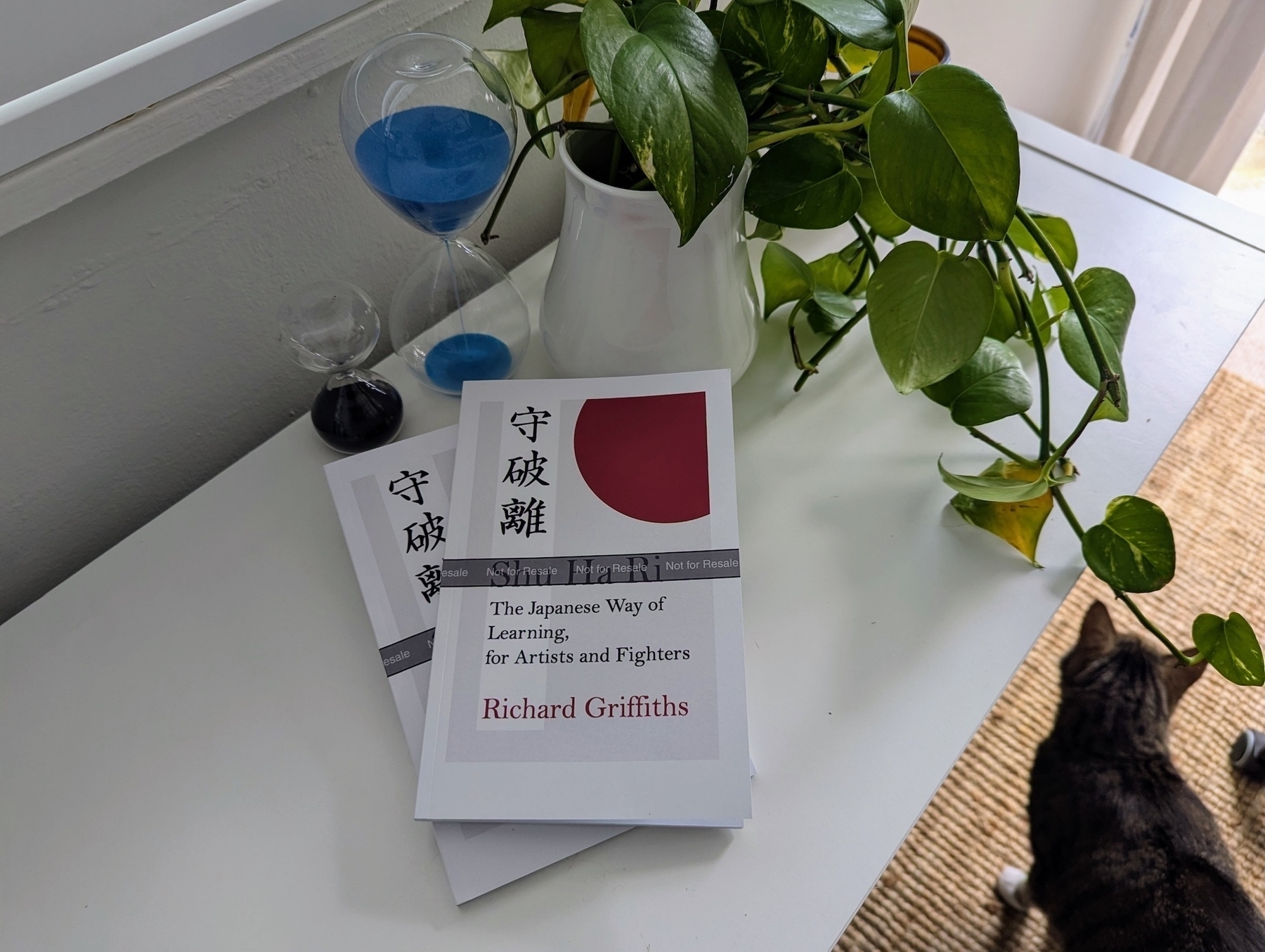
Update: I did it. Shu Ha Ri: The Japanese Way of Learning, for Artists and Fighters is now available. I hope you enjoy it!
#amwriting #booklaunch #comingsoon #nonfiction
As Alan Jacobs says, reading more books and reading books more - they’re not the same thing.