Quote
-
“Small pieces loosely joined”. — From fragments you can build a greater whole.
-
“Everything is miscellaneous”. — What does it mean to write from the bottom up instead of from the top down?
-
“The smartest person in the room is the room”. — The mastery of knowledge is an illusion.
-
“The Internet is not made out of content”. — What comes after content?
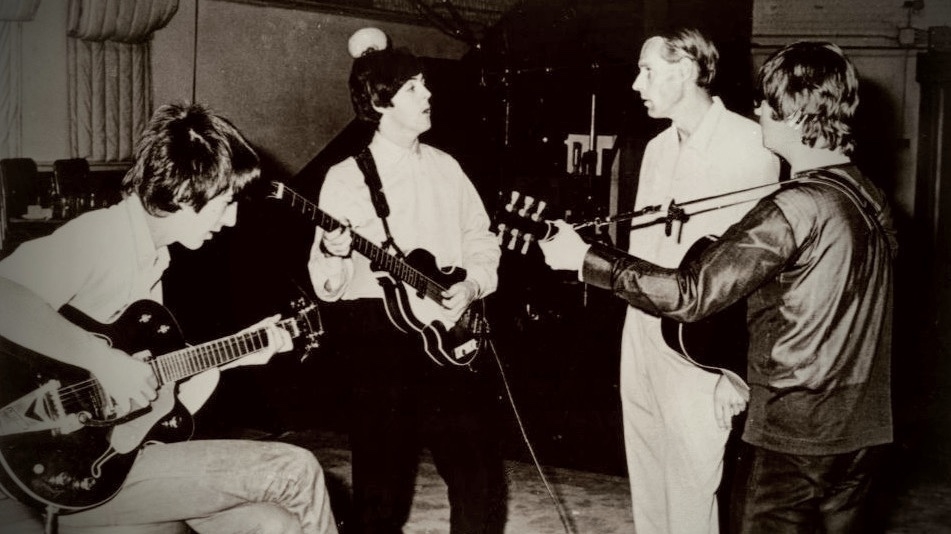
“There’s a great strength in me showing you a chord or a riff or something, and it’s just going from mind to mind, there’s no paper involved. All of what we did in this very studio would be that. It was really an immediate transference of ideas.”
– Paul McCartney on The Rest is History podcast on YouTube.
This chimes with the Japanese concept of ishin-denshin, heart-to-heart communication, which is central to the Shu Ha Ri way of learning I’ve written about.
💬 “Our conventional response to all media, namely that it is how they are used that counts, is the numb stance of the technological idiot. For the ‘content’ of a medium is like the juicy piece of meat carried by the burglar to distract the watchdog of the mind.” — Marshall McLuhan
Whether you’re interested in making your own containers for ‘content’ or in challenging the whole paradigm, the key is to create new ways of being human.
Read more: What’s the future of creative work without human intent?
#AmWriting #Creativity #Fediblog #MediaTheory
Memory isn’t a static recording but a constant act of reconstruction. Every time we revisit a note or a book, we are weaving together the original content with our current environment and past self.
“We construct and reconstruct our memories every time we attempt to recall them.”
So how do we decide what’s worth preserving and what we must allow ourselves to forget? Explore the “differential allocation of attentional resources” in this look at the fallibility of memory.
Link: writingslowly.com/2026/05/1…
#CognitiveScience #Philosophy #Memory
Is note-making an “aide memoire” or a replacement for the source? To distill a book into notes on it, is to change our relationship with the original text. Beyond just storing facts we are building a library of our own interpretations. There’s a friction between preservation and occlusion in our digital workflows.
“When you make notes you forget your reading and replace it with the future opportunity to read again not the original book but your own notes on it.”
Read more: writingslowly.com/2026/05/1…
#Zettelkasten #PKM #NoteMaking
💬 “We need to build digital worlds worth protecting.”
— Dr Krista Fisher, on the real manosphere. Womens Agenda
Compare like with like
When critiquing my own work it’s tempting to compare it unfavourably with something good. But almost all early drafts need improvement.
For example, here’s the final version of a well-known voiceover:
Space, the final frontier.
These are the voyages of the Starship Enterprise
Its five year mission
To explore strange new worlds
To seek out new life
And new civilizations
To boldly go where no man has gone before.
But here’s an early draft of that famous start to Star trek. tl;dr it sucks too. [Neatorama.com]
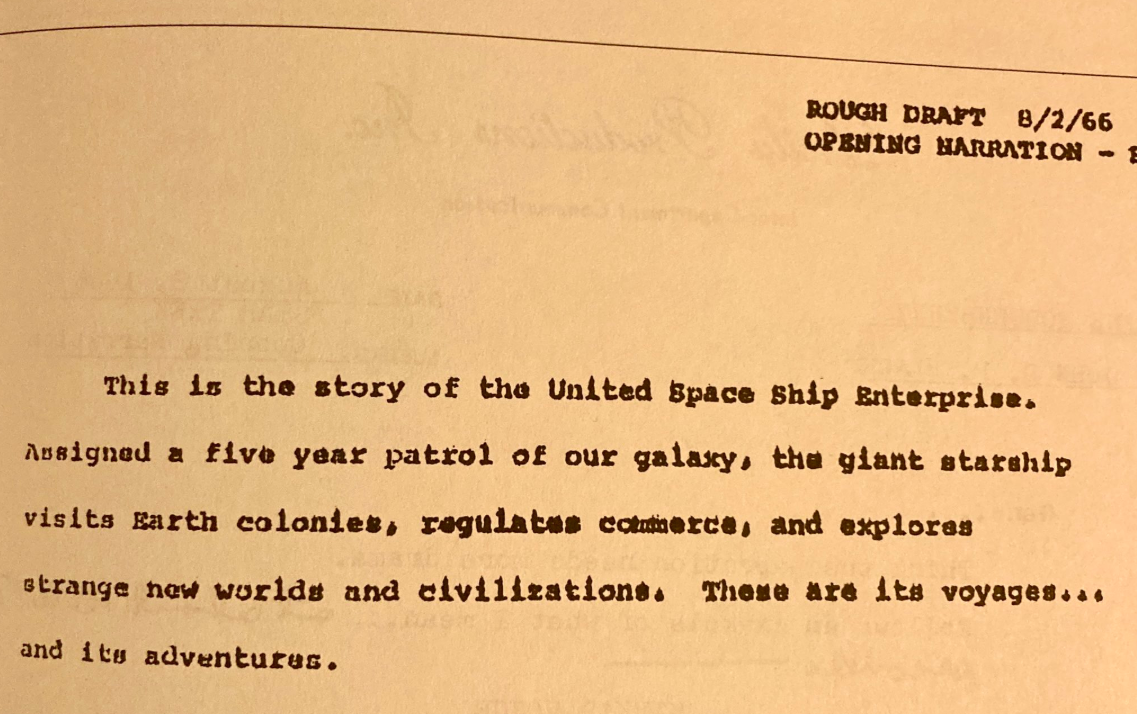
The lesson? If your terrible draft lacks sparkle, it might just be because almost everyone’s does, at first. So if you can’t compare like with like, then don’t compare at all.
Unless you really are planning to regulate commerce and so on.
Holy mother of cheeses, the Internet is not made out of content

Holy mother of cheeses, the Internet is not made out of content.
💬 “The Net is not content.
There is great content on the Internet. But holy mother of cheeses, the Internet is not made out of content.
A teenager’s first poem, the blissful release of a long-kept secret, a fine sketch drawn by a palsied hand, a blog post in a regime that hates the sound of its people’s voices — none of these people sat down to write content.
Did we use the word “content” without quotes? We feel so dirty.” — Doc Searles and David Weinberger, New Clues
Plenty of my thoughts about writing, and writing for the Web, are really just paraphrases of something David Weinberger has already said with far greater eloquence and perspicacity.
And what do you know? the author has a new book out in October 2026:
No doubt Beautiful Particulars will also help reshape my brain, and maybe yours too.
I’m the author of Shu Ha Ri: The Japanese Way of Learning, for Artists and Fighters, available now.
And if this article piqued your interest you might like to sign up to the Writing Slowly weekly email digest, where you’ll find yourself in an exclusive club whose privileged members just get a weekly email.
💬 “For good or ill, a new generation, though raised in the lap of AI, will not be speaking or writing anything like the ‘intelligence’ that raised it.” - Notes on the artificial style of writing.
#Zettelkasten #LLM #AIPhilosophy #Writing #Notemaking #AIWriting
Simon Willison says:
💬 “I’m effectively using Substack as a lightweight way to allow people to subscribe to my blog via email.”
I already do this easily via micro.blog and it’s a lot less convoluted. I guess he has complete control of the output though, provided he’s happy to tinker like this.