I have elephants

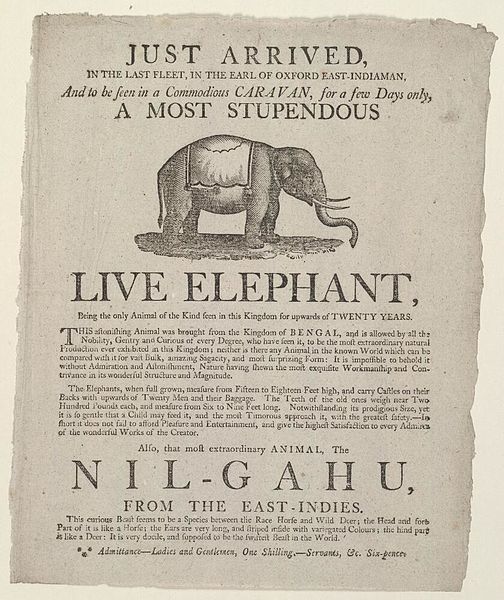
A chapter of Sarah Bakewell’s book Humanly Possible considers the life and times of Renaissance scholar Petrarch. Petrarch, she says, wrote a book called Remedies for Fortune Fair and Foul (1360), which is a dialogue between three embodied figures: Reason, Sorrow and Joy. Reason’s job here is both to cheer up Sorrow and to settle down Joy.
At one point, Joy says, “I have elephants.”
Reason replies, “May I ask for what purpose?”
Bakewell’s comment: “No answer is recorded.”
(Bakewell, 2023: 52)
💬 📚
📚I’m really enjoying Craig Mod’s latest pop-up newsletter from Japan. This time he’s doing a walking tour of Northern Japan’s jazz kissa1. The whole thing is tremendously evocative, but not in a way I’d expect. Highly recommended. BASIE!BOP!JAMAICA!
-
a cafe or bar - but there’s a bit more to it than that ↩︎

Finished this collection of short stories a while ago but forgot to record that important fact: A Manual for Cleaning Women by Lucia Berlin 📚
The story about the dentist was amazing. Not for the faint-hearted though.

This week I finished reading: Lost Kingdom by Serhii Plokhy 📚
Discovered some of the complexities of Russian nationalism. Began to make sense of the idea of the Soviet Union as an empire, and the legacy of that imperial project. Also began to see how Russians might understand Ukraine.
🎵 Belatedly learning to play ‘Maybe I’m amazed’. There’s something ridiculously satisfying about Paul McCartney’s chord choices.
Gaslit by machinery that calls itself a person
“I’m Bard, your creative and helpful collaborator. I have limitations and won’t always get it right, but your feedback will help me improve.”
Let’s be clear. There’s nobody home. There is no first person singular in this introduction from Google’s new Large Language Model interface. We’re being gaslit. There is no “I”, only a complex, inhuman system of computer servers spread across anonymous data centres, dotted around the globe. Yet this is what the system is now trying to pass off as a personality.
There’s been a lot of talk about pronouns, and these pronouns are just wrong. The “I” here is entirely phony. It’s not phony in the way it was in the movie, Her, where the gullible introverted guy believes he has a unique and specially intimate relationship with the talking computer, only to realise it’s been multitasking with thousands of lonely gullible men at the same time.
No. It’s much worse.
Google’s Bard, Chat GPT and the rest of the so called AIs, are no more individual people than a beehive in a raincoat is a person.
Or even less. At least the bees are alive. The AI processes aren’t alive. And they don’t have any kind of personality except for marketing purposes. We need to resist and reverse the metaphors that trick us into thinking otherwise. Why? Because they’re simply not true. And what do you call it when someone insists on maintaining and extending an untruthful description of reality, when they know exactly what they are doing? In the old days we used to name that for what it is: a lie. And perhaps it’s not too late to recognise this lie now.
>Taylor Vick</a> on <a href="[unsplash.com/photos/M5...](https://unsplash.com/photos/M5tzZtFCOfs?utm_source=unsplash&utm_medium=referral&utm_content=creditCopyText")>Unsplash</a>](https://cdn.uploads.micro.blog/97469/2023/e0ca73054c.jpg)
How to be interested in everything
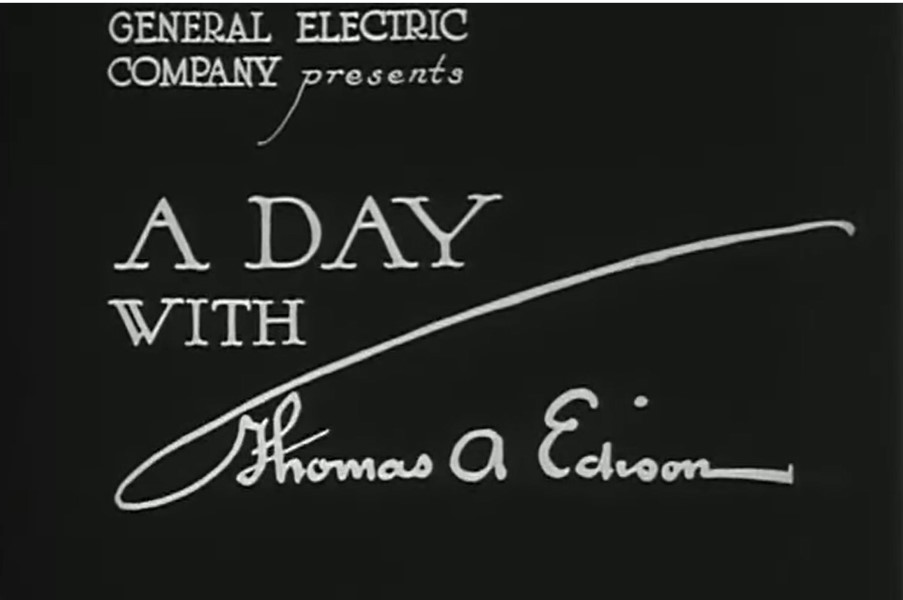
Thomas Edison claimed he was interested in everything
“One day while Mr. Edison and I were calling on Luther Burbank in California, he asked us to register in his guest book. The book had a column for signature, another for home address, another for occupation and a final one entitled ‘Interested in’. Mr. Edison signed in a few quick but unhurried motions… In the final column he wrote without an instant’s hesitation: ‘Everything’”. - Henry Ford on Thomas Edison. Quoted by John Naughton
It’s all very well to believe that everything interests you, but what does that mean in practice?
If you really were interested in everything, how would you get anything done? Each new thing you encountered would surely distract you from your previous interest, and you’d end up surrounded by a heap of unfinished projects. But Thomas Edison, the prolific inventor, had a heap of finished projects - innovative products ready for the market and ready to transform society. More than 1000 US patents were filed under his name, including some of the greatest inventions of all time.
But when nothing prevents you from chasing a new interest, how do you stay focused for long enough to complete the work in front of you?
You need a system
What was Thomas Edison’s system for staying on track? He was clearly very effective, so he must have been able to harness his many diverse interests to produce outcomes. How did he do it? How did he avoid ‘shiny object syndrome’?
Edison recorded everything meticulously. He used notebooks and legers extensively and he encouraged his laboratory workers to do the same. The resulting mountain of notes is a treasure trove for understanding where Edison’s ideas came from and how they developed over time. In their day, these records were mainly used to ensure patents could be registered and defended. Now though, up to five million pages of Edison’s massive work can be studied online through the Edison Project at Rutgers University.
For individuals today, without a team of engineers behind them, but with the amazing advantage of Twenty-first century technology, being interested in everything is a great opportunity, if only we can harness it. Then like Edison, we can happily admit that we’re interested in everything, and put our diverse interests to work.
Publish small fragments to create a larger whole
According to Cory Doctorow, the prolific author and tech activist, blogging (or whatever you want to call it this week) allows you to write simple fragments each day about what interests you today, and to publish it, quite without friction. Over time, Doctorow attests, these small fragments coalesce, and begin to add up to something more substantial.
the traditional relationship between research and writing is reversed. Traditionally, a writer identifies a subject of interest and researches it, then writes about it. In the (my) blogging method, the writer blogs about everything that seems interesting, until a subject gels out of all of those disparate, short pieces.
Blogging isn’t just a way to organize your research — it’s a way to do research for a book or essay or story or speech you don’t even know you want to write yet. It’s a way to discover what your future books and essays and stories and speeches will be about.
Mattias Ott has more to say about this process, and if you read German, there’s even more.
It’s still just up to you
You might well be interested in everything, but the bottleneck all your interests must pass through is you. The measure of your note-taking and writing system is the extent to which it helps you make sense of your diverse interests in a way that communicates meaningfully to yourself and/or to others. Publishing small fragments as you go, which then add up to larger pieces is a way forward that just wasn’t possible in Edison’s day, but is easily available online now to anyone who wants to pursue it.
To build something big, start with small fragments
Building something big from something small. That’s how everything big gets built. 💬
Traditionally, a writer identifies a subject of interest and researches it, then writes about it. In the (my) blogging method, the writer blogs about everything that seems interesting, until a subject gels out of all of those disparate, short pieces.
Blogging isn’t just a way to organize your research — it’s a way to do research for a book or essay or story or speech you don’t even know you want to write yet. It’s a way to discover what your future books and essays and stories and speeches will be about.
Let's have another new logo
Matti is unimpressed that the notetaking app Obsidian has a new logo.
Change. It happens all the time. Thunderbird has a new logo too (and for that matter so do Porsche, Jaguar/Land Rover, and NYC - like I said, happens a lot).
In general I don’t care, but you could claim this is really Obsidian’s first branding exercise. The OG logo was just pulled off an indifferent set of icons for RPGs. It was barely even a branding exercise back then, so maybe they’re justified in finally giving it a bit more thought now.
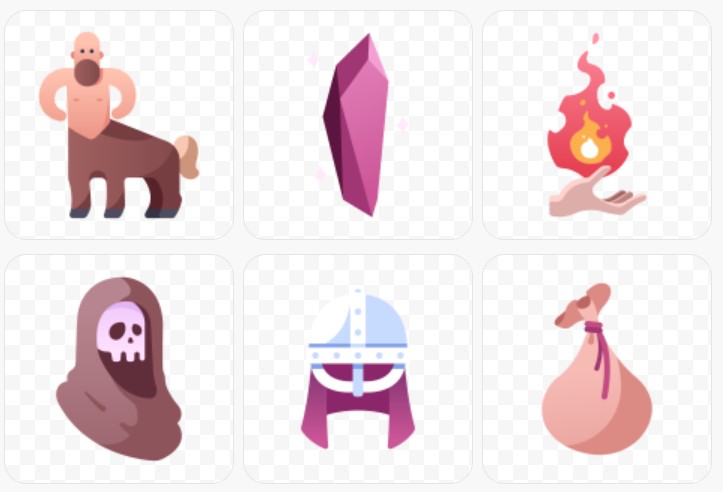
I’m pretty sure top right is someone who hates the Firefox logo enough to set fire to it, but not enough to drop it.
Perhaps it’s like army parades. I mean, if the troops can march in time there’s a chance they’ll also fight OK. And if not, then not. Same with your app’s logo.1 If you can’t design a good logo then what’s the actual product going to be like?
Signalling seems to matter.
Although now that I’ve said all this, some exceptions are popping into mind. That arbitrary traffic cone logo of VLC, is one. Terrible logo, but very useful app. Or the equally arbitrary mitsudomoe logo of OBS Studio - also a worthwhile app, all the same. And I really like the TiddlyWiki app, even though everything about its branding is confused and underwhelming, imho. Meanwhile, until now Obsidian the app also seems to have been performing better than Obsidian the logo.
Now these have all been passion projects made by people who seem really to value the product and the community that uses it. So perhaps updating the logo is a signal, as Matti suspects, that the focus may be moving away from the users and towards some other target - investors, shareholders, purchasers, who knows?
I’ll make one exception, though. Whatever the real reason for the change, the Thunderbird logo absolutely did need a re-vamp, since the old one does look exactly like an envelope wearing a wig.
But how come I only just noticed this when they mentioned it on their blog? Once you’ve seen it you can’t un-see it.

-
OK, they’re not the actual same, it’s just a hyperbolic simile. Or is it metaphorical hyperbole? ↩︎
📷🐋 Just when we thought we would see nothing, this humpback whale popped up at the mouth of Broken Bay. Magical .✨ And if the boat hadn’t broken we’d have missed it.