The future of the humanities is wide open
The humanities within universities are facing decline and financial prioritization, yet interest in liberal arts thrives outside academic institutions.
To understand the future of AI, look to the past
The hype about AI isn’t new. In his day, Victor Hugo was breathless about the book.
By rejecting the terms of Trump’s authoritarian bullying, Harvard University may forego $2.3 billion in funding. But they’ll lose much more if they, and we, don’t continue to stand up to it. The stakes, conveniently, are written on the university shield.

Why not publish all your notes online?
Contemplating whether to publish personal notes online reveals both the potential benefits of motivation and community engagement and the drawbacks of self-doubt and privacy concerns.
Time to concede nothing
A reflection on the enduring legacy of thinkers like Erasmus and Castellio, emphasizing the importance of perseverance in upholding values of civility and humanism amid modern strife and polarization.
Why in #Australia are there at least 50 private health insurance options (!) but only two major supermarket options, only two main telecom providers, and pretty much a single major hardware chain? It’s well past time for some serious #antimonopoly action.
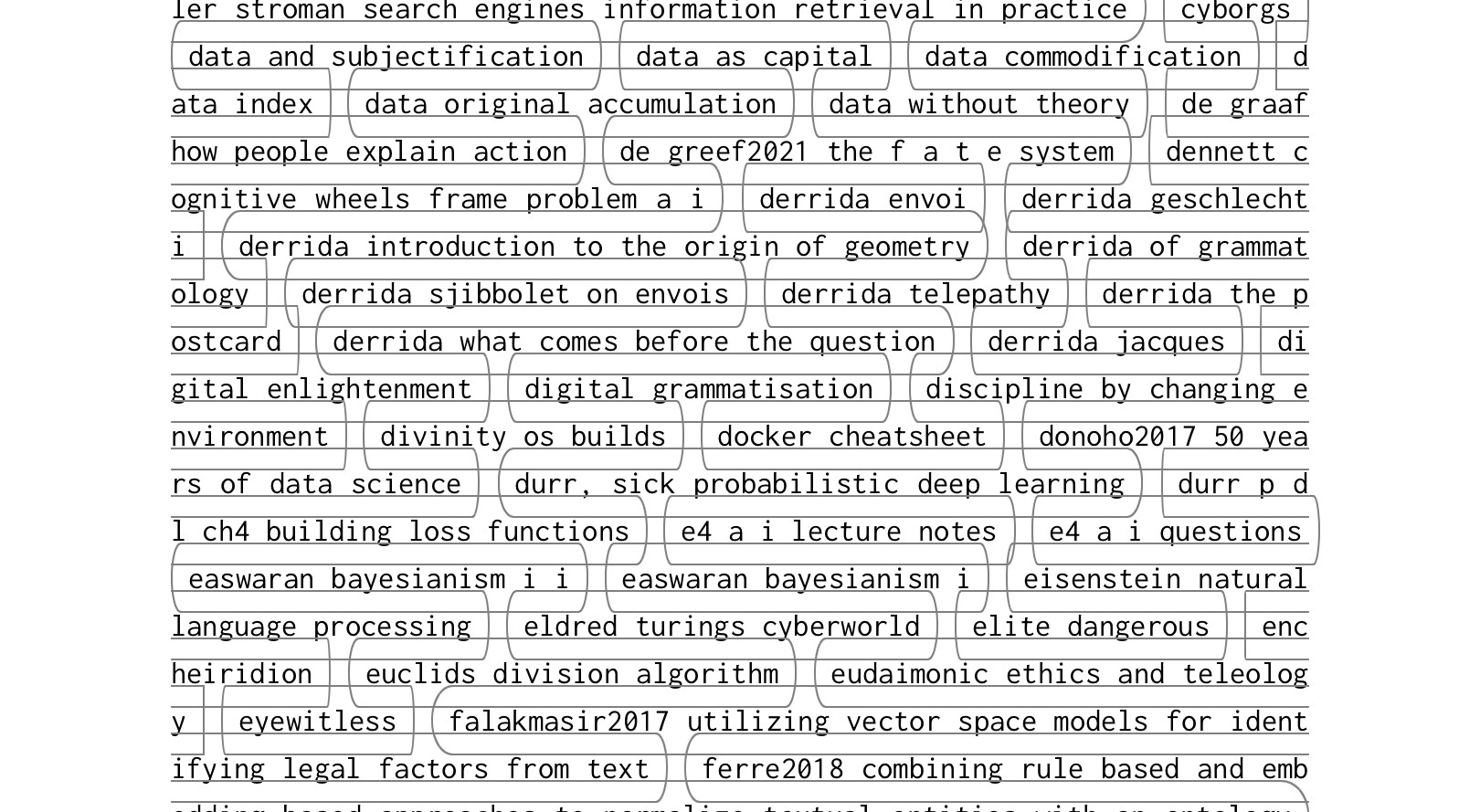
In his intriguing Zettelkasten, machine learning engineer Edwin Wenink has made 899 of his private notes public edwinwenink.xyz.
These notes are a constant work in progress and not necessarily intended for your reading. Nevertheless, I submit them to your “voyeurism.”
(HT: Annie)
And previously, Andy Matuschak has recommended working with the garage door up.
But where’s the limit?
Some sound advice from a less crazy time (two whole months ago): Write it Down | dansinker.com
Some say that due to AI, “the vast majority of human beauty that will exist has already been created”. I’m pointing out the opposite:
It’s a great time to be writing the future.
Why? Well, by nature humans innovate. Humans equipped with AI?
They just innovate harder.
Legendary computer game Myst started life as an interconnected network of cards in the equally legendary app HyperCard. To be precise, 1,355 cards in 6 HyperCard stacks.
Now, through graph analysis the last secrets of that network are finally being ‘deMystified’.