The real science behind Project Hail Mary

Yes, there is some real science behind 📚 Project Hail Mary.
It’s an enjoyable and successful sci-fi novel and film, but the science fiction is frankly quite a bit more fiction than science.
It would hardly give away the plot of Project Hail Mary to mention that it has a lot to do with the microbial contamination of experimental research. I mean, that’s what the story is about – in the same way Andy Weir’s previous novel, The Martian, was all about potato farming.
If this floats your spaceship (microbes I mean, not potatoes), you might enjoy a fascinating article about the real science of microbial contamination in experimental contexts. Apparently there’s a bacteriophage called Φ80 and it’s running amok.
How Φ80 infiltrates research labs.
Scary stuff! Perhaps someone will turn it into a movie.
I’m the author of Shu Ha Ri: The Japanese Way of Learning, for Artists and Fighters, available now.
And if you found this article interesting you might like to sign up to the Writing Slowly weekly email digest. You’ll receive all the week’s posts in that handy email format you know and love.
💬 “For good or ill, a new generation, though raised in the lap of AI, will not be speaking or writing anything like the ‘intelligence’ that raised it.” - Notes on the artificial style of writing.
#Zettelkasten #LLM #AIPhilosophy #Writing #Notemaking #AIWriting
Notes on the artificial style of writing
In which the artificial style of writing encounters the iron hand of fashion
AI makes writing more bland, as reported by NBC News. This will accelerate the rate at which readers demand new forms of writing that AI can’t yet (or ever) achieve. There’s been plenty of talk about how AI caters to the economic requirement for efficiency (aka reduced labour costs), but there’s another very obvious economic requirement too: novelty.
AI handles novelty of combination very well. Just try asking it for a story about a unicycling giraffe who learns quantum mechanics and escapes from a zoo in the Alpha Centuri star system — it won’t refuse you. That kind of combinatorial novelty it handles with aplomb. At no point will it tell you this is a bad idea. On the contrary, “You might consider how the unicycle itself acts as a metaphor for the observer effect,” says Google’s Gemini as it eggs me on. But it doesn’t produce novelty of expression. Despite the arguable novelty of this scenario, the adventures of a fugitive circus scientist space giraffe, the story, as written by AI, will still be, well, bland.
Cheaper, better and newer. Consumers crave novelty, which drives the endless parade of fashion, and the instant obsolescence of what only yesterday was highly desirable. In a sense, AI writing stands at the end of an era, the era that saw the kind of writing on which AI has been trained as up to date. For example, if a chat-bot wrote an article or a piece of advertising copy in the 150-year-old style of Charles Dickens, it would be quaint, but hardly useable. To achieve the effect it does, of being ‘as good as an average human writer’, it must mimic what’s considered the current writing style, and it does so blandly.
Now the research shows that AI-generated prose isn’t just bland, it’s also distorted in several other ways, many of them, such as pronoun use, connected with style.
How LLMs distort our written language.
But fashions change, and the blandness of the AI style will accelerate the speed at which writing style fashions change. Just as we can’t take seriously today someone who writes like Charles Dickens (unless it’s deliberate pastiche), tomorrow we won’t be able to take seriously any writing produced in the style of a bot. And that means soon we won’t be able to take seriously any writing that’s written in our current style.
You have your own peculiar and necessarily limited interests and instead of spreading the net too widely, maybe it’s worth keeping a bit focused on these. But how? Top level categories in my notes.
#PKM #Zettelkasten #notemaking #Writing #WritingSlowly
Top level categories in my notes
What kind of top-level categories do you have for your notes?
If you’re doing knowledge management you might use or adapt Tiago Forte’s PARA system:
- Projects
- Activities
- Resources
- Archive
Or you might consider using Bob Doto’s four-folder approach:
- In-box
- Sleeping
- References
- Main
Tame the chaos with just four folders for all your notes.
Prolific German sociologist Niklas Luhmann’s second collection of notes, his second Zettelkasten (ZKII) was arranged according to eleven top-level categories, based on subjects or themes associated with his singular major project, a theory of society.
- Organisation theory
- Functionalism
- Decision theory
- Amt: office, post, job, duty
- Formal / informal order
- Sovereignty / State
- Isolated/individual terms, problems
- Economy
- Ad hoc notes
- Archaic societies
- High cultures
In his lecture on Luhmann’s Zettelkasten, researcher Johannes Schmidt of the Niklas Luhmann Archive at Bielefeld University observes that these headings are hardly comprehensive. Instead they strongly echo the progression of Luhmann’s scholarly interests over many years.
“Looking at these you quickly see that this does not describe a certain body of knowledge to work through like in the first Zettelkasten. If you know a bit about the development of Luhmann’s theory you quickly recognize this as a historic record of research interests.”
Simon Willison says:
💬 “I’m effectively using Substack as a lightweight way to allow people to subscribe to my blog via email.”
I already do this easily via micro.blog and it’s a lot less convoluted. I guess he has complete control of the output though, provided he’s happy to tinker like this.
Finished reading Trip to the Moon by John Yorke

Trip to the Moon by John Yorke 📚 sets out the author’s deeply-considered views on the nature of story and goes further than his previous work on the same theme, Into the Woods.
John Yorke is a highly experienced writer and producer for British TV, and here he presents invaluable insights into how stories really work, from the perspective of someone who absolutely knows what he’s talking about. I found the section on non-western story-forms very interesting, and though I wasn’t convinced by the claim that stories in all cultures are basically fueled by ‘some bastardization of the hero’s journey’, just hearing the argument made by a true expert was very helpful.
More convincing - and worrying - was the claim that effective storytellers ‘unshackle us from empirical observation by drugging us with rage or anger or pleasure.’ Indeed, if this book has a single key theme, it might be that telling stories is a uniquely dangerous skill, whose seductive power we’d do well to understand much better than we do.
The insights of Trip to the Moon are profound, though a more rigorous edit would have served the work well. In places the text feels unbalanced. Crucial developments are often truncated in the main chapters only to resurface in the lengthy commentary at the back. Despite this imbalance, the author’s body of work remains vital for any aspiring writer. Start with Into the Woods before tackling this more fragmented sequel.
💬 The fight against the far-right is much more compelling to voters when it is framed in the practical opposition to corruption than the ideological opposition to populism. — Ian Dunt, Substack.
A lesson from Hungary for the rest of us.
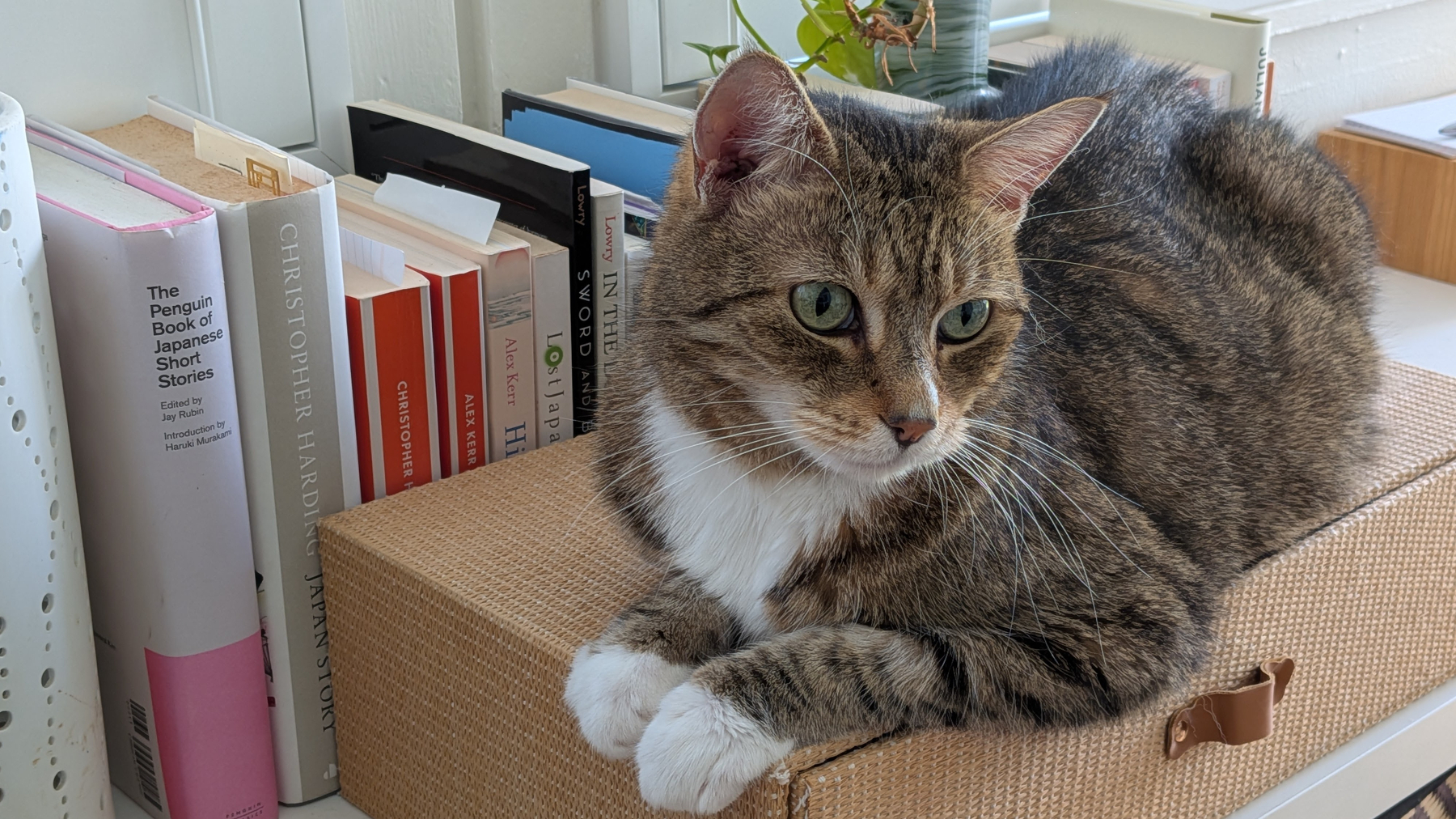
Make YouTube videos and you’ll eventually be tempted to sit in a bath of ketchup or jump into a tiny pool with a goat – but either would bring relief from the cat photos the rest of us seem compelled to post.
How do social media platforms trap users in networks they would rather leave? | UNSW
On Mastodon, Harold Jarche points to the renewed relevance of Harold Innis, the mid-20th century Canadian scholar who called out US media imperialism for what it was.
💬 “We can only survive by taking persistent action at strategic points against American imperialism in all its attractive guises.”
I’ve written about Innis’s lost notes but his warnings about the distorting power of the media are very appropriate now.