article
-
Christian Wiman, “The Preacher Addresses the Seminarians” from Once in the West (Farrar Straus and Giroux, 2014). ↩︎
- Baker, S. (1985). The practical stylist. Harper and Row. p. 2-3). 1
- Choose your own race and finish it
- Only sinners left down here
- Why I’m writing slowly
- You can get a lot done by writing slowly
- My range is me
- The mastery of knowledge is an illusion
-
Quoted in Cruz, Robson Nascimento da Cruz, and Junio Rezende. “A escrita de notas como artesanato intelectual: Niklas Luhmann e a escrita acadêmica como processo.” Pro-Posições 34 (2023): e20210123. English PDF. ↩︎
-
In the case of reading magazine submissions, the threat of AI imitating humans is a little overblown. To maintain a manageable slush pile you simply need to introduce some little task that only a human could perform. You could accept only manuscripts that were sent in the mail, for example. This immediately kills the zero-cost proposition of submitting AI-written stories. And when that gets gamed, you could decide to read only those submissions with a hand-written address on the envelope. In other words, if you only want to accept human labour, you just need to request human labour. Re-introduce any human work at all, and the cost benefits of automation are curtailed or even eliminated. ↩︎
-
If you’re using crumbs to reach the molten heart of creation, they’ll pretty soon be toast. ↩︎
- the friendship roles I’m good at,
- the roles I’m bad at, and
- the roles I’d like to focus more on.
- The Builder
- The Champion
- The Collaborator
- The Companion
- The Connector
- The Energizer
- The Mind Opener
- The Navigator
-
Well, Tom Rath’s 2006 book, Vital Friends. ↩︎
-
an emerging network of federated networks, all interoperable, thereby marginalising the walled garden silos of monopolistic data-extracting megacorps. HT: Paulo Amoroso ↩︎
- global education
- effective language learning
- multilingualism
- equal treatment regardless of language - language rights
- language diversity; and
- human emancipation
Conducting myself properly

They made me the student leader of the school orchestra. One day the music teacher was sick and he asked me to conduct. I had no idea what to do, except what I’d seen him doing. So I waved my arms around.
Today I’m fragmented, overwhelmed by what there is still to complete, and also by all there is to start. Somewhere in the middle, there I am, lost between starting and finishing. Flailing.
Yet even no method is still a method. Says the poet Christian Wiman1:
💬 “The truth is our only savior is failure.”
And look at those stats! This is my 200th post here this year. Writing slowly? No, not me.
The real story of Napoleon?
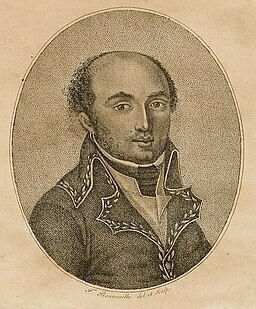
If you’re thinking of viewing Ridley Scott’s movie version of Napoleon 🍿, or if you’ve already seen it, I’d recommend also reading The Black Count: Glory, Revolution, Betrayal, and the Real Count of Monte Cristo by Tom Reiss. 📚
This Pulitzer prizewinning biography puts Napoleon’s life and times in historical context and it’s an amazing story. The ‘black count’ of the title was Alexandre Dumas, father of the famous author of The Count of Monte Cristo and The Three Musketeers. He rose from obscurity to became Napoleon’s commander of cavalry during the Egyptian campaign.
But quite unlike Napoleon, he seems to have been motivated by something rather more than personal glory. He actually believed in the ideals of the Revolution, not least the implementation of Liberté.
As an aside, the book provides a huge number of fascinating factoids, such as why dolomite (the mineral as well as the mountain range) is named dolomite.
Why I'm writing faster

Why do you write?
Everyone has their reasons but I write so I can think:
Writing is not simply a way of saying what someone knows but one of the most effective ways to unveil what there is to say. As Baker (1985) suggests, “in fact, writing creates a thought and the capacity to think: with writing you discover thoughts that you barely knew you had”
But what slows you down?
I’ve been running this site, and writing slowly since 25 January 2014. For the first nine years it really lived up to its name, because I posted very rarely. The reason, I reasoned, was that the WordPress front end and I just didn’t get along. It was a room of my own, sure, but it wasn’t comfortable. It just didn’t feel like a room I wanted to spend time in.
The author Virginia Woolf wrote about how women need a room of one’s own to write in. But that still left the rest of the world to the men. Jane Austin wrote at the kitchen table of a busy household, and it wasn’t ideal. Capitalism gives us hot-desking - not even a table to call your own. So your virtual environment really matters. A UI of your own? Not likely.
And what speeds you up?
Eventually, after complaining about WordPress for five years, and having tentatively connected the site to micro.blog (not before eight months of procrastination) while still hosting it on WordPress, I finally switched completely to micro.blog as the host. This meant the front-end editor also changed completely. Now I just had a plain box to write in, with a couple of options for simple categories. Often though, I just wrote in a text editor and copy-pasted as necessary. The outcome was stark. This shift resulted in a dramatic increase in writing frequency, which given the name of the site is a little embarrassing. On 27 January 2023 I wrote:
“Don’t worry, whatever happens I’ll still be writing slowly.
Between 2014 and 2022 I had only written 26 posts. But following the big changeover I wrote 194 posts and counting, in a single year. As a result there’s now about 33,000 words on this site. And here are the latest statistics.
So what’s the right speed for you?
I admit it then: I’ve sped up. Yet I still maintain that writing slowly is the way to go. A little every day or two adds up to a whole heap. Never mind the quality. Just look at the size! Maybe I’ll change the name of this site to Writing Bigly.
“Don’t worry, whatever happens I’ll still be writing bigly.”
Well clearly that won’t be happening. Meanwhile, though, I wish you a very big writing year ahead. Let me know in the comments what you’ve achieved, and what you have planned. Exciting!
More on writing and blogging
Publish first, write later
“Literature is perhaps nothing more complicated and glorious than the act of writing and publishing, and publishing again and again.”
- Marcelo Ballvé, on the curious writing career of César Aira
César Aira on the constant flight forward
Argentinian author César Aira’s writing process is more about action than reflection. In a moment I’m going to share with you an extract from The Literary Alchemy of César Aira, an essay by Marcelo Ballvé, originally published in The Quarterly Conversation in 2008.
But before coming to the extract, I’ll just comment on David Kurnick’s claim in Public Books that Aira’s work is primarily about process:
“It is not in the least original to begin talking about César Aira’s work by recounting the technique that produces it. But it can’t be helped: Aira has made a discussion of his practice obligatory. To read him is less to evaluate a freestanding book, or a series of them, than to encounter one of the most extraordinary ongoing projects in contemporary literature.”
True, I’m not being at all original here, just cutting and pasting. Still…

Aira’s own Aleph
It’s as though through his writing Aira has found the basement in Buenos Aires that contains the entire universe in condensed form, the basement that features in Borges’s 1945 story “The Aleph”.
And having found that fabled basement, it’s as though Aira has taken on the persona of Carlos Argentino Daneri, the character in Borges’ story whose life’s obsessive goal is to write a poetic epic describing each and every location on Earth in perfect detail.
But instead of taking the find seriously, Aira parodies it. Everything is here: and what do you know? None of it makes sense! Or, perhaps instead of parodying “The Aleph”, he takes it completely seriously: Why not write about it, about all of it? What then? In an interview in 2017 for the New Yorker, Aira said: “I am thinking now that maybe . . . maybe all my work is a footnote to Borges.”
Of course I’m not just cutting and pasting. I’m writing too. Aira also inspires my own writing process. His example inspires me to choose my own race - and finish it.
One of my role models is the Argentinian author César Aira. He’s written a very large number of novels and novellas (at least 80 - around two to five per year since 1993), published by a variety of presses. That’s a lot of races and a lot of finish lines crossed.
Now here’s Marcelo Ballvé on Aira’s unique writing process.
According to Aira, he never edits his own work, nor does he plan ahead of time how his novels will end, or even what twists and turns they will take in the next writing session. He is loyal to his idea that making art is above all a question of procedure. The artist’s role, Aira says, is to invent procedures (experiments) by which art can be made. Whether he executes these or not is secondary; Aira’s business is the plan, not necessarily the result. Why is procedure all-important? Because it is relevant beyond the individual creator. Anyone can use it.
Aira’s procedure, which he has elucidated in essays and interviews, is what he calls el continuo, or la huida hacia adelante. These concepts might be translated into English as “the continuum,” and a “constant flight forward.” Editing is an abhorrent idea in the context of Aira’s continuum. To edit oneself would be to retrace one’s steps, go backwards, when the idea is to always move forward. To judge yesterday’s writing session, to censor a lapse into the absurd or the irrational, to revive a character your work-in-progress sent tumbling over a cliff—all of these actions go against Aira’s procedure. Instead, the system prioritizes an ethic of creative self-affirmation and, I would say, optimism. To labor to justify previous work with more strange creations that in turn establish the need for ever more artistic high-wire acts in the future—this is the continuum, the high-wire act the artist must perform when he refuses to submit to any rule that is not his autonomously chosen procedure. It is an act performed with deep abysses yawning to each side of him—conformity, market pressures, conventionality, self-repression of all kinds . . . In other words, Aira’s literary career, embodied in each of his 63 novels, is a reckless pursuit of artistic freedom.
Aira says that when he sits down to write his daily page or two, he writes pretty much whatever comes into his head, with no strictures except that of continuing the previous day’s work. (The spontaneous feel of his stories would seem to back up this claim, but I’ve always asked, can anyone write as well as Aira does while simply letting the pen ramble?)
True, his books are very short. Aira says in interviews that he’s often tried to make his novels longer, but they seem to come to a natural rest at around the 100-page mark. Technically, much of what Aira has written would have to be classified in the novella category, but it’s hard to classify Aira’s work within any genre, be it story, novel, or novella. In my mind, Aira’s creations are something different altogether. They are stories, pure and simple, which Aira has managed to ennoble by seeing them into publication in the form of a single book. What he has done is put stories into circulation as objects, which is a defiant feat when seen in the context of a global literary market that demands hefty, sprawling, “big” novels.
The key to Aira’s curious career, I think, is to be found in his conception of literature as something with more affinities to the realm of action than the inner world of reflection. Literature is perhaps nothing more complicated and glorious than the act of writing and publishing, and publishing again and again. Editing is dispensable, so is the search for the “right” publisher. (Aira publishes seemingly with whomever shows any interest in his manuscripts; at least a dozen publishers, most of them small independents, in Argentina alone.) The idea seems to be: publish first and ask questions later…In fact Aira’s mentor, the deceased Argentine poet and novelist Osvaldo Lamborghini had a saying: “Publish first, write later.”
Extracted from The Literary Alchemy of César Aira, by Marcelo Ballvé. The Quarterly Conversation
César Aira’s main publisher in English is New Directions. They’ve published about 21 of Aira’s works in translation, while And Other Stories has published another half-dozen.
Now read: Choose your own race
Choose your own race and finish it
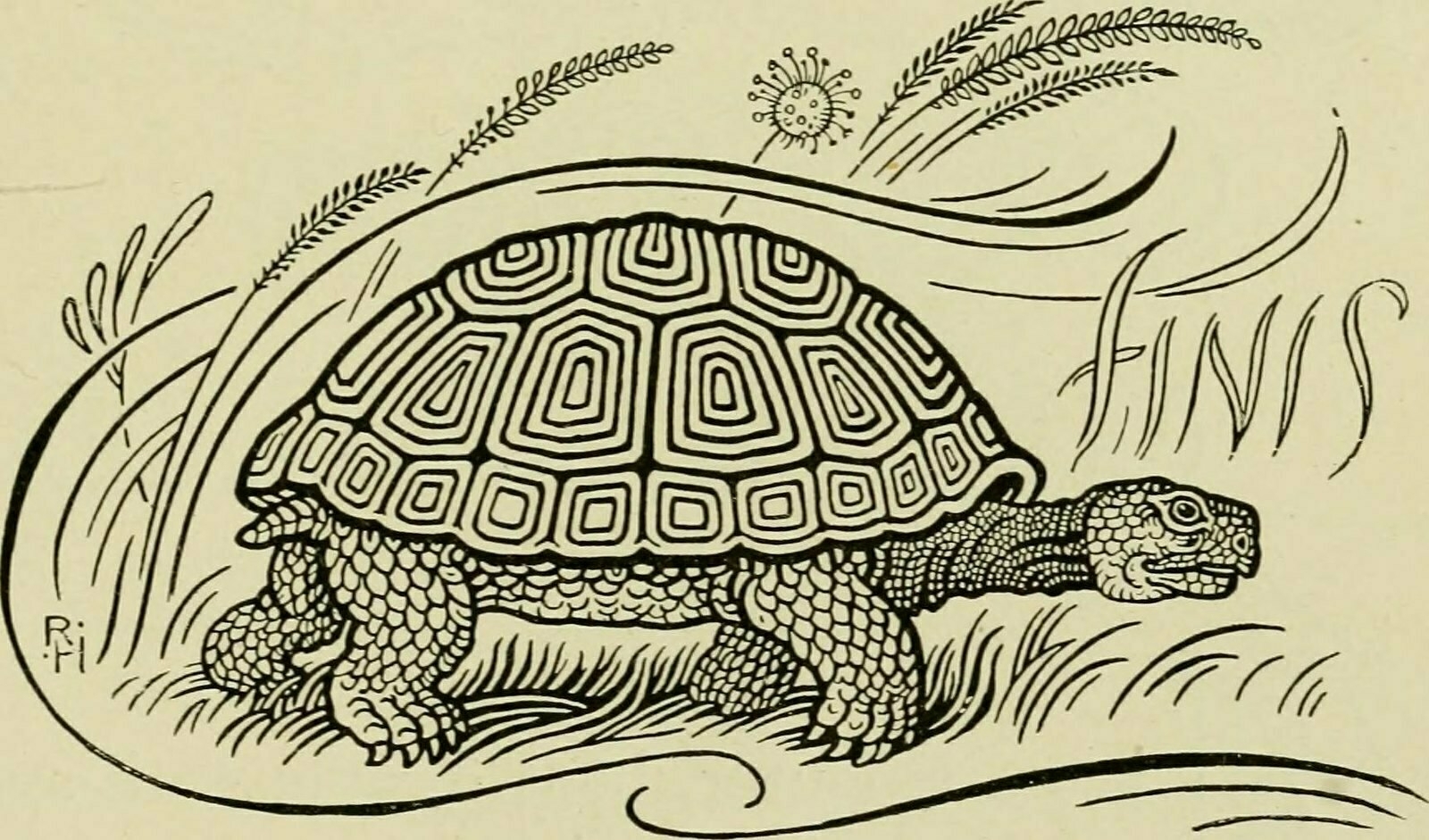
Are you Hare or Tortoise?
The idea of writing slowly appeals to me because it comes from Aesop’s fable of the hare and the tortoise. Perhaps you remember it.
The hare challenges the tortoise to a race, which he’s obviously the favourite to win. Everyone knows a hare moves much faster than a tortoise. As expected, the hare shoots ahead, then slows for a well-deserved rest, since there’s no way the tortoise will ever catch up. Meanwhile, the tortoise just plods along and eventually passes the hare, who has fallen into a deep sleep by the side of the road. The hare wakes up, just in time to watch the tortoise cross the finish line first.
Now perhaps the moral of the story is something like: slow and steady wins the race. Well, sure, that’s a good moral. And it’s true too: if you just keep on going you’ll achieve far more than if you give up. Obviously.
Another popular interpretation is that ‘pride comes before a fall’. Everyone knew the hare was fast, so why did he have to boast about it? And by trying to beat a tortoise, of all creatures?
I think of myself as someone who hasn’t been quick to publish. I think that because its completely, starkly true. There are others much quicker than me (for example, everyone who ever published). But if publishing quickly is your key metric, there’s now a big problem.
Too fast to keep up
On Amazon there are hundreds or even thousands of genre fiction writers who are writing a novel a month or even faster, just to satisfy the voracious appetite of the algorithm. If they slow down their pace even a little, the site loses sight of them and they risk sinking back down towards obscurity - so all they can do is keep going, writing faster and faster, and with the assistance of AI tools if necessary. In relation to these prolific authors, everyone is writing slowly.
But now that AI has worked out how to tell a coherent story too, the humans, however fast, have no chance. Bots are writing for themselves, and they can write far, far quicker than any human could possibly keep up. If all that matters is quantity, we’re sorted - AI will make mountains of it.
In 2023 for example, the news reported literary journals closing their books to new entries because they were simply overwhelmed by automated entries that the editors couldn’t tell apart from the stories written by humans. And with so many entries they didn’t have time to check anyway1.
So from now on, by most metrics, all humans are writing slowly. Let’s face it, in relation to the machines, we’re second best, no longer gold medal material. It’s enough to induce a bout of Promethean shame.
Each of these moments of innovation involves an emotion similar to what German philosopher Günther Anders called ‘Promethean shame’. This is the feeling that technology is embarrassing us by pointing out our human limitations. We’re just not as good at doing things as the tech that we invented to ‘help’ us do it. In Anders' original formulation the shame arose in the observation of high quality manufactured goods. What was it shame of? That we were born, not manufactured (Die Antiquiertheit des Menschen, 1956). In the face of the latest AI panic, we’re asking, yet again: if the tools don’t really need us, what’s the point of humans at all?
Keep your eye on the finish line
But for me, the key message of the fable of the hare and the tortoise isn’t about how you’ll win the race if you just keep going. I don’t really have any problem with keeping going. I’m tenacious and have a lot of inertia. That means I find it hard to start, but equally hard to stop. No, for me the moral of the fable of the hare and the tortoise is quite different.
The story reminds me that I’ve only won when I cross the finish line. Anything else isn’t a victory. That means it’s OK to write slowly, but what I need to keep sight of is finishing something, anything, and shipping it. It’s not enough to actually write, however fast or slow. What matters is publishing, in whatever form, for whatever audience.
But maybe the process is what matters
One of my role models is the Argentinian author César Aira. He’s written a very large number of novels and novellas (at least 80 - around two to five per year since 1993), published by a variety of presses. That’s a lot of races and a lot of finish lines crossed.
Even if you met another Aira fan it would be unlikely you’d both have read the same Aira books, because there are just so many of them. And of course, Aira’s has written a novel called The Hare - but who, even among Aira enthusiasts, has read it? In other words, Aira’s oeuvre is more the record of a particular creative process than it is a body of work to be read in its entirety.
Indeed, the critic Marcello Balvé says Aira’s many novels are “stepping stones, a trail of crumbs leading to a place as close to the molten heart of creation as it is possible to come without burning up.” That’s a bit overheated, but why not2?
Which way are you running?
The story of the hare and the tortoise reminds me too that while I can’t really control my top speed, I can at least control the length and direction of the race I’m running. I often think in terms of writing a whole book, or even a series of books - only to feel overwhelmed by the enormity of the task I’ve set myself.
But it doesn’t have to be like this. Aira only writes short books, but he publishes roughly two a year. A book is made out of chapters, and chapters are built from sections, and sections are made from paragraphs and sentences. In fact, the road to a complete book passes necessarily through a series of completed short pieces, each no harder to write than this one I’m writing right now. I could rein in my ambitions, and publish as I go, one idea at a time.
That way, instead of never completing anything, I’ll always be completing something. And publishing it for you to read, exactly as I’m doing now.
But whether I’m a tortoise or a hare, or even a person who resists anthropomorphizing animals just for the sake of a cheap fable, or even a person who’s uncomfortable with running and competition metaphors, all the same I’m running my own race: watch me win.
More on writing slowly
You can get a lot done by writing slowly
Thoughts are nest-eggs. Thoreau on writing
More on Artificial intelligence (AI) and large language models (LLMs)
Despite AI, the Internet is still personal
Can AI give me ham off a knee?
More than ever, embracing your humanity is the way forward
Jules Verne could have told us AI is not a real person
Gaslit by machinery that calls itself a person
In eight different ways, to have a friend is to be one

A few years ago, Barking Up The Wrong Tree reflected on research 1 that identified the eight different kinds of friends you need. But it struck me that this is really a primer on the eight different kinds of friend you need to be to others.
Remember the old saying, “to have a friend is to be one”? Well there’s more than one way you can be a friend to someone and you’re probably not making the most of all your opportunities here. I’m not saying you should try to cover all the bases. It’s unlikely any one person could really fulfill all the eight roles to best effect. Instead, I’m using this as a checklist to reflect on:
I’m also using this as a way of being more reflective about what my various friends actually need from me. For example, I tend to do a lot of ‘mind-opening’, but actually, this may not always be very useful. If I’m honest, it might well just be annoying.
“What do you need right now?” might be a good phrase to practice!
Eight ways to be a friend
Is domain-hosting a viable social media business model?
Since July 2023 BlueSky has apparently learned from Manton Reece and micro.blog that you can run a sustainable and open social media network with a domain-hosting business model.
Almost learned. There’s a way to go yet, with a big missing owning your content piece.
Meanwhile, micro.blog cross-posts automatically to BlueSky, so the #Interverse1 is gradually becoming a reality. 😍
“You can automatically cross-post your microblog posts to Medium, Mastodon, LinkedIn, Tumblr, Flickr, Bluesky, Nostr, and Pixelfed.” Source
I’m not using BlueSky myself. I really loved Paul Frazee’s work on BeakerBrowser, and it’s great he’s working on BlueSky. That’s very nearly enough to sign me up, but the venture capital vibe still puts me right off. I mean, ultimately it’s all just for the venture fund returns isn’t it?
I’m very happy just owning my content, and sharing it with you myself, with a little help from micro.blog and Mastodon. So thanks for reading, wherever you read.
Can you make your autobiography out of hashtags?
 Image credit[^1]
The hashtags of a cyberneticist
In 1963 Ross Ashby, the British cyberneticist and inventor of the automatic homeostat, engraved a tiny schnapps glass with a list of things his wife liked. He called this gift A Cup of Happiness from Ross to Rosebud.
When I read the tiny spiral writing engraved on that glass it seemed like a very personal version of the hashtags by which, sixty years later, people on Mastodon or other social networking sites introduce themselves. But they are also a rather touching distillation of the couple’s life together.
Since reading this, I’ve been over-thinking what hashtags I might use for this purpose, and Ross Ashby’s attempt has inspired me. Not that my hashtags would be anything like these, but their bourgeois English everyday intimacy does have a certain kind of charm. As a historical document the list fairly oozes ‘mid-century anti-modern’! Here are the items, in full:
Jill ~ Pottery ~ Sally ~ TR2 ~ Ruth ~ Arranging flowers ~ Preserved ginger ~ ITMA ~ Shaffers ~ Steven ~ Dinard ~ Tennis ~ Mark ~ May Hill ~ John ~ Merrow Down ~ Richard ~ Lobster ~ Bread making ~ Michael ~ Clive Brook ~ Bear Lake ~ Chas. B Cochran ~ Auctions ~ Wood fires ~ Stratford ~ Terry’s ~ Gardening ~ Cookham ~ Tiddles ~ Repertory ~ Swimming ~ Bingen ~ Green Ridges ~ Sand castles ~ Ewhurst ~ Nov. 1926 ~ Cheltenham ~ Monday Night at Eight ~ Ouray ~ Delphiniums ~ Windon House ~ North Devon ~ Eau de Cologne ~ Dressmaking ~ Rhossilli ~ Tea ~ Palo Alto ~ Hot baths ~ Take it from here ~ Earrings ~ Cornwall ~ Geraniums ~ Painswick ~ Bear Grass ~ Oeufs Mournay ~ Furs ~ Vanilla slice ~ Crème de Menthe ~ Gt. Smith Street. Source
There are several different ways of reading this list. You can highlight interests:
Pottery, arranging flowers, tennis, bread making, gardening, swimming
Or you can name favourite places and houses:
Shaffers, Dinard, May Hill, Merrow Down, Bear Lake, Stratford, Cookham, Bingham, Ewhurst, Cheltenham, Ouray, North Devon, Rhossilli, Palo Alto, Cornwall, Painswick, Terry’s, Green Ridges (the house they built)
You can remember favourite people:
Jill, Sally, Ruth, Steven, Mark, John, Richard, Michael,
Or shows:
ITMA, Monday Night at Eight, Take it from Here, Chas. B Cochran (impressario of Cole Porter and Noel Coward musicals)
Or favourite foods:
Preserved ginger, lobster, tea, oeufs mornay, vanilla slice, creme de menthe
Or beloved objects:
TR2 (the Ashbys’ sports car), wood fires, sand castles, delphiniums, eau de cologne, hot baths, earrings, geraniums, bear grass, furs
Or special moments:
Nov. 1926, Gt Smith Street (the place in central London where the couple first met)
According to the Ross Ashby information site, Tiddles was their cat. The rest we have to work out for ourselves.
What do your own hashtags say about you?
If you think about your own list of hashtags, I wonder which personal ones you left out, since the Internet doesn’t need to know everything about us (read: has already categorised us to the minutest detail).
For example, web developer Jeremy Keith has a ‘bedroll’ list on his website of people who have visited his house in Brighton. Who else does this?! Hashtags may be quite generic, but in combination they can tell a unique story.
Cybernetics revisited
Clearly no mention of Ross Ashby can go without reference to cybernetics, which is seemingly back in fashion. As the AI revolution takes off there’s a renewed interest in revisiting the aims of the earlier cyberneticians, and to some extent their methods. A new School of Cybernetics has recently opened at the Australian National University (part-funded by Microsoft, Meta and others), with a public exhibition that took place until 2 December 2022. The school is led by Prof Genevieve Bell, a former vice president of Intel.
The claim is:
“We focus on systems – rather than specific technologies, or disciplines—as the unit of analysis. Cybernetics offers a way of transcending boundaries, of thinking in systems and ensuring that humans, technology and the physical environment are in the frame as technology advances and transforms the world around us. It is a way to imagine humans steering technical systems safely through the world.”
And there’s plenty more on what they’re calling ‘the new cybernetics’.
I can’t help thinking: there’s a lot of politics in who gets to do the steering. The culture of Microsoft and Meta is powerfully to resist being steered, at every possible opportunity, law-suit by law-suit for eternity. Cyberneticist Stafford Beer’s support for the socialist Allende government of Chile is probably not a model they’re all that interested in. But if you are interested in what might have been, you could do worse than listen to Evgeny Morozov’s podcast, The Santiago Boys. I’ve found it fascinating.
A note on the craft of note-writing
An fairly new article from Brazil caught my eye, on note-writing as an intellectual craft. It highlights the German sociologist Niklas Luhmann’s note-making process (he put his many linked notes in a Zettelkasten - an index box).
Cruz, Robson Nascimento da Cruz, and Junio Rezende. “Note-writing as an intellectual craft: Niklas Luhmann and academic writing as a process.” Pro-Posições 34 (2023).
<doi.org/10.1590/1…>
https://www.scielo.br/j/pp/a/L7gmq6W7bvzgn984hSJ94
Abstract: "Despite numerous indications that academic writing is a means toward intellectual discovery and not just a representation of thought, in Brazil, it is seen more as a product of studies and subjects than an integral part of university education. This article presents note-taking, an apparently simple and supposedly archaic activity, as a way through which academic writing is eminently oriented towards constructing an authorial thought. To this end, we discuss recent findings in the historiography of writing that show note-taking as an essential practice in the development of modern intellectuality. We also present an emblematic case, in the 20th century, of the fruitful use of a note-taking system created by German sociologist Niklas Luhmann. Finally, we point out that the value of note-taking goes beyond mere historical curiosity, constituting an additional tool for a daily life in which satisfaction and a sense of intellectual development are at the center of academic life."
Yes, Esperanto is idealistic - not that there's anything wrong with that
The child who learns Esperanto learns about a world without borders, where every country is home.
Yes, Esperanto is idealistic…
The Prague Manifesto of the 1996 World Esperanto Congress promoted seven objectives, goals or principles of the Esperanto movement.
It positioned Esperanto as a movement for:
…and what’s wrong with idealism?
Even without knowing any Esperanto, I applaud these aims. They’re idealistic and so am I. But if the aim is human emancipation, is it possible that the language itself is just a MacGuffin? Not that there’s anything wrong with that, as they’d say on Seinfeld.
On the other hand, perhaps it is still possible to imagine not only a different language, but a different kind of language - one that by its very existence helps promote the kind of values outlined by the Prague Manifesto.
If you’re an Esperanto speaker, or if you speak another ‘international auxillary language’, I’d like to know what you think.