article
Not just notes: another meaning of 'Zettel'
In German, Zettelkasten, quite simply, means ’note box’. But there’s another, more hidden meaning of the word Zettel (note) that even German-speakers may know nothing of.
All the same, it’s useful for thinking with.
Busybody, hunter, dancer - which is your curiosity style?
Are you curious about your world? If so, what does your curiosity look like? How does it feel, and how does it move? And could you expand your repertoire of curiosity?
In other words, could you practise curiousity differently?
Three styles of curiosity - so which one is yours?
I’m interested in what it means to be curious. So I was intrigued by a new study about curiosity that I found via The Conversation.
The study examined the different ways nearly half a million Wikipedia users read their way through its massive network of articles. It turns out these can be characterised as three different styles of curiosity.
The authors write:
“By measuring the structure of knowledge networks constructed by readers weaving a thread through articles in Wikipedia, we replicate two styles of curiosity previously identified in laboratory studies: the nomadic “busybody” and the targeted “hunter.” Further, we find evidence for another style—the “dancer””.
And what are these different styles? In very brief summary:
Why not make notes by hand?
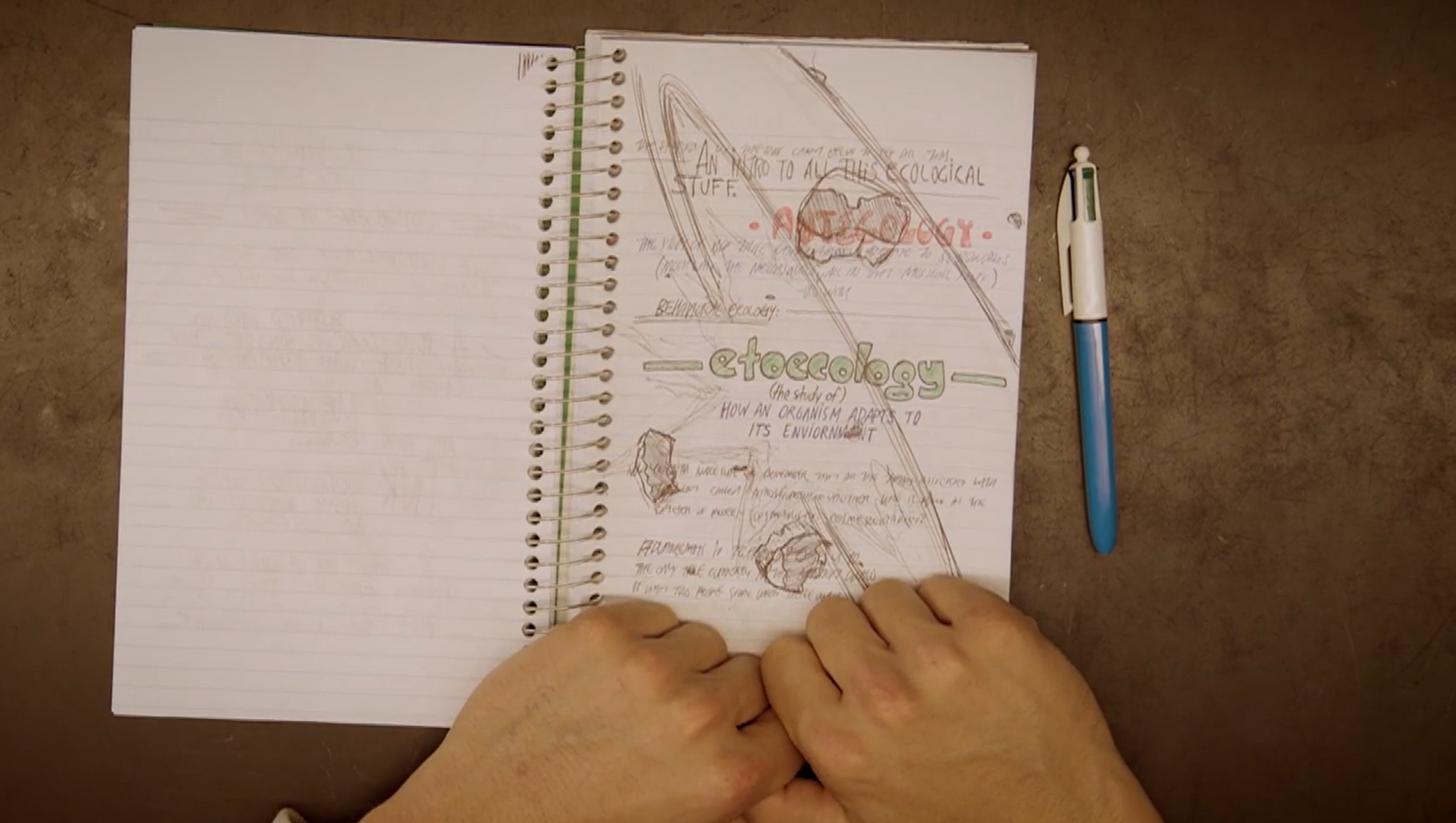
It’s often said that making notes by hand is good for learning. Here’s 🎬Notes on Biology, a nice stop-motion short about the benefits of doodling in class.[^1]
So many note-taking apps in the app graveyard - but not all are zombies
While clearing out my desk recently I found a USB thumb drive with a whole heap of old note-taking apps on it. This drive dates from 2017, not even seven years ago, but it seems like ancient history.
These note-taking apps come and go and the only ones worthwhile IMHO are the ones with a format you can keep using, or at least access. Several, I’m happy to say, had easily re-usable plain text files in a ‘data’ folder or similar.
So why am I mentioning this?
The truth according to Trump
Alan Jacobs rightly observes that Trump supporters don’t care about the ’truth’ of their claims.
He’s spot on to point out that the purpose of the constant barrage of egregious lying is to mock the idea that truth matters, and to gather a constituency of people who are in on the joke.
And certainly, there’s no point trying to correct these outlandish claims, as though their pushers ever cared a fig about the facts of the matter. They don’t.
How to write an article from your notes - an example
In July 2024 educational technologist Andy Matuschak published a long article outlining his observations on the debate over discovery learning versus instructional learning, and how it relates to the Holy Grail of educational technology: “a wildly powerful learning environment”.
Exorcising us of the Primer is a great article, but it’s just as interesting to see how this piece of writing came into existence in the first place.
The shortest writing session that could possibly be useful
Here’s my perspective on ‘atomic notes’.
They’re atomic in time even before they’re atomic in any other dimension.
An atomic note, for me, is the shortest writing session that could possibly be useful.
I got this from computer game designers, who call the shortest viable unit of play an ‘atom’. A single life in Space Invaders (and yes, that shows my age). Just enough to make you desperate to keep going.
Enhanced markdown apps you can use for free to make effective notes
I’ve lost track of the ridiculous number of ‘Zettelkasten apps’ now on the loose on the wild wild web. When I checked the ChatGPT marketplace, for example, I had to stop counting at 50. I was losing the will to go on looking at them.
Everyone makes the apps, it seems, but who’s left to use them?
If you’re one of those sensible people who just want to make useful notes, plain text files with Markdown are simple, elegant, versatile and durable.
How to get Strata for micro.blog up and running
I’ve decided to make use of the ‘notes’ feature in micro.blog.
This is like making private posts in a blog. But my main use case is brainstorming future blog posts. I want to take notes of half-formed ideas, which may or may not end up as blog posts. They’re not quite draft quality, but I have a hunch they’ll end up as public posts, not just remain as private notes.
The Notes feature is very easy to use. You make notes from the main page by clicking on the ‘Notes’ menu item.
And you can set up multiple ’notebooks’, which you can rename at will.
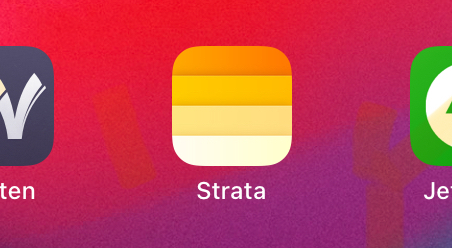
But there’s also an iOS app called Strata to make the experience easy and fun. That’s what I wanted to try.