article
-
but don’t take my word for it, what do I know? Read the book and the close reading archive. ↩︎
-
Using the Zettelkasten (or Bibliography Apparatus) as a Database
-
Collecting Reading Notes without writing Permanent Notes
-
Treating Blank Reading Notes as “To Read” list
-
Forgetting to write notes while reading
Making meaning where there is none
A quote by Italian author Roberto Calasso parallels the enigmatic environment of Piranesi’s world, in a novel where meaning is derived from seemingly disconnected elements.
Create a note system that indexes itself
Niklas Luhmann’s Zettelkasten system exemplifies a self-indexing record-keeping method. It allows efficient organization of notes through associative linking rather than through traditional indexing.
Semantic line breaks are a feature of Markdown, not a bug
The adoption of semantic line breaks in Markdown enhances clarity by encouraging writers to isolate each sentence while allowing for visually appealing paragraph formatting. It’s a superpower I didn’t know I had - until now.
Maybe you can create coherent writing from a pile of notes after all
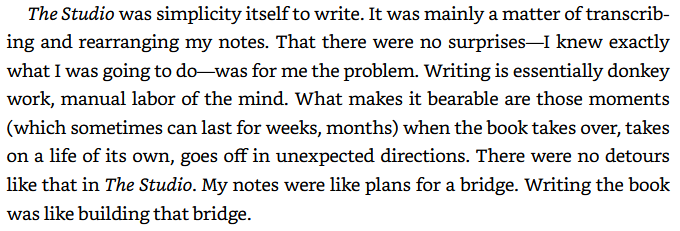
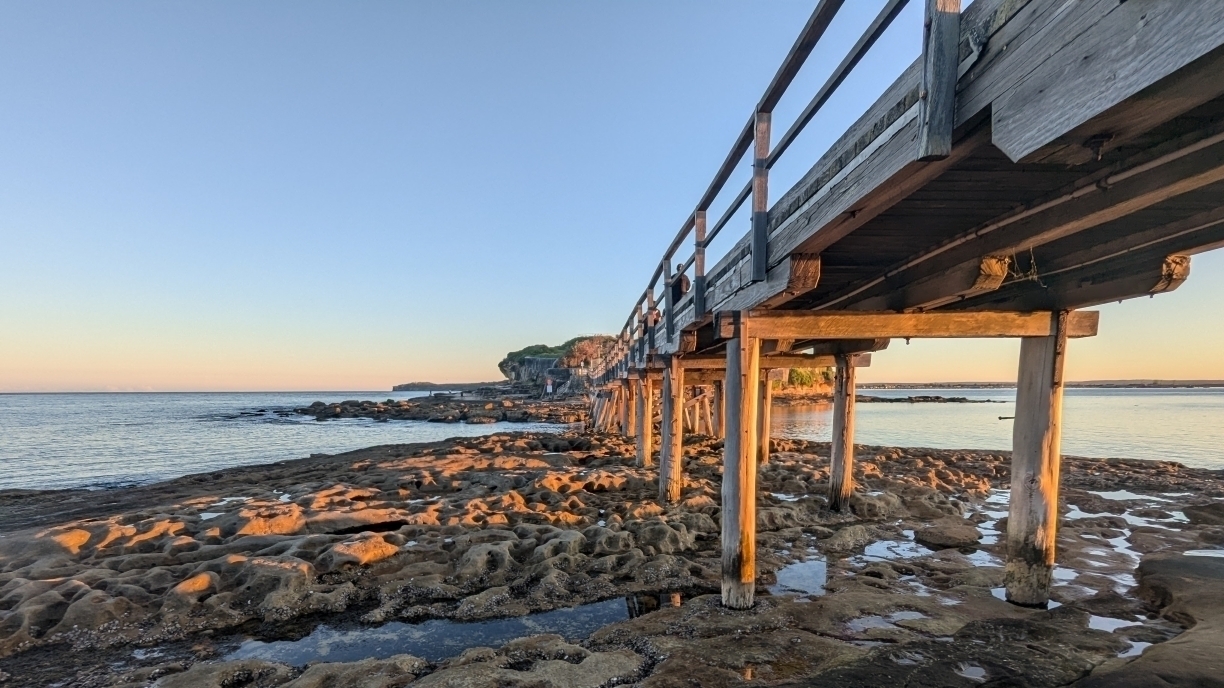
“My notes were like plans for a bridge”.
I’ve argued that you can’t create good writing just by mashing your notes together and hoping for the best. That’s the illusion of connected thought, I’ve said, because you can’t create coherent writing just from a pile of notes.
Well, maybe I was wrong.
Perhaps a strong or experienced writer can do exactly that. Here’s John Gregory Dunne, the journalist husband of Joan Didion, in the Foreword to his 1968 book on Hollywood, The Studio:
I imagine he wasn’t just a good writer, though.
Surely he was first a very good note-maker.
I’d like to hear about people’s experiences, good and bad, of using their notes to create longer pieces of writing. Was it like building a bridge, or perhaps like building a bridge out of jelly?

HT: Alan Jacobs, who draws a different but very valid lesson from the anecdote.
Stay in the Writing Slowly loop and never miss a thing (unless you don’t get round to opening your emails, in which case, yeah, you might miss a thing. Anyway:
Read better, read closer
For anyone seeking clues on better techniques for reading, Scott Newstok, author of How to Think Like Shakespeare, has created a marvelous resource: a close reading archive. Here is where all your close reading questions will be answered, including, what is it? how do you do it? what have people done with it? and does it have a future in a digital age?
Close reading is one of those two-word phrases that seem to take on a life of their own. Anyone connected to the humanities has probably heard of it, but it’s not necessarily well understood. Is it finished? Apparently not. Not at all.
Professor Newstok’s close reading archive is an openly available companion to John Guillory’s cultural history, On Close Reading, published January 2025.
Newstok is also editor of a book on Montaigne’s view of teaching, which is how I discovered Gustave Flaubert’s endorsement of what might perhaps be seen as a kind of close reading avant la lettre1:
“Read Montaigne, read him slowly, carefully! He will calm you . . . Read him from one end to the other, and, when you have finished, try again . . . But do not read, as children read, for fun, or as the ambitious read, to instruct you. No. Read to live.”
Now consider: three ways to make notes while reading.
For even more, please subscribe.
Improve your notes (and your life) with two-word phrases
I’ve been discovering the power of two-word phrases in innovation and branding. This article illustrates their impact through historical examples and modern applications.
Year in books for 2024
Happy New Year!
Here are some of the books I finished reading in 2024.

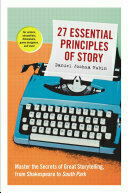
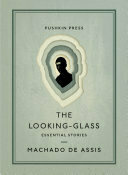
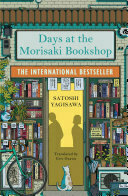
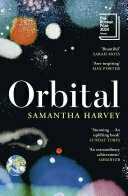
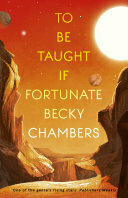
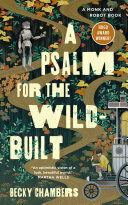
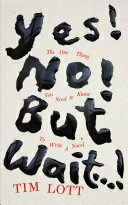
Happy New Year!
Do you have annual reading goals? And do you kep a record of your reading? I posted a little gallery of the books I finished reading in 2024. Micro.blog, the web service I use, is great for this. But it only works if I actually use it! Which is why only some of my reading was captured.
So my reading resolution for 2025 is to be more systematic in recording my reading.
In the past few years I’ve set a target. This has helped me to understand my reading cadence, but now I know it, I don’t really need a target any more. It’s not like there’s a big reward to be had for reading 1000 books a year!
How about you? How do you keep track? What works? And do you have any specific book goals for 2025?
Zettelkasten anti-patterns
When developing your Zettelkasten, your collection of linked notes, what have you learned not to do?
Mathematician Alex Nelson keeps a paper Zettelkasten, and has posted online about how he does it. He calls this Zettelkasten best practices.
But Nelson also lists some ‘worst practices’ to avoid, which he calls anti-patterns.
So I’m wondering, do you have any other examples of ‘Zettelkasten anti-patterns’ from your own experience?
For reference, here are the ‘anti-patterns’ Nelson identifies. I’m not going to explain these here, though, because you can read the post for yourself:
Are there any more Zettelkasten worst practices, and how have you avoided them?
Atomic notes and the unit record principle
Thinking about atomic notes
Researcher Andy Matuschak talks about atomicity in notes, an idea also developed by the creators of the Archive note app, at zettelkasten.de.
To make a note ‘atomic’ is to emphasise a single idea rather than several. An atomic note is simplex rather than multiplex. And this form of simplicity relates to the idea of ‘separation of concerns’ in computer programming.
Back to the unit record principle
But the idea is much older than this. I found something very similar described in 1909, in The Story of Library Bureau.
How to write a better note without melting your brain
There’s a great line in Bob Doto’s book [A System for Writing][2] which goes like this:
“The note you just took has yet to realize its potential.”
Haven’t you ever looked at your notes and had the same thought? So much potential… yet so little actual 🫠.
Perhaps you jotted something down a couple of days or weeks ago and returning to it now you can’t remember what you meant to say, or what you were thinking of at the time.
Or perhaps you made a great note then, but now you can’t find it.
Or maybe you just know your note connects to another great thought… but you can’t for the life of you remember what.
Well I already make plenty of half-baked notes like these, but how can I make them better? It’s not something they teach in school, so most of us don’t even realize there’s untapped potential, if only we could access it.
So, how can I make worthwhile notes from my almost illegible scribbles on the fly? Well, here’s what works for me. Maybe it’ll work for you too.
When writing my notes, I just have a few simple rules that I mostly stick to: