📚 Spotted in a charity store, the most ambitious book title I can remember. Can anyone beat it?

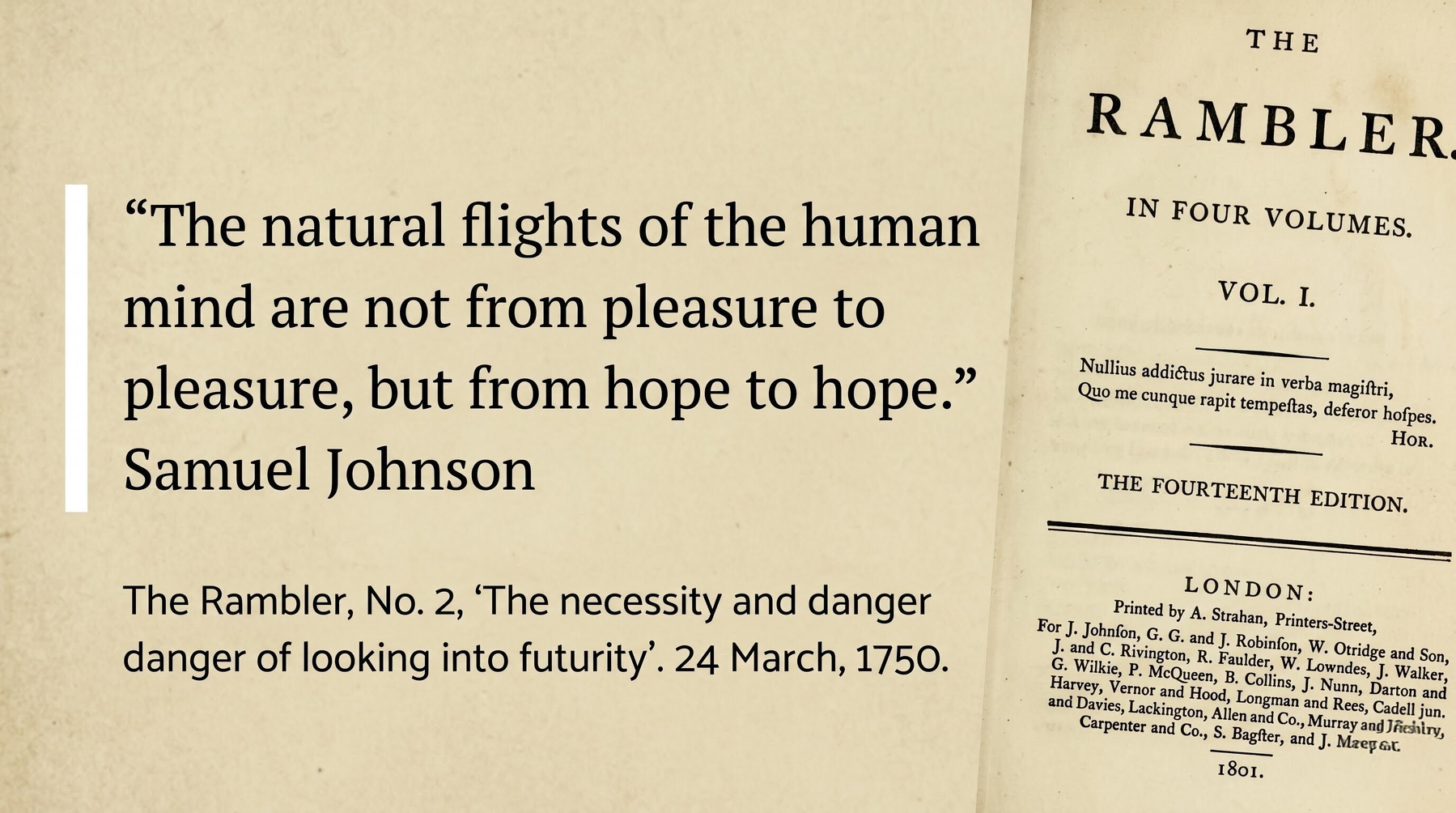
Here’s Dr. Johnson on the dangers of quoting others in a commonplace book:
“the pleasure of wantoning in common topicks is so tempting to a writer, that he cannot easily resign it; a train of sentiments generally received enables him to shine without labour, and to conquer without a contest.” – Samuel Johnson, The Rambler, No. 2, ‘The necessity and danger of looking into futurity’. 24 March, 1750. Link
There’s some irony in quoting him, but it’s in the service of pointing out that Johnson’s essays in The Rambler are well worth a read.
Loud and agitated shouting had me alarmed this morning. Sounded like a real bust-up. Then I understood. It’s the World Cup. Messi has scored. Our neighbours are Argentinian and this is only the start. ❤️🇦🇷
”A student’s understanding of particular subjects forms in collaboration with teachers, peers and the daily friction of being one mind among many.” – W. Ian O’Byrne
A thoughtful article on the messy process that helps kids learn.
So you practised for 10,000 hours but you’re still not an expert. What happens next? How to learn deliberate practice: https://writingslowly.com/2026/06/15/how-to-learn-deliberate-practice.html
#ShuHaRi #Expertise #LearningStrategies #PersonalGrowth
How to learn deliberate practice
Have you heard of ‘deliberate practice’?
You might well have, because Swedish psychologist Anders Ericsson’s work on what makes an expert has been hugely influential over the years. His co-authored original paper from 1993 has been cited more than 3,000 times and it has spawned more than a few popular books, including Geoff Covin’s Talent Is Overrated: What Really Separates World-Class Performers from Everybody Else, Malcom Gadwell’s Outliers: The Story of Success, and Daniel Coyle’s The Talent Code: Greatness Isn’t Born. It’s Grown. Here’s How.
Oh, those titles.
The key message of ‘deliberate practice’ is simple but not obvious. If you want to become an expert you have to do the right kind of practice. This was stated very clearly in Ericsson’s widely-read book, Peak: Secrets from the New Science of Expertise (2016):
“If you are not improving, it’s not because you lack innate talent; it’s because you’re not practicing the right way. Once you understand this, improvement becomes a matter of figuring out what the ‘right way’ is.”
This is an attractive message because it’s very optimistic. It encourages people to overcome the fatalistic worry that somehow, maybe due to their genes or their upbringing, ’they’re just not cut out for it’.
Instead of being resigned to your fate, you can change it. And the key? Deliberate practice!
Unfortunately, the strong popular interest has warped some of Ericsson’s key ideas about how to gain expertise. Two concepts in particular have made it hard to move forward productively.
Pelicans? Well if you insist.

#BirdsOfAustralia
#WildlifePhotography
#FeatheredFriends
Why must sci-fi author Ted Chiang state in The Atlantic that AI is not conscious? I call this La Stilla Syndrome: my Jules Verne-inspired name for the delusion our technology is alive. Chiang doesn’t buy it and nor should we.
#SciFi
#ArtificialIntelligence
#TedChiang
#JulesVerne
#TechPhilosophy
Sci-fi writer Ted Chiang has words of wisdom about so-called AI consciousness:
💬 “it is fundamentally dishonest to have a machine emit many categories of sentences, including any sentences using first-person pronouns.”
I said this exactly three years ago. We’re still being gaslit by machinery that calls itself a person.
#AIHype