Quote
- What is the real work of serendipity?
- A library of good neighbours
- The Dewey Decimal System pigeonholes all knowledge, like cells in a prison
- Harrison Owen, creator of Open Space Technology.
- Tiago Forte’s summary of How to Take Smart Notes, by Sönke Ahrens
💬“I had in my mind to write three books about the world as it was, using concepts and images almost like characters. But I ended up making a long detour.” — Italian author, Roberto Calasso. (Source).
“Long detour” is an apt summary of a writing life, and fitting inspiration for my latest project.

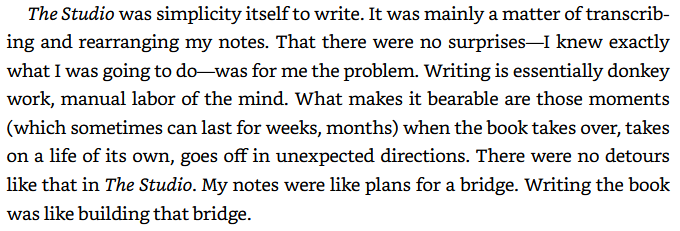
💬 “It was mainly a matter of transcribing and rearranging my notes… My notes were like plans for a bridge. Writing the book was like building that bridge.” - John Gregory Dunne, The Studio, 1968.
Maybe you can create coherent writing from a pile of notes after all. writingslowly.com

Maybe you can create coherent writing from a pile of notes after all
“My notes were like plans for a bridge”.
I’ve argued that you can’t create good writing just by mashing your notes together and hoping for the best. That’s the illusion of connected thought, I’ve said, because you can’t create coherent writing just from a pile of notes.
Well, maybe I was wrong.
Perhaps a strong or experienced writer can do exactly that. Here’s John Gregory Dunne, the journalist husband of Joan Didion, in the Foreword to his 1968 book on Hollywood, The Studio:

I imagine he wasn’t just a good writer, though.
Surely he was first a very good note-maker.
I’d like to hear about people’s experiences, good and bad, of using their notes to create longer pieces of writing. Was it like building a bridge, or perhaps like building a bridge out of jelly?

HT: Alan Jacobs, who draws a different but very valid lesson from the anecdote.
Stay in the Writing Slowly loop and never miss a thing (unless you don’t get round to opening your emails, in which case, yeah, you might miss a thing. Anyway:
💬“The note you just took has yet to realize its potential.” - Bob Doto, A System for Writing
Why not let your reading be a smorgasbord of serendipity?
Yes indeed, why not let your reading be a smorgasbord of serendipity?
Here’s Anna Funder, author of Wifedom: Mrs Orwell’s Invisible Life, on working at the University of Melbourne English Department library as a student:
“It sounds prehistoric now, but I sat at the front desk, typing out index cards for new acquisitions or requests from staff for books or journals — anything from the latest novel, to psychoanalysis, poetry or medieval studies. I read things that had nothing to do with my studies: a smorgasbord of serendipity. Despite my time there, I have never understood the Dewey decimal system: how can numbers tell you what a book is, to a decimal point?” - Every book you could want and many more
My take on this?
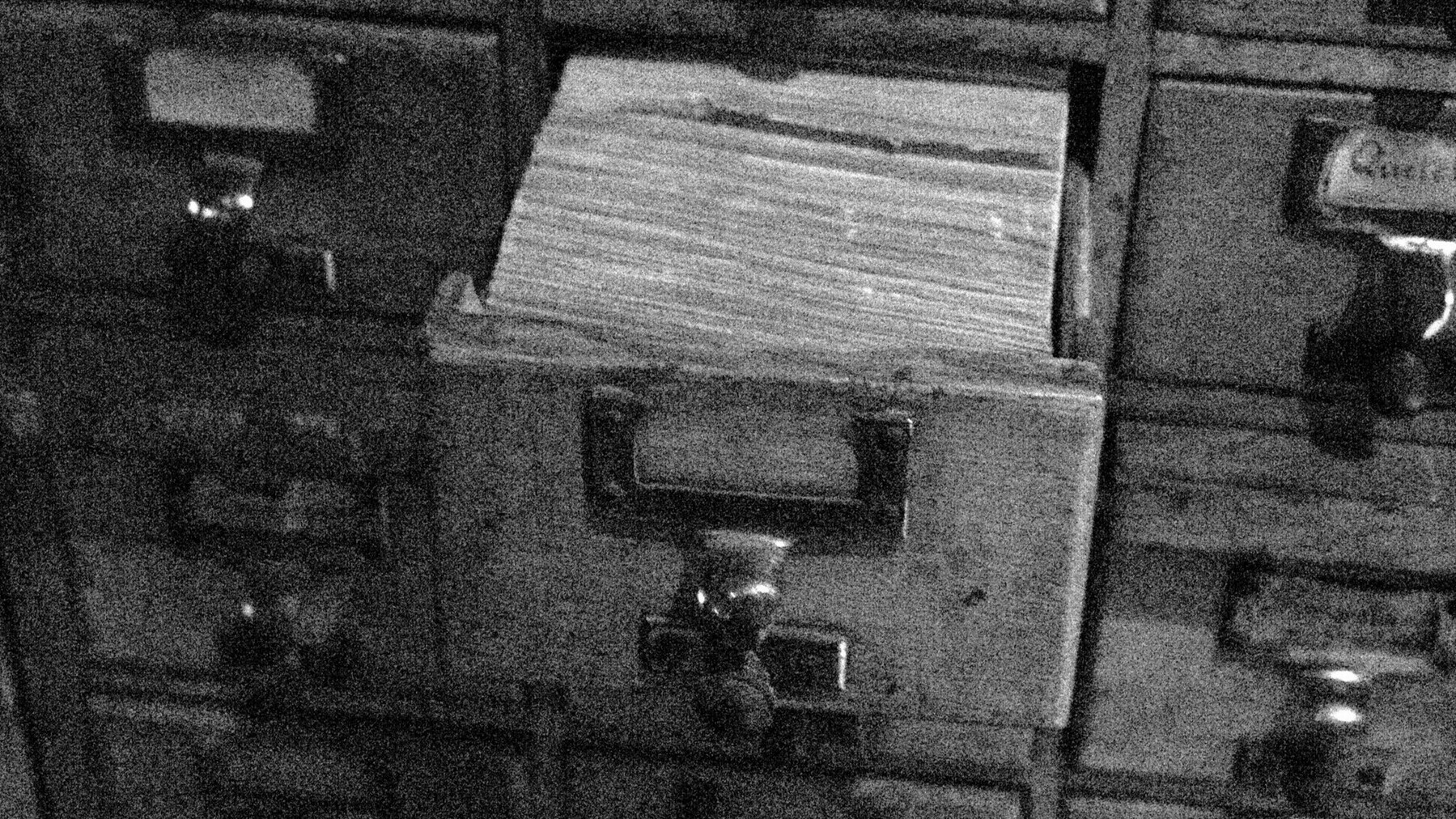
HEAJ:Mundaneum by Marc Wathieu is licensed under CC BY 2.0
💬“Peace of the sort that brings wholeness, harmony, and health to our lives only happens when chaos, confusion, and conflict are included and transcended.”
Work as if writing is the only thing that matters
“Work as if writing is the only thing that matters. Having a clear, tangible purpose when you consume information completely changes the way you engage with it. You’ll be more focused, more curious, more rigorous, and more demanding. You won’t waste time writing down every detail, trying to make a perfect record of everything that was said. Instead, you’ll try to learn the basics as efficiently as possible so you can get to the point where open questions arise, as these are the only questions worth writing about. Almost every aspect of your life will change when you live as if you are working toward publication. You’ll read differently, becoming more focused on the parts most relevant to the argument you’re building. You’ll ask sharper questions, no longer satisfied with vague explanations or leaps in logic. You’ll naturally seek venues to present your work, since the feedback you receive will propel your thinking forward like nothing else. You’ll begin to act more deliberately, thinking several steps beyond what you’re reading to consider its implications and potential.”
💬 “The real issue with speed is not just how fast can you go, but where are you going so fast? It doesn’t help to arrive quickly if you wind up in the wrong place.” - Walter Murch, In The Blink of an Eye.
Found at Austin Kleon’s post, Hurry Slowly
💬“At what point does something become part of your mind, instead of just a convenient note taking device?”
A question discussed with philosopher David Chalmers, on the Philosophy Bites podcast.
🎙️Technophilosophy and the extended mind
So much of this depends on what ‘the mind’ means. Meanwhile, we do seamlessly interact with our note-making tools, to achieve more than we could without them.