Atomic Notes
-
Using the Zettelkasten (or Bibliography Apparatus) as a Database
-
Collecting Reading Notes without writing Permanent Notes
-
Treating Blank Reading Notes as “To Read” list
-
Forgetting to write notes while reading
Improve your notes (and your life) with two-word phrases
I’ve been discovering the power of two-word phrases in innovation and branding. This article illustrates their impact through historical examples and modern applications.
Year in books for 2024
Happy New Year!
Here are some of the books I finished reading in 2024.

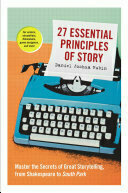
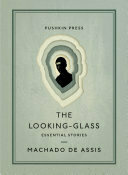

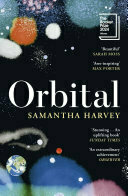
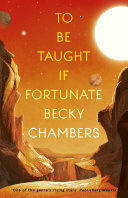

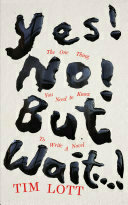
Happy New Year!
Do you have annual reading goals? And do you kep a record of your reading? I posted a little gallery of the books I finished reading in 2024. Micro.blog, the web service I use, is great for this. But it only works if I actually use it! Which is why only some of my reading was captured.
So my reading resolution for 2025 is to be more systematic in recording my reading.
In the past few years I’ve set a target. This has helped me to understand my reading cadence, but now I know it, I don’t really need a target any more. It’s not like there’s a big reward to be had for reading 1000 books a year!
How about you? How do you keep track? What works? And do you have any specific book goals for 2025?
Zettelkasten anti-patterns
When developing your Zettelkasten, your collection of linked notes, what have you learned not to do?
Mathematician Alex Nelson keeps a paper Zettelkasten, and has posted online about how he does it. He calls this Zettelkasten best practices.
But Nelson also lists some ‘worst practices’ to avoid, which he calls anti-patterns.
So I’m wondering, do you have any other examples of ‘Zettelkasten anti-patterns’ from your own experience?
For reference, here are the ‘anti-patterns’ Nelson identifies. I’m not going to explain these here, though, because you can read the post for yourself:
Are there any more Zettelkasten worst practices, and how have you avoided them?
Here’s one for the #Zettelkasten and #PKM tragics: a dive into the pre-history of ‘atomic notes’.
writingslowly.com/2024/11/2…
Atomic notes and the unit record principle
Thinking about atomic notes
Researcher Andy Matuschak talks about atomicity in notes, an idea also developed by the creators of the Archive note app, at zettelkasten.de.
To make a note ‘atomic’ is to emphasise a single idea rather than several. An atomic note is simplex rather than multiplex. And this form of simplicity relates to the idea of ‘separation of concerns’ in computer programming.
Back to the unit record principle
But the idea is much older than this. I found something very similar described in 1909, in The Story of Library Bureau.
How to write a better note without melting your brain
There’s a great line in Bob Doto’s book [A System for Writing][2] which goes like this:
“The note you just took has yet to realize its potential.”
Haven’t you ever looked at your notes and had the same thought? So much potential… yet so little actual 🫠.
Perhaps you jotted something down a couple of days or weeks ago and returning to it now you can’t remember what you meant to say, or what you were thinking of at the time.
Or perhaps you made a great note then, but now you can’t find it.
Or maybe you just know your note connects to another great thought… but you can’t for the life of you remember what.
Well I already make plenty of half-baked notes like these, but how can I make them better? It’s not something they teach in school, so most of us don’t even realize there’s untapped potential, if only we could access it.
So, how can I make worthwhile notes from my almost illegible scribbles on the fly? Well, here’s what works for me. Maybe it’ll work for you too.
When writing my notes, I just have a few simple rules that I mostly stick to:
🗨️ Keanu Heydari on the value of the #Zettelkasten.
“Maintaining a zettelkasten is, in itself, an exercise in Stoic care of the self (epimeleia heautou). This practice is not merely about external organization but about cultivating inner freedom through discipline, mindfulness, and deliberate engagement with knowledge.”
Not just notes: another meaning of 'Zettel'
In German, Zettelkasten, quite simply, means ’note box’. But there’s another, more hidden meaning of the word Zettel (note) that even German-speakers may know nothing of.
All the same, it’s useful for thinking with.
Busybody, hunter, dancer - which is your curiosity style?
Are you curious about your world? If so, what does your curiosity look like? How does it feel, and how does it move? And could you expand your repertoire of curiosity?
In other words, could you practise curiousity differently?
Three styles of curiosity - so which one is yours?
I’m interested in what it means to be curious. So I was intrigued by a new study about curiosity that I found via The Conversation.
The study examined the different ways nearly half a million Wikipedia users read their way through its massive network of articles. It turns out these can be characterised as three different styles of curiosity.
The authors write:
“By measuring the structure of knowledge networks constructed by readers weaving a thread through articles in Wikipedia, we replicate two styles of curiosity previously identified in laboratory studies: the nomadic “busybody” and the targeted “hunter.” Further, we find evidence for another style—the “dancer””.
And what are these different styles? In very brief summary: