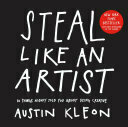
Finished reading: Steal Like an Artist: 10 Things Nobody Told You About Being Creative by Austin Kleon 📚
I actually read this back in September 2023, having bought all three of his trilogy. I really like Austin Kleon’s approach to creative work and seek to emulate it. ‘Show your work’ is important.
Manton Reece has updated his excellent and inspiring book on Indie Microblogging.
This 1660 description of the Royal Society well describes micro.blog methinks:
💬 “Their first purpose was no more, then onely the satisfaction of breathing a freer air, and of conversing in quiet one with another, without being ingag’d in the passions, and madness of that dismal Age”. The fediverse is an opportunity learned societies can’t ignore
Some people have created a little list of books they didn’t read in 2023. I suppose mine would be my rather long but unpublished list of books I’d like to read.
Well, that’s why we now have 2024.
I wish you, dear reader, a happy new year. (Please let me know what else I should read before another year passes).
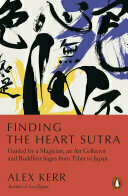
Finished reading: Finding the Heart Sutra by Alex Kerr. 📚 I really enjoyed Alex Kerr’s Lost Japan, and this opinionated reflections on the Heart Sutra didn’t disappoint either. I learned a great deal both about the Sutra itself and about Kerr’s background, straddling two cultures.
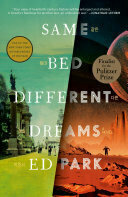
Finished reading: Same Bed Different Dreams by Ed Park 📚 This was my final read of the year, 2023. Fascinating take on the intertwining of Korean and American history in the 20th Century. I kept stopping to check whether the extraordinary connections were real. Mostly, they were. Intriguing.
The value of feedback depends on how you use it

I had a school friend who worked on Saturdays at the local op shop. Whenever an item of clothing she liked came in, she’d put it on view somewhere prominent near the front of the store. If it stayed there unsold for three weeks, then - and only then - she’d consider buying it herself. The result was a fairly unique style - bargain clothing that people who shop in op shops wouldn’t be seen dead in.
Obviously it’s important to pay attention to feedback from other people, but what you do with what they tell you can make all the difference.
Kevin Kelly has a great story about how he learned to avoid being the best in order to be the only. Figuring life is short, he decided to focus on the things only he can do. But what exactly is that, and how would he know?
Here’s how he finds out. When he has a great idea he doesn’t keep it to himself like most people would. Instead he tells people all about it. He talks a lot about what he’d like to do, “hoping that someone else would steal the idea”. If no one takes him up on it, clearly it’s something only he is prepared to act on.
Do the things only you can do, he says. If you do what others can do, even if you’re highly skilled at it, eventually you’ll be overtaken. But if you do what no one else will, it’s not a competition. That’s what he means by “Don’t be the best, be the only”.
This isn’t just theory. When Kelly was the editor of Wired magazine about half the articles were submissions and half were commissioned. Kelly would have a whole pile of article ideas that he’d send out to freelancers to write. But he was surprised to find that the pile of his story ideas kept growing because there were some that no one would write, even though he was offering them payment. Some ideas just kept getting turned down. These were great ideas, he thought, but there was no evidence. In fact, it was clear from the growing pile that he literally couldn’t pay people to write them.
Eventually he decided to start writing them himself, and these turned out to be some of his most successful articles.
“If at all possible, try and work on things that no one has a name for what you’re doing”. - Kevin Kelly, Longform podcast, Episode 532 (this comes near the end of the interview).
This advice is perhaps at odds with that of Adam Grant, who says “Every time you create something, people react and then you discover what people care about”.
“If you only focus on your own interest, you tend to develop novel ideas, but not necessarily useful ideas. And so for me, the audience is a filter. … I might have 30 ideas for a book. Let me hone in on the four or five that also might be relevant to other people. The goal there is to make a contribution.” - Adam Grant, Longform podcast, episode 557.
These might look like two different pieces of advice, and maybe they are - either to write what no one else is willing to (Kelly), or to write what others want to read (Grant). Depending on how you understand what people are telling you, the outcomes will surely be very different. In both cases, though, the key is to make the most of the feedback you’re given.
What that looks like, you’ll have to decide for yourself.
—-
Now read:
Choose your own race and finish it
The thing about advice is that people do what they want with it
Raising babies? Here's how to survive - I mean, enjoy it
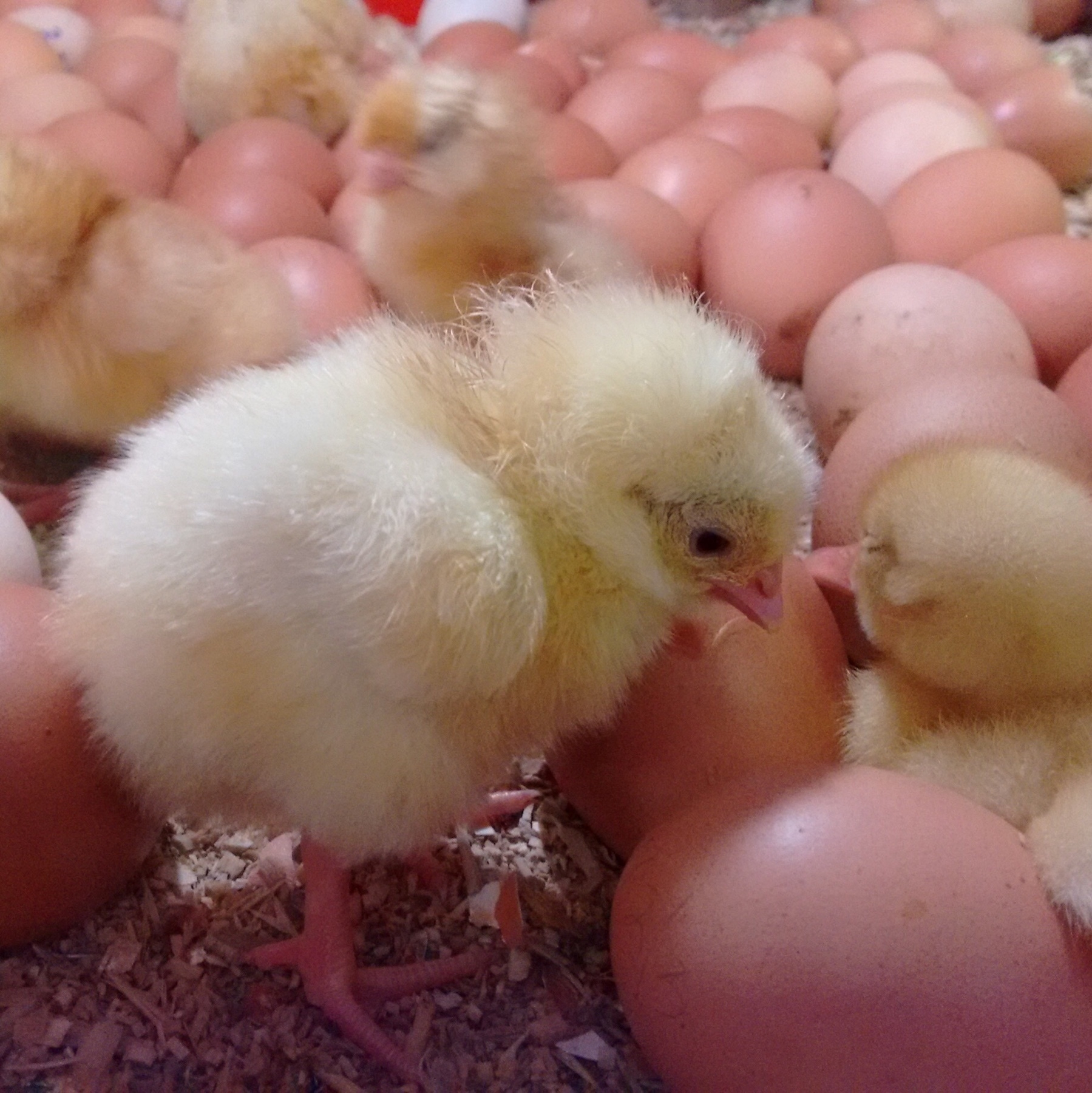
Ben Werdmuller may not be alone in finding it quite a challenge raising a baby while also having a life. Here are some thoughts from my own experience of parenting very young children.
tldr; I think I just about got away with it.
It’s just a phase
First, you will get through it. Though the feeling of being (over-) stretched and (completely) grounded may seem permanent, it really is just a short phase of your life. Before you know it, it will be over and you’ll miss it. So the important thing is to lean into the constraints. This is now, and even though it may seem like an eternity it won’t be like this for very long. Children grow very fast and you miss every stage as they outgrow it.
Plan on returning to the things you abandon
Second, because it’s just a phase, you can afford to let go of a few things - even things that seem indispensable. A bit like how at the end of the day you go to sleep thinking “that will just have to wait till tomorrow” - some things will have to wait till the kid grows up a bit and is a bit more independent. I noticed that even as pre-school arrived, my kids needed much less of me and much more of their peers. Then, at the age of about 5, they had a less independent phase. It goes in waves but in general they need your time less intensely the older they get. I did a graduate diploma in psychology when they were teenagers and they didn’t even notice. Those things you really need to do this year? Well, you prioritised kids (theory) so now you need to prioritise your time with kids (practice). Create a three or five year plan which includes ramping up the things you do without the kid, so you know those days really are coming, with a little patience.
Find something nurturing in every little thing
Third, “If you have a young family and you are managing to spend time on creative work…” Yes, I’m getting to that! Even though you’re now travelling at the speed of a baby, you can still experience something for yourself in almost every activity. I remember visiting Seattle with a toddler and a baby. We saw every children’s playground and not much else really. But hey! I visited Seattle! There was a fish ladder too, as I recall. The Bumbershoot music festival? There was a ride where you go round and round slowly in a large toy car. Oh, and space noodles at the Space Needle. Most importantly though, I did it with my tiny children. Thomas Merton said it more eloquently:
“if we have the courage to let almost everything else go, we will probably be able to retain the one thing necessary for us — whatever it may be. If we are too eager to have everything, we will almost certainly miss even the one thing we need. Happiness consists in finding out precisely what the “one thing necessary” may be, in our lives, and in gladly relinquishing all the rest.” - Thomas Merton,No Man Is An Island.
Find the others
Fourth, find some allies and make a community of peers. You can’t actually do it all on your own. That trip to Seattle? We were on a journey across the world, emigrating to Australia, to live in a town where I knew precisely no one. Very quickly we set up a baby-sitting circle, then on the back of that a local economic trading system (LETS) for the same families, using washers as credits, and I joined the community garden toddler group, and before long we had a group of adults to do baby activities with together, so the baby stuff wasn’t just baby stuff - it was social activity for the adults too. By sharing the load, both my partner and I managed to get a lot of writing done in the time we had very young kids. Also, some of those people we met through mutual desperation weren’t just temporary allies. They became our close friends. Yes, raising children slowed us down, and not all of our aspirations were fulfilled (putting it mildly), but both our kids are young adults now and though this is fantastic, I miss them as babies terribly. Would I go back there? Yes, in a flash.
To sleep, perchance to dream
Fifth, sleep and tiredness? Absolutely. It’s actual torture. Easy to say and hard to do, but sleep when the baby sleeps. Far from perfect, and usually far from doable, but wherever possible, get those micro-sleeps in. Compared with chinstrap penguin parents, who sleep for 4 seconds at a time throughout the day, human parents have it easy. They might get at least ten seconds at a time. Well, that’s obviously no help at all, but to refer back to point one: you will get through it. And I found meditation really helped, though YMMV.
Baby advice is absolutely the worst advice
Well no one ever benefited from offering unsolicited baby-raising advice. I mean, either it sounds unbearably smug, as in “just be a good parent and it will work out fine”, or completely unhelpful, as in “have you tried just turning the light off?”, or “it’s just a phase” (sorry about that).
Now you’ve seen my poor attempt at being the exception to the rule, what are your top tips for annoying your friends who have young babies?
Conducting myself properly
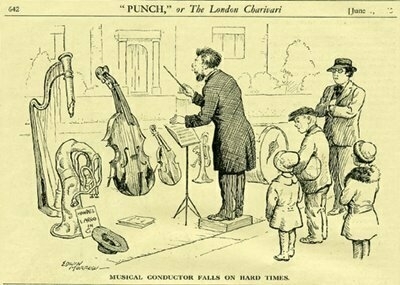
They made me the student leader of the school orchestra. One day the music teacher was sick and he asked me to conduct. I had no idea what to do, except what I’d seen him doing. So I waved my arms around.
Today I’m fragmented, overwhelmed by what there is still to complete, and also by all there is to start. Somewhere in the middle, there I am, lost between starting and finishing. Flailing.
Yet even no method is still a method. Says the poet Christian Wiman1:
💬 “The truth is our only savior is failure.”
And look at those stats! This is my 200th post here this year. Writing slowly? No, not me.
-
Christian Wiman, “The Preacher Addresses the Seminarians” from Once in the West (Farrar Straus and Giroux, 2014). ↩︎
The real story of Napoleon?
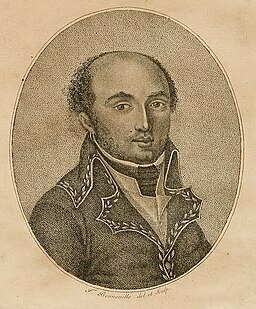
If you’re thinking of viewing Ridley Scott’s movie version of Napoleon 🍿, or if you’ve already seen it, I’d recommend also reading The Black Count: Glory, Revolution, Betrayal, and the Real Count of Monte Cristo by Tom Reiss. 📚
This Pulitzer prizewinning biography puts Napoleon’s life and times in historical context and it’s an amazing story. The ‘black count’ of the title was Alexandre Dumas, father of the famous author of The Count of Monte Cristo and The Three Musketeers. He rose from obscurity to became Napoleon’s commander of cavalry during the Egyptian campaign.
But quite unlike Napoleon, he seems to have been motivated by something rather more than personal glory. He actually believed in the ideals of the Revolution, not least the implementation of Liberté.
As an aside, the book provides a huge number of fascinating factoids, such as why dolomite (the mineral as well as the mountain range) is named dolomite.
Why I'm writing faster
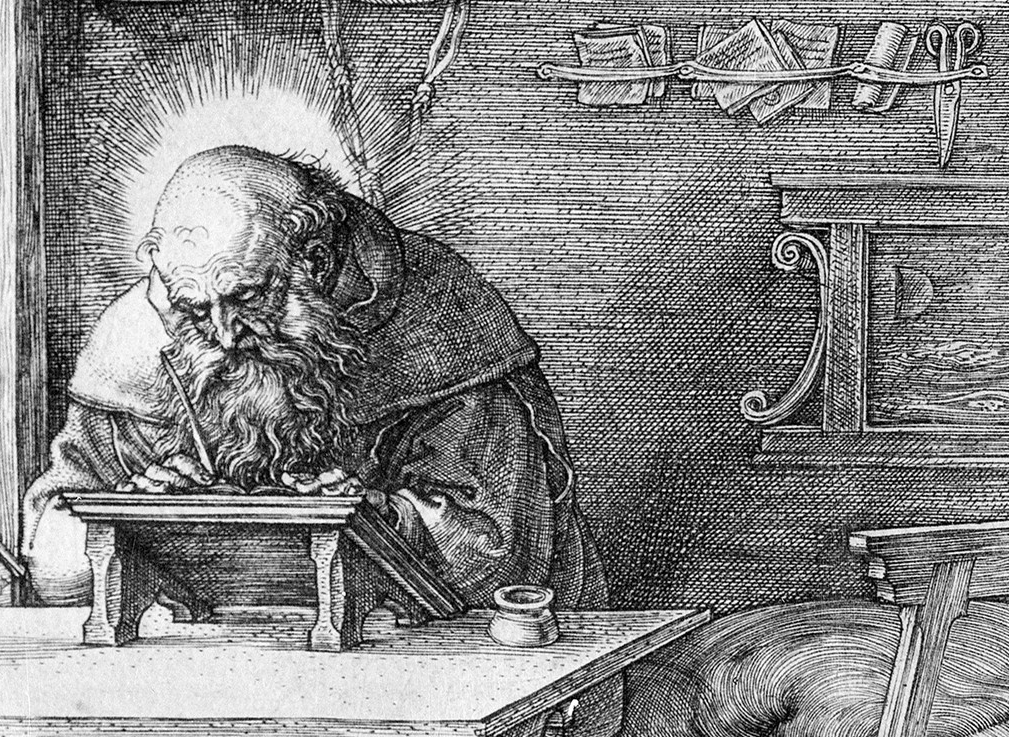
Why do you write?
Everyone has their reasons but I write so I can think:
Writing is not simply a way of saying what someone knows but one of the most effective ways to unveil what there is to say. As Baker (1985) suggests, “in fact, writing creates a thought and the capacity to think: with writing you discover thoughts that you barely knew you had”
- Baker, S. (1985). The practical stylist. Harper and Row. p. 2-3). 1
But what slows you down?
I’ve been running this site, and writing slowly since 25 January 2014. For the first nine years it really lived up to its name, because I posted very rarely. The reason, I reasoned, was that the WordPress front end and I just didn’t get along. It was a room of my own, sure, but it wasn’t comfortable. It just didn’t feel like a room I wanted to spend time in.
The author Virginia Woolf wrote about how women need a room of one’s own to write in. But that still left the rest of the world to the men. Jane Austin wrote at the kitchen table of a busy household, and it wasn’t ideal. Capitalism gives us hot-desking - not even a table to call your own. So your virtual environment really matters. A UI of your own? Not likely.
And what speeds you up?
Eventually, after complaining about WordPress for five years, and having tentatively connected the site to micro.blog (not before eight months of procrastination) while still hosting it on WordPress, I finally switched completely to micro.blog as the host. This meant the front-end editor also changed completely. Now I just had a plain box to write in, with a couple of options for simple categories. Often though, I just wrote in a text editor and copy-pasted as necessary. The outcome was stark. This shift resulted in a dramatic increase in writing frequency, which given the name of the site is a little embarrassing. On 27 January 2023 I wrote:
“Don’t worry, whatever happens I’ll still be writing slowly.
Between 2014 and 2022 I had only written 26 posts. But following the big changeover I wrote 194 posts and counting, in a single year. As a result there’s now about 33,000 words on this site. And here are the latest statistics.
So what’s the right speed for you?
I admit it then: I’ve sped up. Yet I still maintain that writing slowly is the way to go. A little every day or two adds up to a whole heap. Never mind the quality. Just look at the size! Maybe I’ll change the name of this site to Writing Bigly.
“Don’t worry, whatever happens I’ll still be writing bigly.”
Well clearly that won’t be happening. Meanwhile, though, I wish you a very big writing year ahead. Let me know in the comments what you’ve achieved, and what you have planned. Exciting!
More on writing and blogging
- Choose your own race and finish it
- Only sinners left down here
- Why I’m writing slowly
- You can get a lot done by writing slowly
- My range is me
- The mastery of knowledge is an illusion
-
Quoted in Cruz, Robson Nascimento da Cruz, and Junio Rezende. “A escrita de notas como artesanato intelectual: Niklas Luhmann e a escrita acadêmica como processo.” Pro-Posições 34 (2023): e20210123. English PDF. ↩︎