My range is me

The actor and film director Taika Waititi made an interesting comment on his creative process:

"I'm the laziest, laziest actor you'll ever come across."

Taika Waititi

He said he's too lazy to really try to do acting properly so he ends up just being himself. In his movie Jojo Rabbit, for example, he played a version of Hitler, as imagined by a ten-year-old child. But he couldn't be bothered to read any background, so his comic/tragic version of the character is a lot like Waititi himself, rather than the notorious dictator. Did this work? Well the movie was nominated for several Oscars, and I think it won one, so he might have been doing something right.

More recently, he played a pirate in his comedy series, Our Flag Means Death, but having discovered that Blackbeard came from Bristol in the West Country of England, he thought it would be too hard to try that accent and so he just reverted to his own New Zealand voice.

"My range is me. I don't try. And I'm successful, so…"

Taika Waititi

This nonchalance is endearing, but it rather masks the fact that Waititi is extremely prolific, often juggling several large projects at once, including some very big-budget movies. In 2017 he was too busy to pick up his New Zealander of the Year award. I suspect that what he means by 'lazy' is different from that word's common usage! Perhaps his insistence on being himself actually helps him to produce highly creative work and plenty of it.

I'm mentioning all this because I think a lot of people have difficulty just being themselves. Perhaps they feel there is a role they are supposed to perform, or maybe they fear their real, authentic self, whatever that is, wouldn't be good enough. Possibly, their environment doesn't provide the kind of psychological safety they might need to reveal themselves as they are, so they are tempted to hide certain aspects of their character, to mask themselves, or hold themselves in. This can be exhausting, like holding your breath, and this exhaustion doesn't support productive work.

Of course, I'm talking about myself here. I often feel that my best won't be enough, that I'm only acceptable if I can jump some imaginary hurdle. But I recognise that this hesitancy is really mostly in my own mind. Taika Waititi's career shows that at least for one person, relaxing into one's own character is a way of releasing the energy to create high quality work, even if it isn't what people are expecting.

I remember a few years back taking holiday snapshots with my phone. As I did so I was imagining that these photos of my ordinary holiday wouldn't be anywhere near as good as the kind of thing you see on Instagram, where everything seems casual but you know it's been carefully staged to look its best. But my camera app had just updated to a new layout and what I saw, instead of amateur snaps, was a perfect grid of scenes from a beachside paradise. My sense of inadequacy had been entirely made up. Reframed, my holiday and my record of it were far more than merely adequate. My casual shots were more than OK, they were quite good. And the holiday was wonderful. I've remembered that sudden revelation. And now I realise that all this time I've had things the wrong way around. I don't need to be good enough to become creative; instead I want to be creative enough to become good.

A new mantra, then: my range is me.


As a result of following this mantra, I’m the author of Shu Ha Ri: The Japanese Way of Learning, for Artists and Fighters. It’s a short and accessible introduction to the concept, available now.

And if you liked this article, why not subscribe to the weekly Writing Slowly email digest?

You can get a lot done by writing slowly

“People say to me, ‘Oh, you’re so prolific’…God, it doesn’t feel like it—nothing like it.  But, you know, you put an ounce in a bucket each day, you get a quart.”

John McPhee (quoted by Cal Newport)

Journalist John McPhee rarely wrote more than 500 words a day, but his secret was the power of repetition. He did this seemingly small amount of writing nearly every day throughout his long career. By writing a little, a lot, he achieved an enormous amount, including countless articles, 29 books and a Pulitzer Prize.

That's what writing slowly is about. It doesn't mean being lazy. It means cultivating the discipline to keep writing. Five hundred words a day adds up to 182,500 words a year. It's not hard to write a lot. Quantity is not the issue. The only two obstacles are the difficulty of maintaining the habit, and the little voice in your head that tells you your scribbling will never amount to anything.

Update: in fact it has amounted to something. Check out my book, Shu Ha Ri: The Japanese Way of Learning, for Artists and Fighters. And you can also subscribe to the weekly Writing Slowly email newsletter.

When I publish a post with no title, where does it go and who gets to see it?

Thanks to Tom Critchlow, I now know a simple JS trick for including the micro.blog feed into a website:

<script type="text/javascript" src="https://micro.blog/sidebar.js?username=tomcritchlow"></script>

Best albums of 2018

Thanks to NPR’s list of great albums of the year, I found Jeremy Dutcher, Wolastoqiyik Lintuwakonawa. Spent a marvellous evening listening to this mesmerising album twice in a row. Since he’s won the Polaris Music Prize probably everyone in Canada already knows about it. If you haven’t heard it you should fix that at the earliest opportunity. 🎵

I had forgotten that posts to my wordpress site only show up on micro.blog if there’s no title.

Let’s see whether this post, written on my new iPad, makes an appearance…

Finally the iPad

Having finally got hold of an iPad, I’m expecting more posts here soon - and by extension on micro.blog

zines

I'm imagining writing a handful of  'zines and setting up stall at one of those 'zine fairs. I would like that. I just looked it up and found a pop-up 'zine fair just down the road this Sunday. I will go to seek inspiration.

http://www.niemanlab.org/2017/12/zines-had-it-right-all-along/

https://austinkleon.com/2018/03/01/fancy-zines/

Great bike ride down the river and along the bay this morning. Cold to start but warmed up nicely. Flat rear tyre though - twice... argh! I'm getting new tyres, finally. Should be good by Wednesday.

You have been warned

It starts innocently enough, then they take over the world. You have been warned.

several hundred daleks for auction

Social networks fit for humans

“Social Networks don’t scale socially”. A distributed alternative to large social networks is needed, as evidenced by the evolution of platforms like Mastodon, while the web itself remains the ideal social network.

A big win for civilization in England?
A judge has ruled that a local council in England needs to consider its statutory duties before closing down libraries due to funding cuts.
[The Guardian] (https://www.theguardian.com/books/2018/aug/14/family-claims-win-in-high-court-challenge-to-northants-library-cuts)

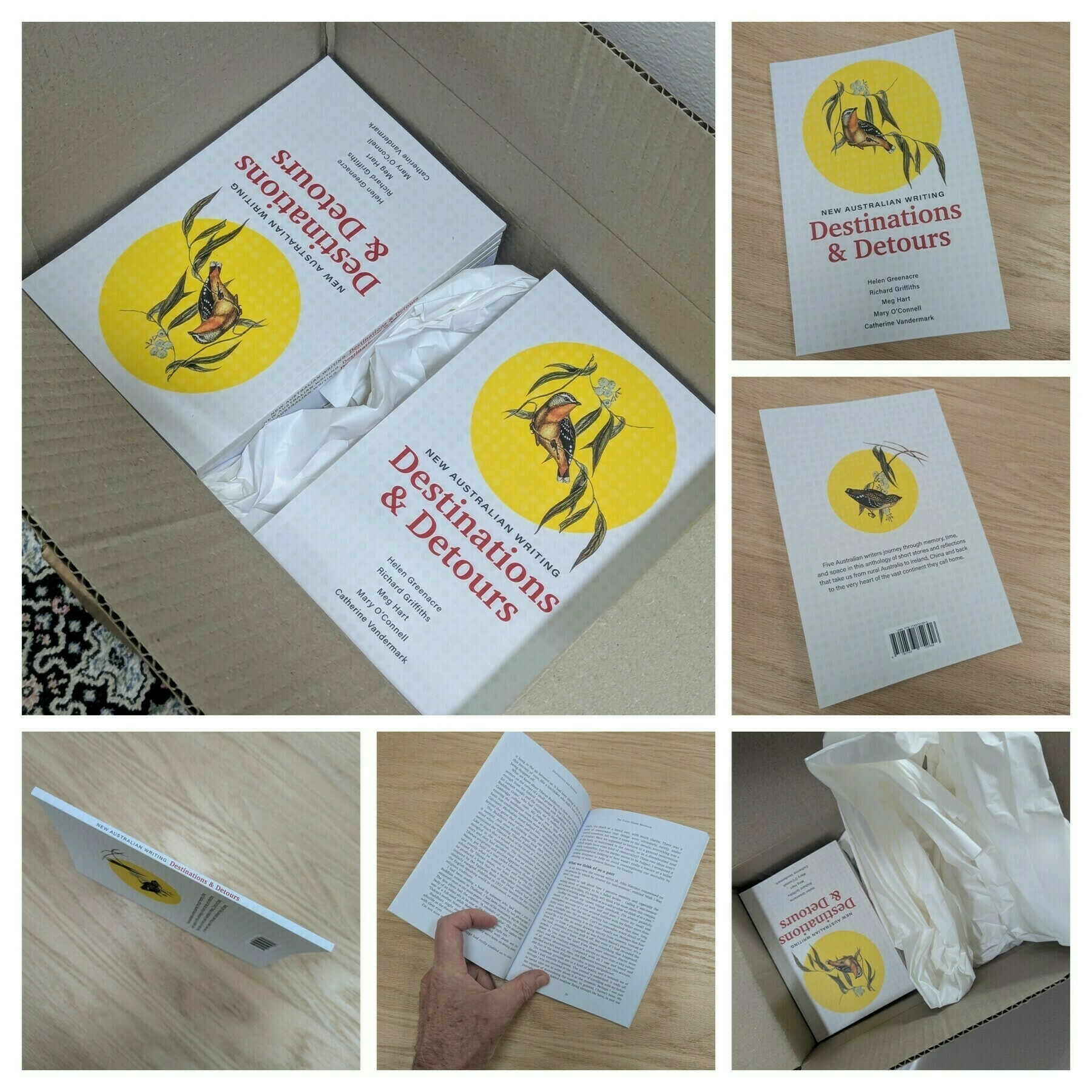
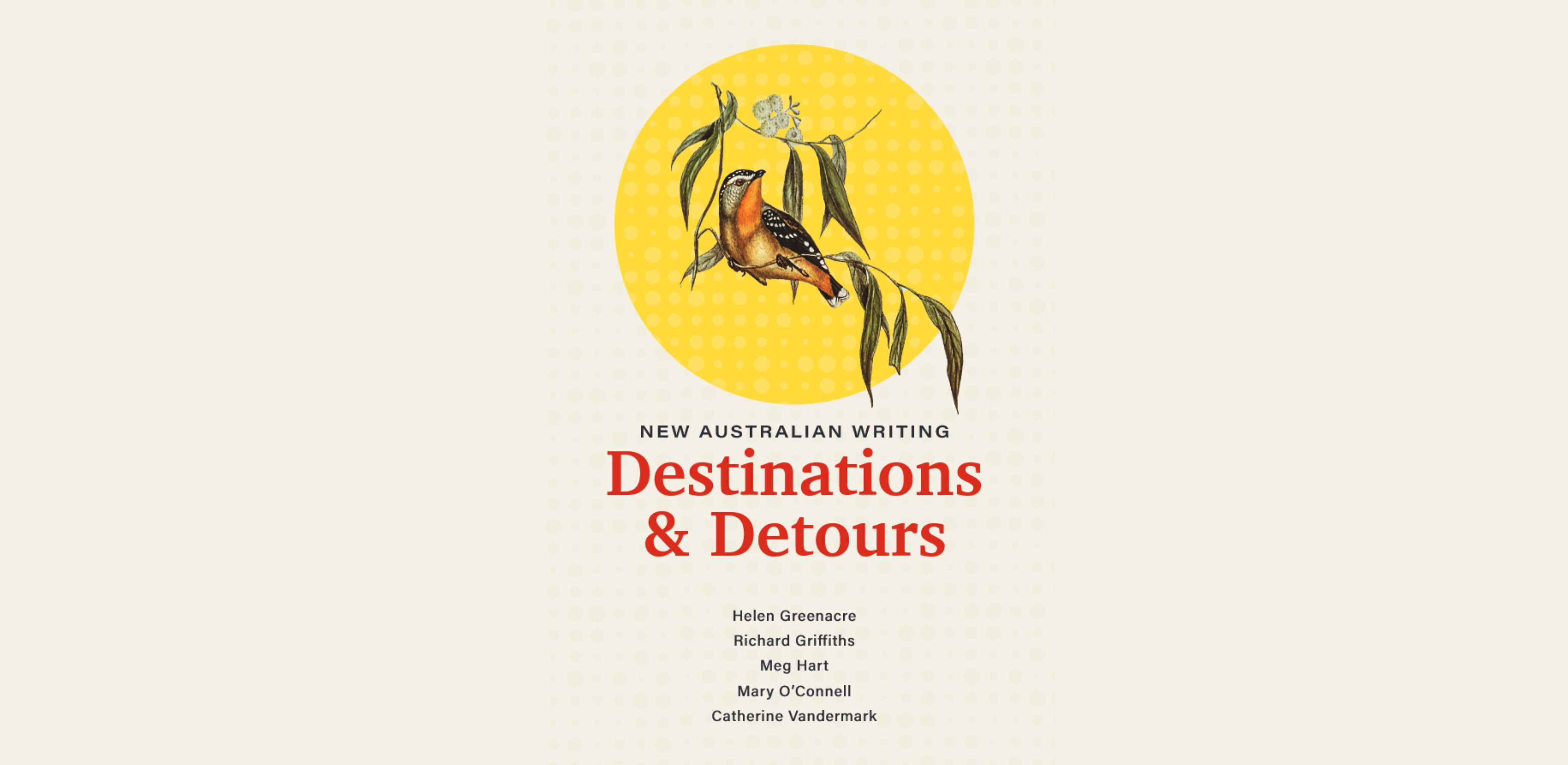
Old English Cuts - book cover

What keeps me from blogging?

Mark Sample asks himself what it is about blogging that keeps him from blogging. For me, to be honest, it's Wordpress. The editor tool makes me feel like I'm engineering something rather than creating. Even with Gutenberg.

Shelter

[caption id="" align=“alignnone” width=“393”]Olivia Chaney - Shelter Olivia Chaney - Shelter[/caption]

Really enjoying this. English song reimagined. The producer, Thomas Bartlett, has had a role in much of my favourite music. 🎵

Blogs are back

According to the Chronicle of Higher Education, blogs are back! The article references one of my favourite metaphors for the web: the garden and the stream. It’s worth reading Mike Caulfield’s classic keynote presentation (for dLRN2015) to understand the contrasting and sometimes complimentary benefits of both.

Should I read the Indieweb Guide?

I’ve now added the Indieweb plugin along with webmentions. Looking forward to finding out how it works! (There’s a guide - maybe I should read it).

Only sinners left down here

I miss my old habit of blogging regularly. It used to make me happy.

I like the idea of cultivating one’s garden online. But somehow the tools have become harder to use, or just less accessible, which for me amounts to the same thing. The end result is less writing.

I don’t think this is unusual. To browse the remains of the blogosphere in recent times is to see that many blogs just faded out around 2014-16. It feels like the Web’s own version of the Rapture. The righteous seemingly vanished. They ascended to Facebook and Twitter I guess. Only sinners were left down here in the blogs.

But besides this great shift there is something else remarkable about the experience of writing online. It relates to the general shift from PC to mobile. Clearly this is a great leap forward. It is a kind of technophile dream to have an always connected computer in your pocket. But as Neil Postman reminds us, progress isn’t linear - it’s ecological. Every technological ‘improvement’ changes the whole ecosystem, and not everywhere for the better. As we spend more time on my phone there is less time left over for the old (relatively productive) way of doing things.

But some of us just like it down here in the blogs. The mission, then: to find ways of writing more, more often; to find and use new ways of working that can support a justified feeling of accomplishment.

Now read: Open, free and poetic.


Just by posting on my site, the post is automatically mirrored to micro.blog

New micro.blog account

I did in fact add a micro.blog account, which you can find at micro.blog/writingslowly

(but it's not fully linked up yet - that's the next step).

I’m thinking of adding a connection between this site and Manton Reece’s micro.blog It’s a bit like Twitter but there’s more control of your site’s own contents. And it’s possible to syndicate everything to Twitter anyway.

Micro.blog