general
-
unless you’re actually a bot, scraping my voice to make scam adverts to send to my friends and family – in which case, my respect will be commensurately diminished. ↩︎
Now you can listen to Writing Slowly
As attentive readers of this website will know, I’m happily using micro.blog as the site’s hosting platform. Micro.blog has a surprisingly wide range of features and it comes with several associated mini-apps, which provide easy access to those features. One of the apps is called Wavelength, and it has just been updated. This has inspired me, finally, to actually make use of it.
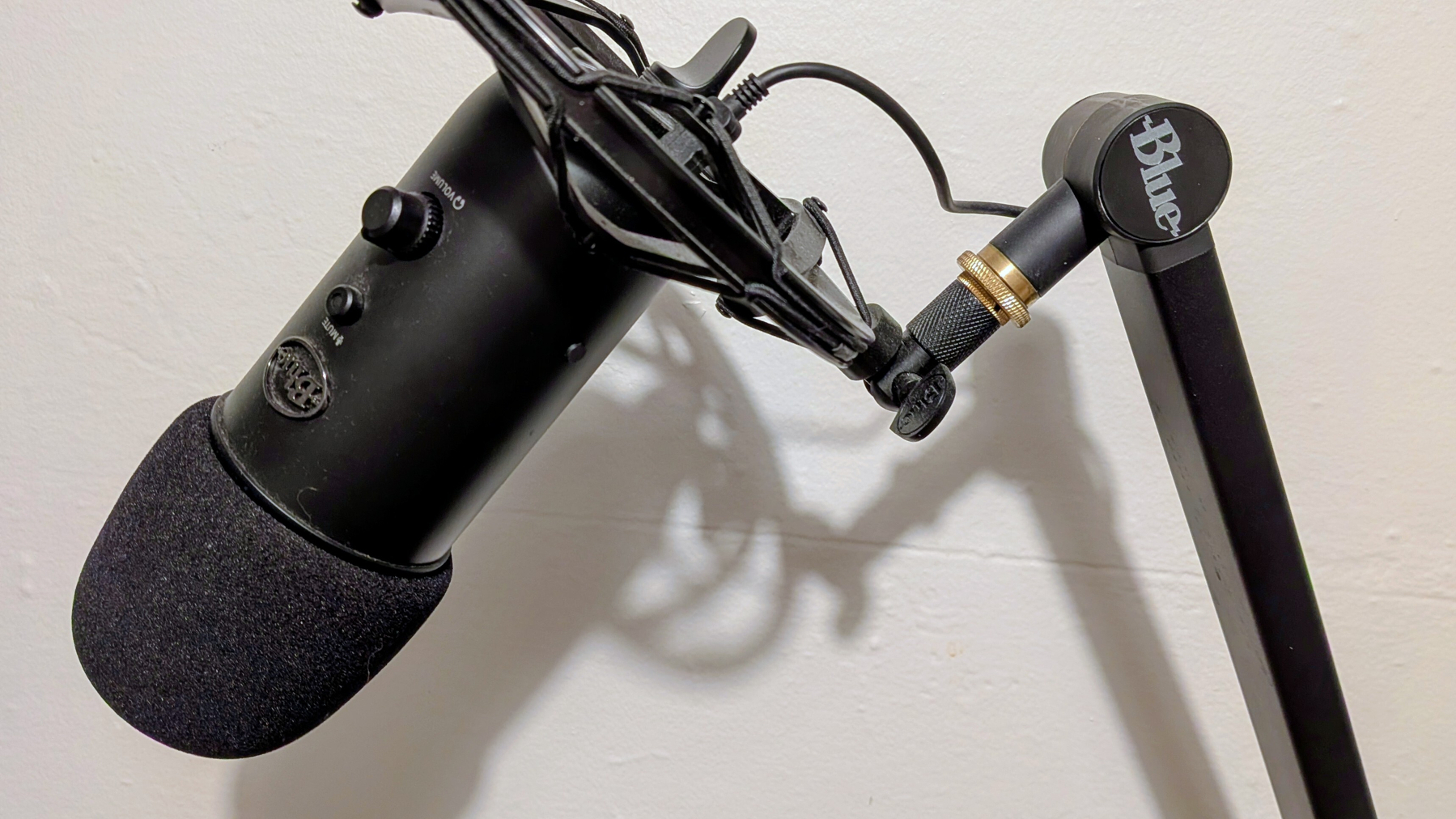
Wavelength makes it easy to edit and publish voice recordings and now with Wavelength I’ve been recording my voice, reading aloud a number of the longer articles on this site. So if you navigate to one of these posts (nearly twenty of them so far) you might find there’s now a little ’listen’ button, which will enable you to hear me speaking my own written words.
Why bother doing this? Well, so far it’s been quite fun, and you might just enjoy the opportunity to hear the person behind the writing.
I feel these days it’s more important than ever to lean into our own humanity. Sure, you can get a better, more professional experience elsewhere, enabled no doubt by AI automation and by the mimicking of human experience rather than the real thing. But as I’ve pointed out before, my range is me.
There’s an increasing amount of slop online and this is one small way to show my words are handmade and originated from a real person.
I’m celebrating the human touch and trying to respect you, dear reader, as a real person too.1
You’ll be relieved to know that while I might still insist on writing slowly, I speak at a reasonable speed.
So do let me know what you think, and whether I sound like you imagined I would. And if you’d like to subscribe to the weekly e-mail digest, there’s never been a better time to do so.
Talking of which, now would also be a pretty good time to check out my book, Shu Ha RI. The Japanese Way of Learning, for Artists and Fighters.

📷 A bluebottle (Physalia utriculus), washed up on the beach.
#photography #wildlife #Australia
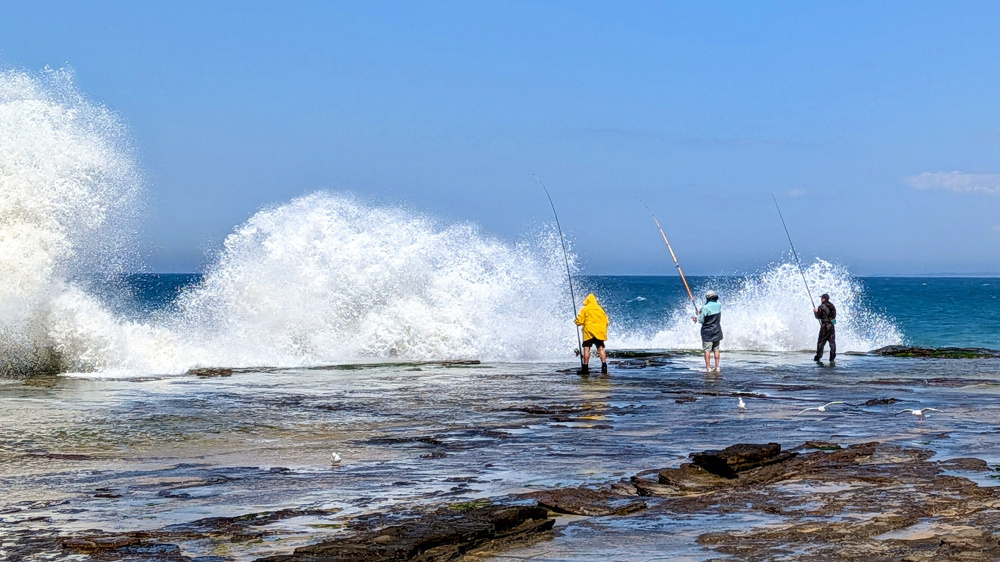
📷 Facing the wave.

📷 Lounge lizard
📷 Late afternoon at the ocean baths.






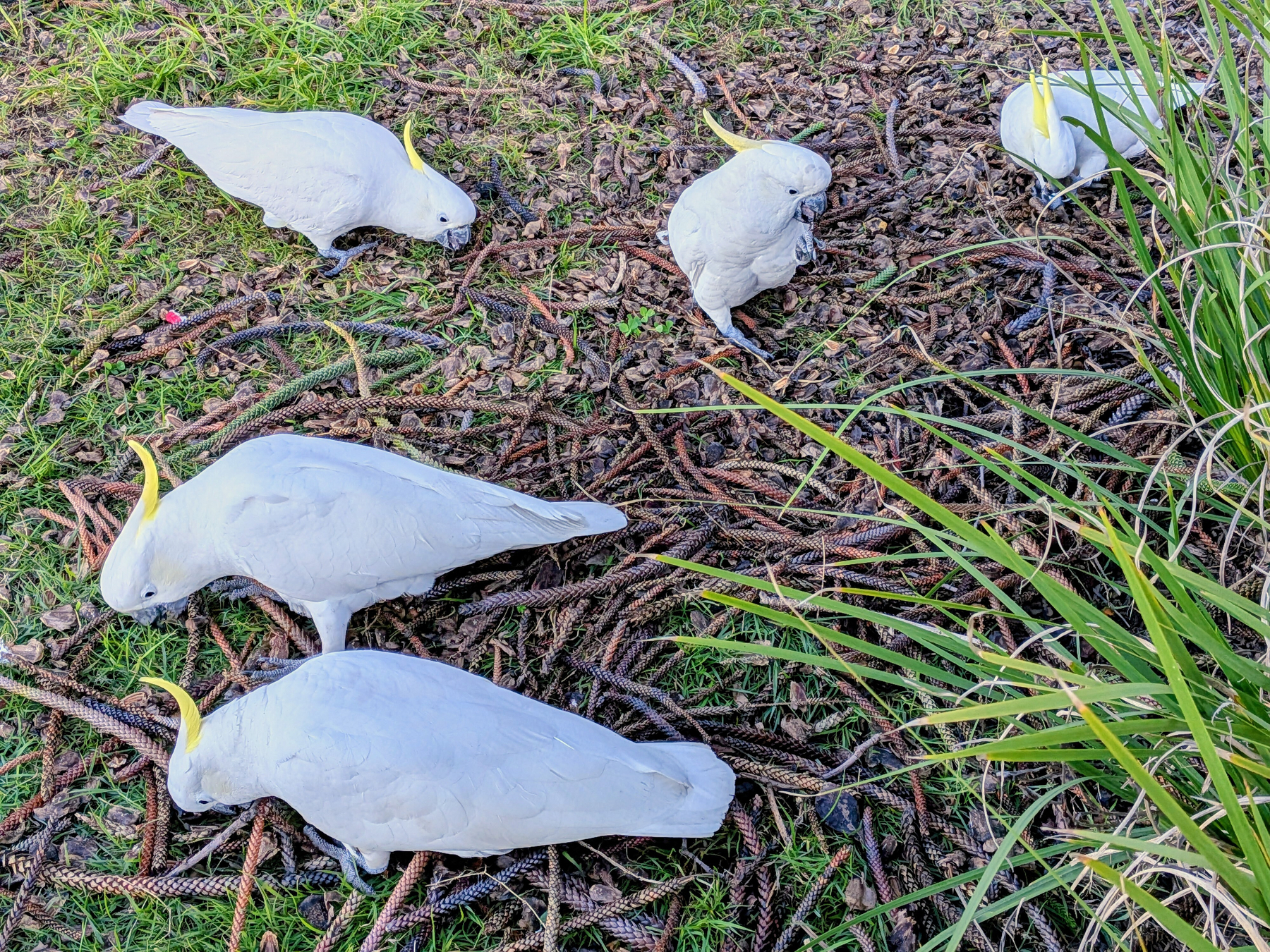
Cockatoos? Five sulphur-crested cockatoos, foraging beneath the Norfolk Island pines of Botany Bay? Well, all right, if you insist.
#BirdsOfAustralia #WildlifePhotography #FeatheredFriends
💬 “We need to build digital worlds worth protecting.”
— Dr Krista Fisher, on the real manosphere. Womens Agenda
What's the future of creative work without human intent?
Nicholas Carr has written about the prospects for creative work in an age of digital production.
He argues that the era where technology merely copies art has given way to one where AI generates it by stripping away human intent and replacing it with mathematical patterns. This results in a flood of “efficient” but hollow content, which forces creators into a relentless “dance marathon” to feed the digital platforms. He suggests that as machine-made “slop” becomes the norm, the true value of art will lie in its humanity. In other words the slow, intentional, and relatively inefficient activities that a computer can’t replicate will be recognised as worthwhile. They’ll literally be a measure of value.
He touches here on a couple of themes I’ve been considering too.
The first theme is what it means for everything to be turned into ‘content’, and for a whole class of ‘content creators’ to rise from nowhere, the way a gold rush would generate a legion of instant but mainly ersatz gold miners.
Carr suggests the ‘content’ doesn’t matter compared with the ‘buckets’ that contain it. As every MrBeast video attests to, it’s the form that matters now.
MrBeast is the brand-name of a prominent American YouTuber who gained worldwide fame for his high-budget videos which feature elaborate challenges and massive financial giveaways. It’s a winning formula precisely because it’s a formula. And the formula of the show makes the content of any individual episode, though still necessary, oddly irrelevant.
If we’re not just making content what are we making?
That’s the question I’ve been pondering for a while now. Online platforms are in the container industry. They all provide containers for other peoples’ stuff. And what do you call the contents of a container, if not ‘content’? This led me to wonder whether the way forward is a) to seize the means of containment and create our own ‘containers’ or b) to deny the entire paradigm and do something else entirely.
So I wanted to know what comes after content?
It’s hard to imagine but I intend to try. At the moment the obvious answer to what comes next is ‘more containers’. As I write this, plenty of writers (including Nicholas Carr) have been moving to Substack because it seems to have some writerly buzz to it (aka ‘organic reach’). The quality of the material there is quite high, and the recommendation engine appears to be working, at least for some.
But attractive as it may seem, isn’t Substack really just the latest in a long line of platforms that seemed great then turned into mush? Blogger, Medium, and now Substack. here today, gone tomorrow. Buzzing along for now, but soon to be ensh_ttified by the venture capital money that feeds it. It’s been observed that the Substack business model is inherently unstable, so before too long the mush cycle will kick in and users will move onwards to the next shiny platform. If you don’t get this you should read John Gruber’s critique at Daring Fireball. What do I mean by an unstable business model? In brief, you can’t meet a billion dollar valuation by taking 10% of the proceeds of a bunch of bloggers. Therefore, adverts and lock-in will follow, as surely as night follows day.
Whether you’re interested in making your own containers or in challenging the whole paradigm, the key is to create new ways of being human, not necessarily because that’s fantastic but because being human is what we’ve got.
The second theme Nicholas Carr raises in his article is what it means when the automation of this machine formalism becomes so pervasive it undercuts the professional and existential self-confidence of a whole generation. Carr sums it up this way:
“In automated systems, human beings are placeholders for future machines.”
Which is a neat summary of the philosophy of German philosopher Günther Anders, whose ideas I’ve been reflecting on. In fact, fear of AI is nothing new.
Decades ago Anders said:
💬 “Our aim is always to create something that could dispense with our assistance and function perfectly without us. In other words, nothing less than appliances through whose functioning we make ourselves superfluous, eliminate ourselves, liquidate ourselves. It is of no consequence that we only ever approximately achieve this goal. What counts is this trend and its maxim, which is: “without us!".” — Günther Anders, ‘The Term’.
In some respects this is the leitmotif of this entire Writing Slowly website - the observation that from now on, by most metrics, all humans are writing slowly, that in relation to the machines, we’re second best. Coming to terms with this ironic de-centering of the human is one of the great moral and cultural challenges of our time. It’s ironic because, as Anders pointed out, we are the creators of the technologies that now confound us, and so, as he also pointed out, it’s weird that they’re now leading us by the nose.
One possible way forward is to challenge the slippery use of “us” and “we”, as in the sentence you just read. It masks some important detail, especially the detail of who benefits and who pays for technological innovation. For example, as I write this, nameable individuals are directly profiting from the use of AI to identify targets for missile and drone strikes in Iran. This targeting is horrendously error prone, even on its own terms. I’m not profiting from the killing of schoolchildren and you may not be either. The victims of these attacks aren’t profiting either; they’re dying. Perhaps if there’s to be a ”we" in this context, it might be me, the victims of this automated violence, and you. Because when they’re blowing up children just because the algorithm told them to, you can be sure their code will be coming for you and me rather than for its owner. It’s nothing personal, it’s just business. It’s merely speeding up the kill chain.
Conversely, if it’s true that “we all benefit” from AI, then, as philosopher Rod Tidwell said, show me the money.
Well, piece by small piece I’m addressing the question, What must I do now? My provisional answer to this question is that you’ve got to choose your own race and finish it.
But you might also notice that I’m doing my best here to form and maintain my own little container, a slightly eccentric bucket in which to mix my own ideas, which I’m still not calling content.

That got a bit heavy so here’s an adorable cat in a bucket, courtesy of marwool.
I’m the author of Shu Ha Ri: The Japanese Way of Learning, for Artists and Fighters, available now.
And if you found this article interesting you might like to sign up to the Writing Slowly weekly email digest. You’ll receive all the week’s posts in the handy email format that never goes out of fashion.
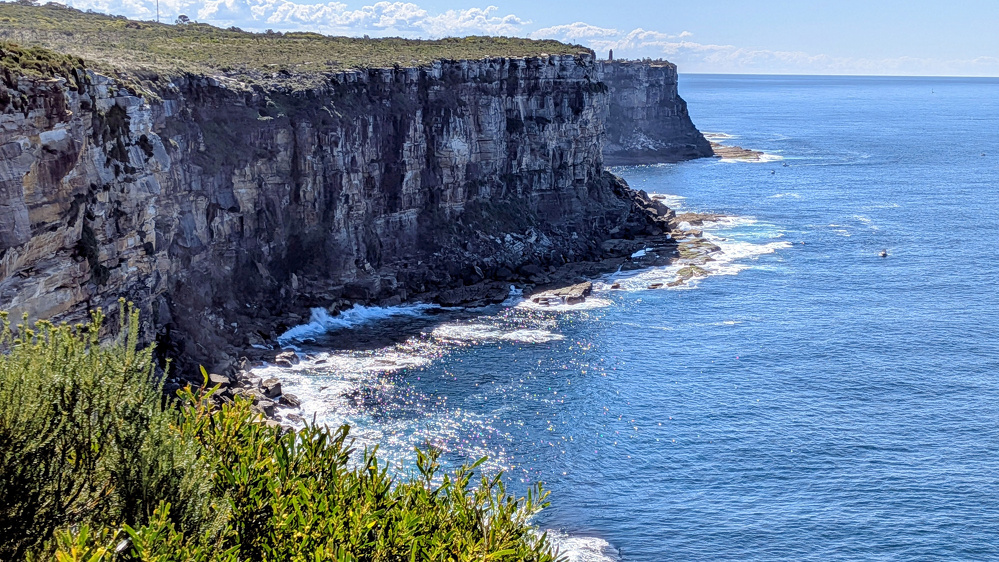
I find writing on the train works well. It helps that there’s a good view. Anyone else do this?
#writing #notetaking #writingcommunity #photography